Tree removal cost: what affects the price

Tree removal cost is never one number. It depends on the tree, the access, what sits underneath it and the equipment needed to take it down safely. Two trees that look the same from the street can need very different jobs.
This guide walks through each part of the price, in plain words, so you can see why a quote says what it says. It also shows how to compare quotes fairly and what to ask before you say yes.
We give no dollar figures here on purpose. A figure printed in an article cannot know about your gate, your slope or your neighbour's fence. The honest way to get a price is a free look at the real job.
Most people want one number before anything else. The better question is what the number is made of. Once you know the parts, a quote stops being a mystery and starts being a plan you can check.
What tree removal cost is made of
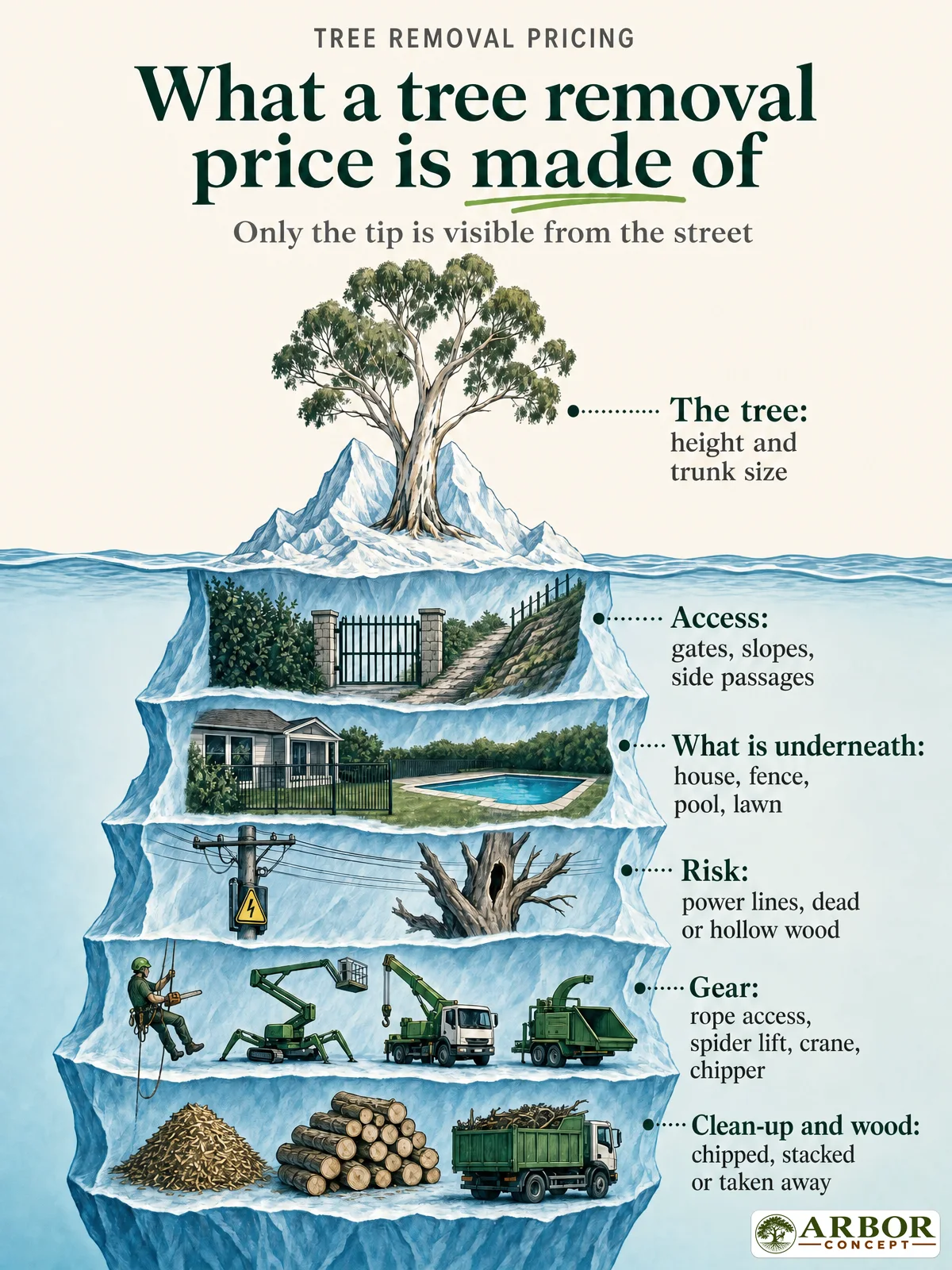
Every price we work out comes from the same list of questions. How big is the tree, and what shape is it in? How hard is it to reach? What could be damaged on the way down? Which gear does the job need? What is left to clear at the end? The list does not change from customer to customer. What changes is the job itself.
Six things that shape the price
Each part can add time, add equipment or add care. Put together, they give the price. None of them is a hidden charge. They are the actual work, written down so you can see it.
This is also why a figure from a friend or a forum is a poor guide. It was the price for their tree, their gate and their lawn. Yours is a different job, even when the tree looks the same.
The tree itself: size, shape and condition
A tall tree with a heavy crown takes longer than a small one, and it takes more care. The trunk matters too. A thick trunk is cut and lowered in many sections, and every section has real weight.
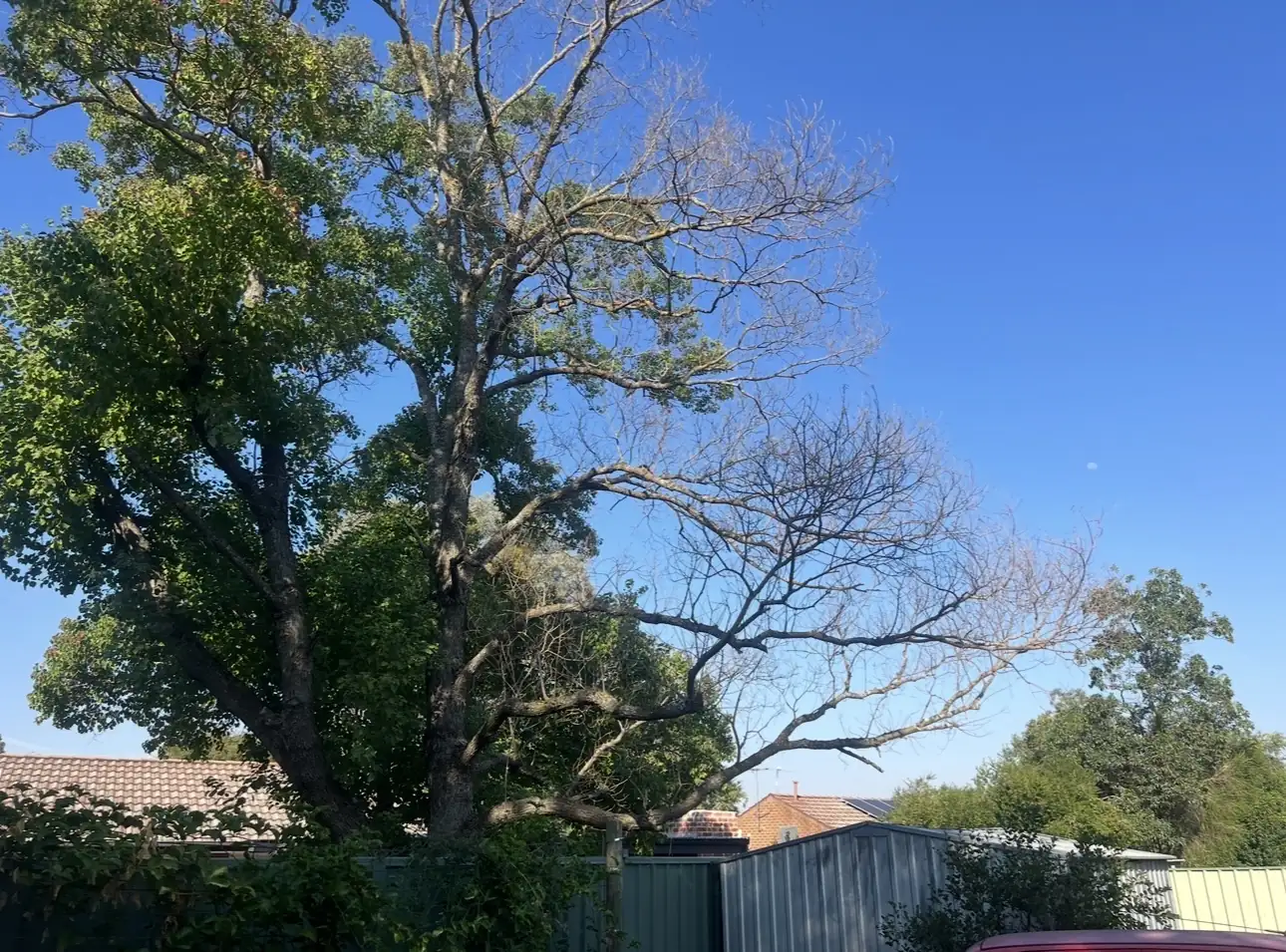
Condition matters just as much. A healthy tree gives you strong wood that holds a rope. A dead or hollow tree is brittle, and it can fail where you do not expect. That slows the job down and can change the method, which changes the price. A competent person should assess a tree before anyone climbs it [3], and this is where that assessment pays off.
A leaning tree, a tree with two stems and a tree with old damage each carry their own risks. A tree with many limbs over a roof is slower than a tall, clean trunk in the open. Drew looks at all of this on the day of the quote. If a tree can stay, he will tell you, even if it means losing the job.
Species plays a part as well. Some timber is dense and heavy, and some drops limbs without warning. You do not need to know which is which. That is the arborist’s job, and it is one reason a visit beats a guess.
Access and what is around the tree
Access is often the biggest swing in tree removal cost. A tree in an open paddock can be felled in one piece and cleared with a machine. The same tree behind a house, with a narrow side passage and a gate, is a different job altogether.
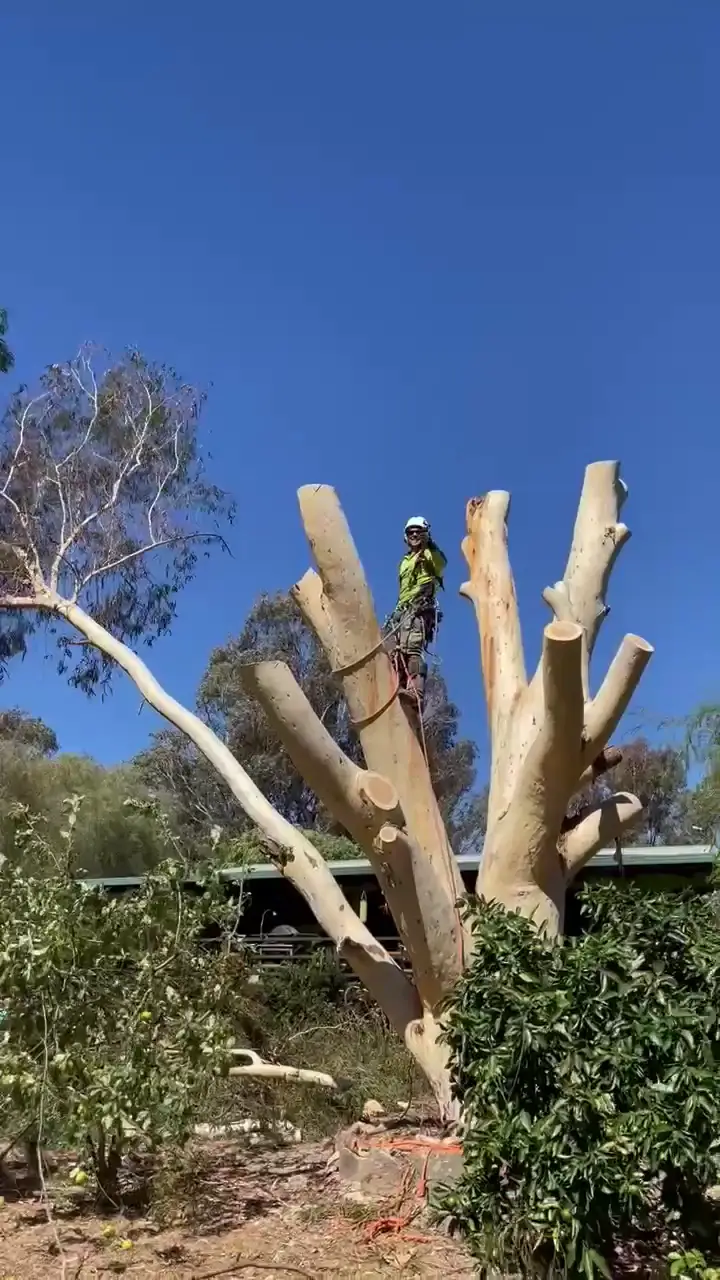
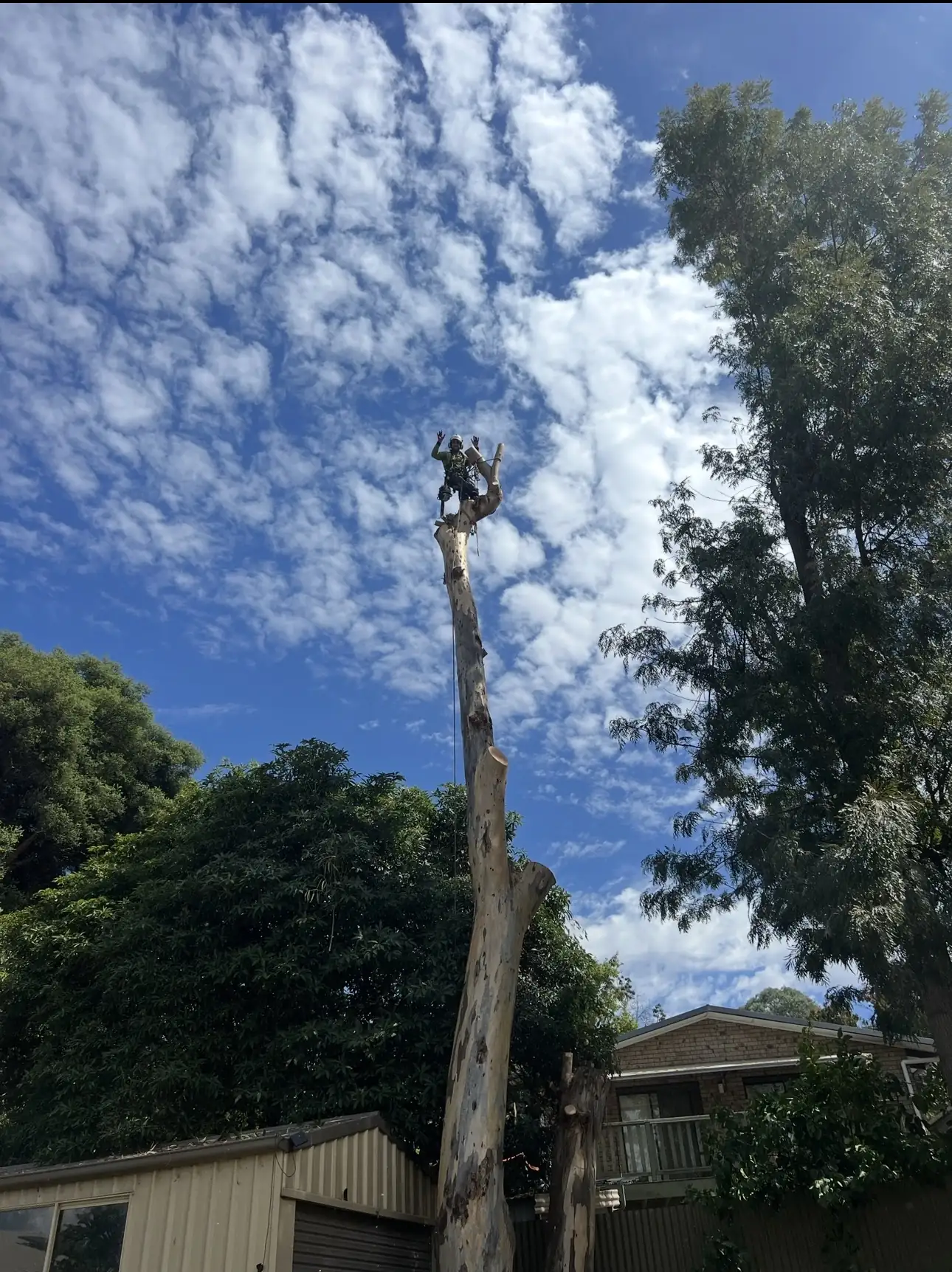
Where a machine cannot reach, our team uses rope access and rigging. A climber takes the tree down piece by piece and lowers each piece to the ground. It is careful work, and it takes longer.
The same tree, three different jobs
| Where it stands | How it comes down | What drives the price |
|---|---|---|
| Open yard, room to drop it | Felled whole, or cut in a few large pieces | Size of the tree, then clearing the timber |
| Beside a house or fence | Taken down in small sections on ropes | Time, rigging and care for what is below |
| Near power lines | Planned cut by cut, often from a spider lift | Planning, special gear and the legal limits |
Look at your own yard the way an arborist would. Can a truck reach the tree? Is there a gate wide enough for a machine? Does the ground slope? Is the tree over a fence, a pool or a neighbour’s shed? Every yes to a tight spot adds time or gear, and each one is worth mentioning when you ask for a quote.
Ground conditions count too. Heavy gear on a soaked lawn can wreck it. If you want to protect a fine lawn, track mats can be quoted in. That is your choice, and we tell you up front.
Drew called me back within an hour and was able to quote the same day at our rental property. Really good price and efficient team. Thanks again
Power lines, council rules and other risks
Risk is the part people forget. A tree beside a power line cannot be treated like any other tree. The law sets how close a person or machine may come to a live line, and the company that runs the network may have to step in. The Safe Work Australia guide says no person, plant or thing should come within an unsafe distance of an overhead line [3]. Energex advises that work near its lines should be done by a professional arborist, not by the homeowner [4].
That planning takes time, and it is part of the price. So is the care taken over a house, pool or shed under the tree. You are not paying for fuss. You are paying for the job to end with nothing broken.
Some trees are protected, and some councils need a permit for removal. The Sunshine Coast Council says a permit may be needed to remove protected vegetation on private property [1]. Noosa Council says a permit is needed to clear vegetation on private land in its area, and that removing protected trees without a permit or exemption is an offence [2].
Rules differ from one council to the next and they are updated from time to time, so ask yours before anything is cut. Our team will help you work out what is needed. A permit does not change the work itself, but the checks take time, and that can shape the day the job is booked.
Equipment: climb, lift or crane
The method follows the tree, not the other way round. A sound trunk can be climbed. A weak one cannot carry a person, so a spider lift puts the cutter next to the tree without loading it. A very heavy tree may call for a crane, which holds each section as it is cut and then lifts it clear.
How a quote is built, step by step
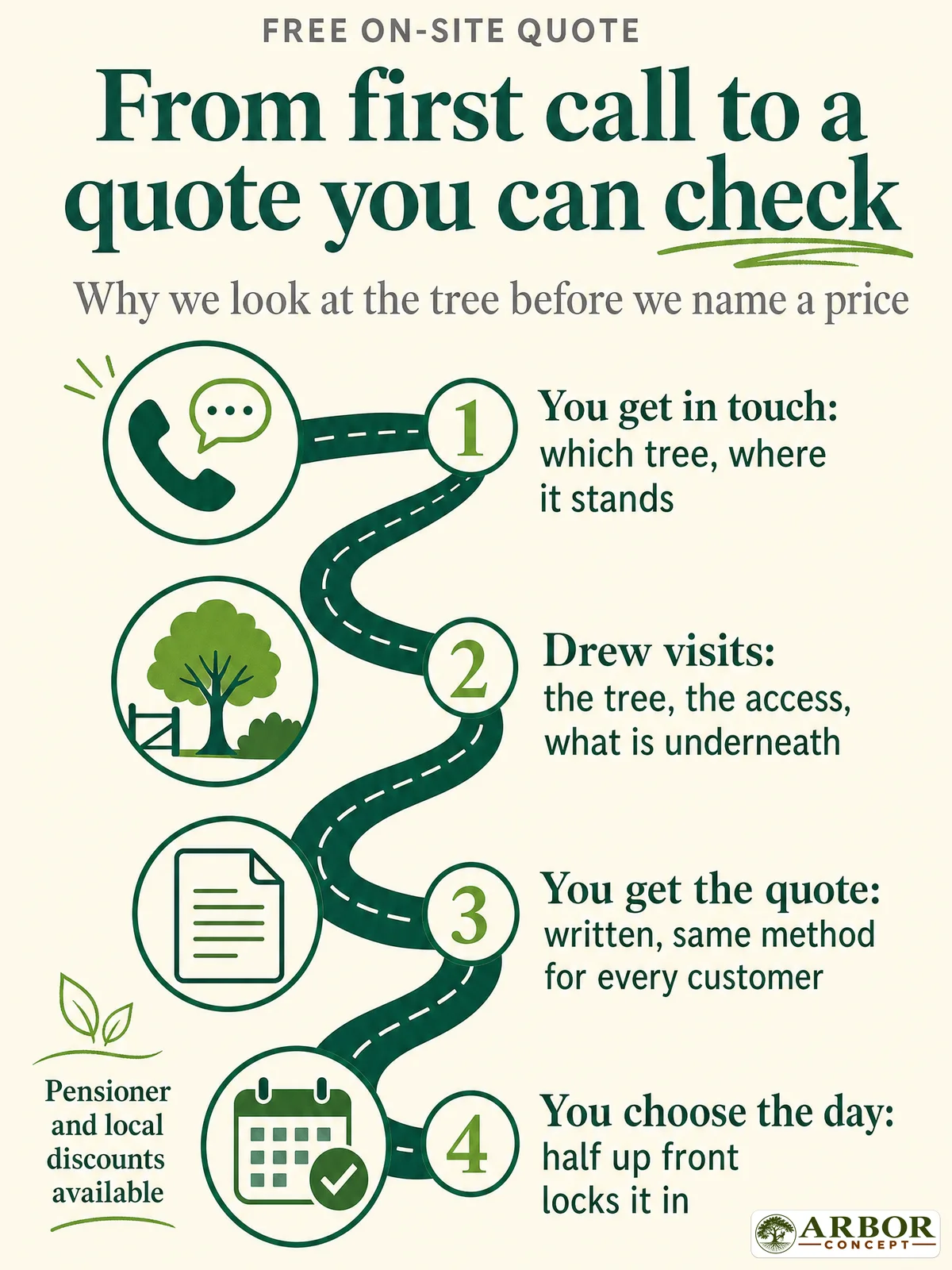
- Drew looks at the tree, the access and what is underneath.
- He picks the method that is safe for that tree and that yard.
- The time, the gear and the care the method needs are added up.
- The wood, the green waste and the clean-up are added.
- You get the result in writing, so you can see what each part is for.
A bigger machine is not always a bigger bill. A crane can save a lot of labour. A lift can shorten the hours a half-cut tree stands open to the weather. We say whether the gear is worth it for your job, and we say so before the work starts.
Smaller gear has a place too. The chipper handles the branches, and a tracked stump grinder handles the stump if you want it gone. Each piece is named in the quote, so nothing is a surprise on the day.
Want this looked at on your own property? The on-site quote is free.
The wood, the green waste and the clean-up
Every tree leaves a lot behind. Timber, branches and leaves have to go somewhere. You choose what happens to them: chipped and taken away, cut and stacked as firewood, left as mulch, or milled by someone we organise.
Tell us your choice early. A quote that takes everything away is a different price from one that leaves the wood on site. When you compare quotes, check that each one means the same thing by clean-up.
The stump is a separate question. Some people want it ground out, some want it left as a seat or a garden feature, and some are happy to let it rot. Say what you want at the visit. A stump left in the ground and a stump ground below the surface are two different jobs, and the quote should say which one you are getting.
How timing and weather change the job
A tree job is outdoor work, so the weather has a vote. Wet ground is the usual one. Heavy gear on soft soil sinks, cuts ruts and can damage a lawn or a drain. Unless a tree is in immediate danger, we move the job until the ground dries. A lost day beats a wrecked lawn.
Wind matters more for safety than for the lawn. Ropes, cut sections and a swinging crane hook all behave badly in a gusty day. If the wind is too strong for the method, the work waits. It is the right call, even when it is a nuisance.
Timing can shape the job in other ways. Nests and dens in the tree can pause the work until the animals are safe, and a council check that is still open can hold the booking. A busy spell after a storm can also push a normal job back, because urgent jobs come first.
What can move your day
Because of this, a good quote says what happens when the weather turns. The half paid up front locks your day, and it works both ways: you are booked, and our team is committed to making it work. If the day has to move, we tell you and set a new one.
Drew was great to deal with from the very first call. He stayed in touch throughout the job and sent photo updates along the way which was great. Drew and his team got there on time and did a fabulous job. Prices are reasonable and you can see there is a sense of pride in their work, super easy to deal with, polite and friendly. Thanks Drew and team, i am very happy with the end result.
What a good written quote shows
A fair quote tells you what you are getting. The Queensland Government says to check that a quote includes every part of the job, that you have read it all including the terms, and that you understand everything in it [5]. It also says the business should not start any work until you approve it.
Read the quote for the method first. It should say how the tree will come down and what gear is planned. Then look at what happens to the wood, the green waste and the stump. Then look at how the site is left. If a line is vague, ask for it to be written plainly before you sign.
Know what you are holding, too. Business Queensland describes an estimate as a rough guide that is not legally binding, while a quote becomes a binding contract once you accept it, and it says a good quote itemises the costs and shows any variations and an expiry date [7]. The Queensland Building and Construction Commission, writing about building work, suggests asking each business to price the same scope so the quotes can be compared like for like, asking about extra charges, and not choosing on the lowest price alone [8]. The same habits work for a tree.
A good quote also covers the practical parts: when the work is expected, how payment is split, and how a change on the day is handled. It should name the approvals that are needed, if any, and who is checking them. A quote that is short and vague is harder to compare and harder to rely on.
Comparing quotes
- Ask what each quote includes: wood, stump, clean-up.
- Ask which method is planned and why.
- Ask what happens if the job changes on the day.
- Ask when the work will be done.
- Comparing totals without comparing what is covered.
- Accepting a price given over the phone, sight unseen.
- Letting work start before you have approved the quote.
- Choosing on price alone for a job near a house or a line.
The law also expects services to be provided with due care and skill, and within a reasonable time [6]. A written quote helps you hold everyone to that, ours included.
When to get an arborist in, and how we price it
Not every job needs an arborist. A small shrub you can cut with hand tools from the ground is a garden task. So is a low twig within easy reach. If you are unsure, ask. A short question to Drew costs nothing.
Anything that means climbing, a chainsaw above your head, a big trunk, a dead tree or a tree near a house or a power line is different. Those jobs are for a qualified person with the right gear. Do not try them yourself just to save money. The risk is real, and so is the damage when it goes wrong.
We price the work: the time, the equipment and the risk. We do not charge more because of the house or the person. Every quote is built the same way, so you can see exactly what you are paying for.
Every job is quoted free on site, never from photos. Photos cannot show uneven ground, a hidden fence or the access. Drew comes out, walks the job with you and explains the options. Half is paid up front to lock in your day, and the rest is paid when the job is done and you are happy. Pensioner and local discounts are available, so ask.
You can read more about how we quote and price on our how we quote page, or see how tree removal works from the first call to the last cut. When you are ready, ask for a free quote and tell Drew about the tree.