What is forestry mulching, and when does it suit a block?


Forestry mulching is a way of clearing land with one tracked machine that chews trees and scrub into mulch on the spot. Nothing is dragged out and stacked. What was growing ends up as a layer of chopped plant matter on the soil.
This guide explains what the machine does, which ground it suits and where another method wins. It also covers the soil, the animals and the rules that still apply when the cut material stays on the block.
A machine that works this fast leaves little room for surprises. Walking the real block first shows the slope, the soft patches and the trees worth keeping, and that is where the right method gets chosen.
Picture a block that has been left alone for years. Lantana, regrowth and young gums have knitted into one thick wall. Cutting it by hand would take days. Carting it all away would take a lot of trucks and a lot of handling.
What forestry mulching actually is
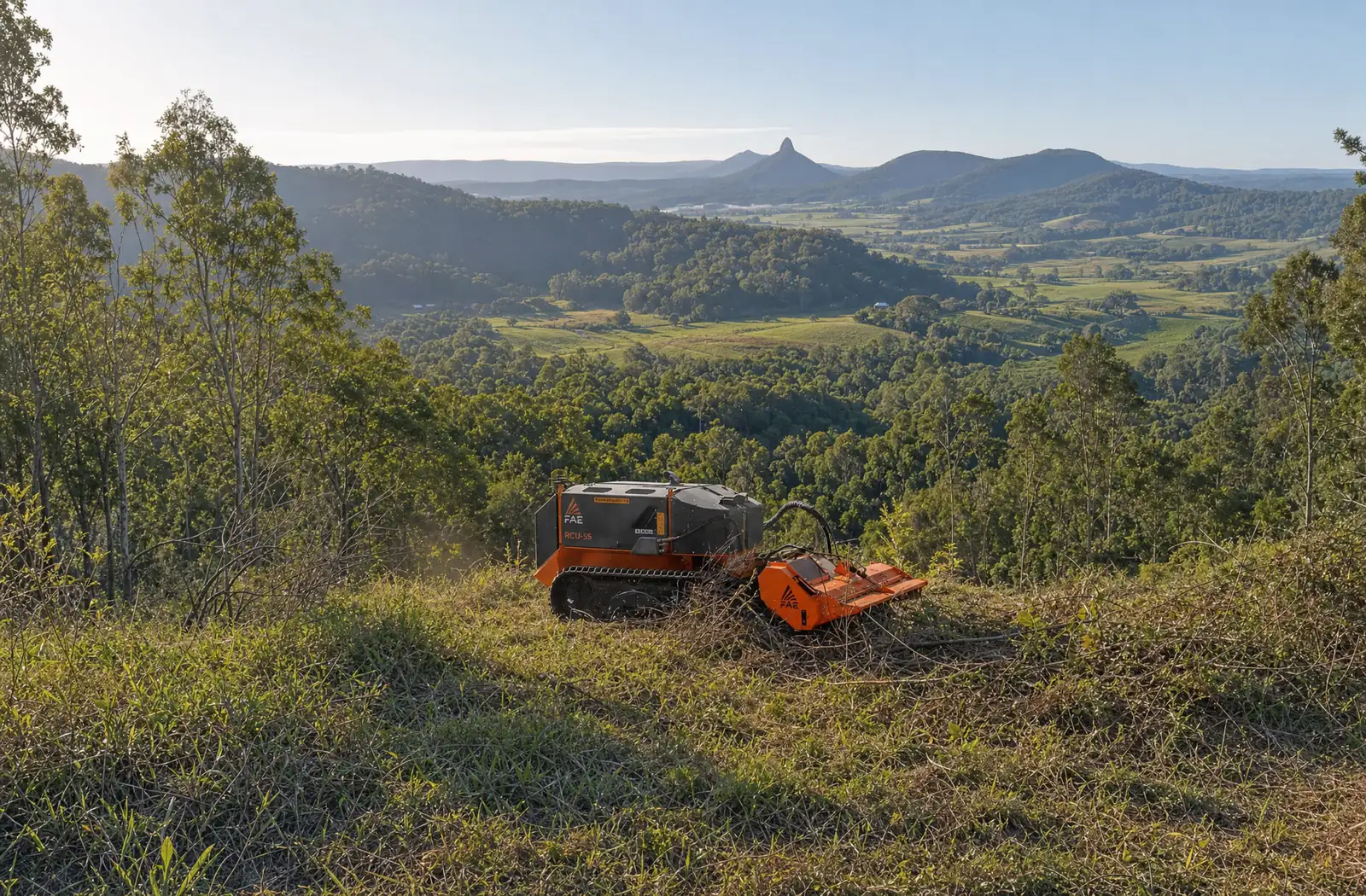
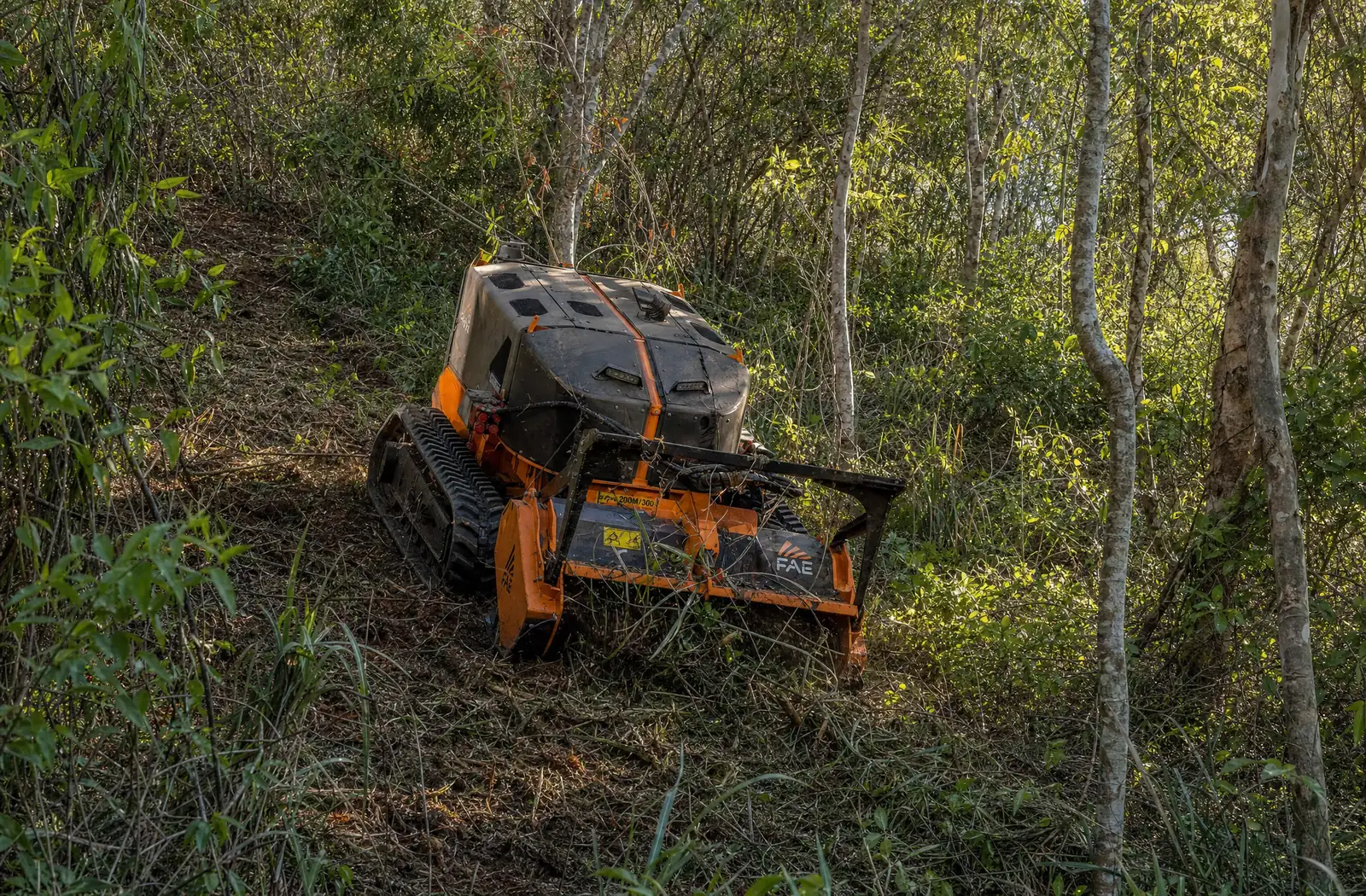
This is the kind of ground forestry mulching was made for. One tracked machine rolls into the growth, grinds it up where it stands and leaves a rough carpet of chopped plant matter behind. The block is open when the machine leaves, and the old growth now lies on the soil as mulch.
A fast-spinning cutting head at the front does the chewing. Our machine takes everything from undergrowth up to stems around 150 mm thick. It runs on tracks, which suits sloping ground. And it is driven by remote control, so the person steering it stays well back.
Forestry mulching at a glance
The word forestry sounds grand, but the idea is plain: the growth is ground up where it stands. The cut material doesn’t leave as logs and brush. It stays, in small pieces, close to where it grew.
People choose this method for a few simple reasons. It clears land quickly. It leaves the ground covered. And there is far less to load onto trucks and carry off. On a large or awkward block, those three things add up to a shorter job with less disturbance. They do not make it the right choice every time, which is what the rest of this guide is about.
A forestry mulching job from first walk to last pass
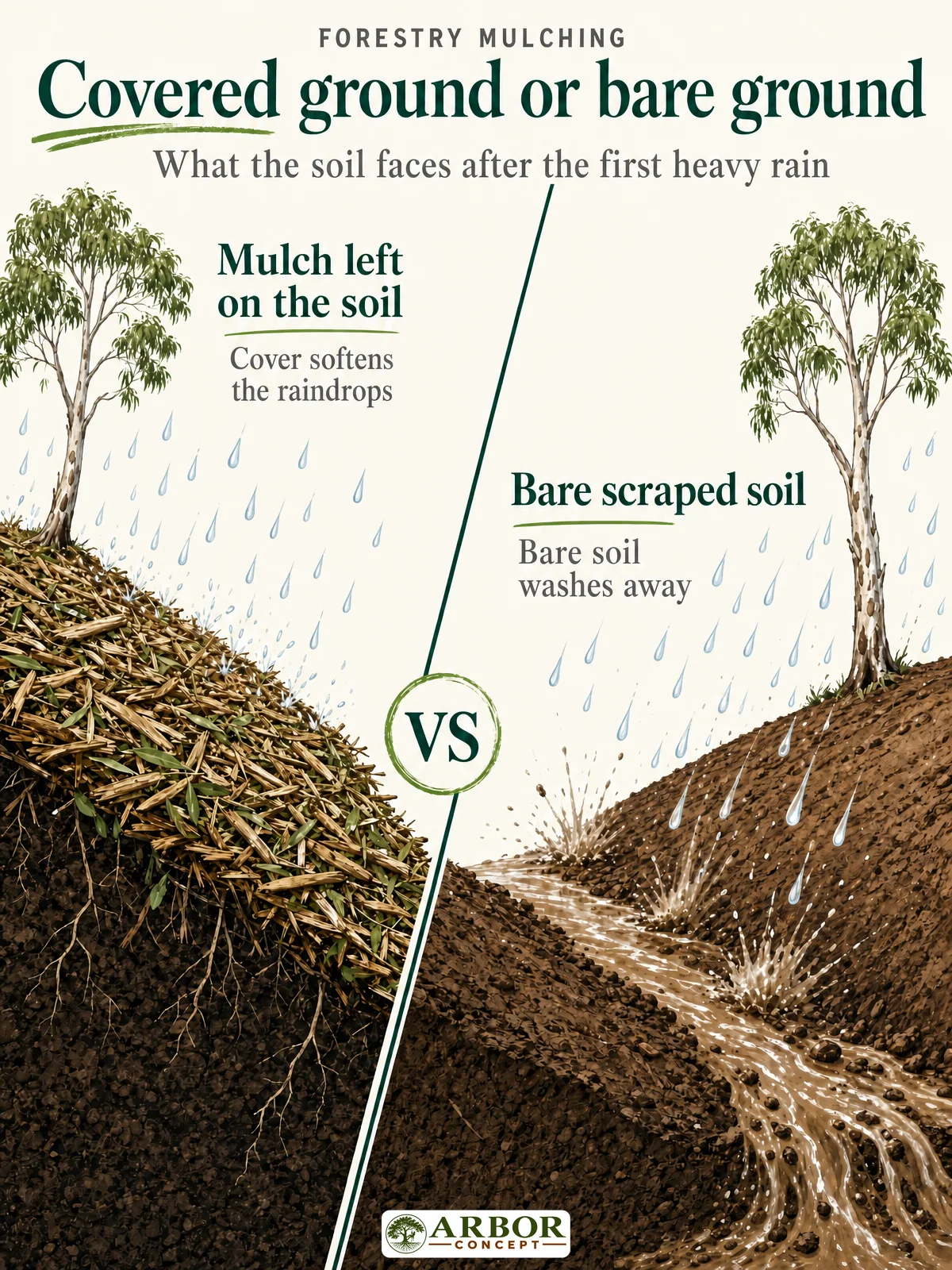
Every job follows the same order. The machine is only one step in it, and it is not the first.
How a job runs
- Drew walks the block with you and settles which trees and patches stay.
- Boundaries, fences, underground services and soft ground are checked before anything moves.
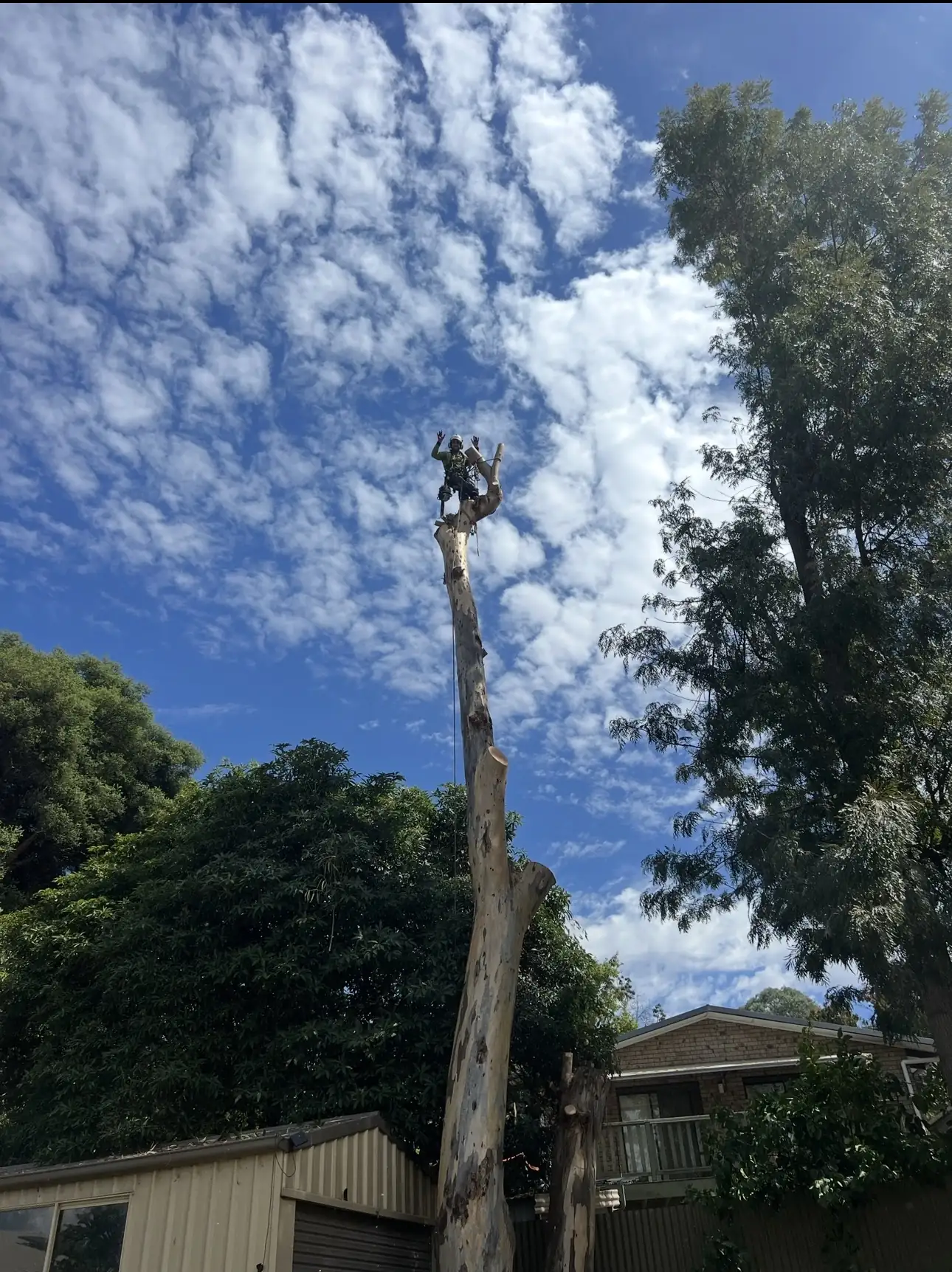
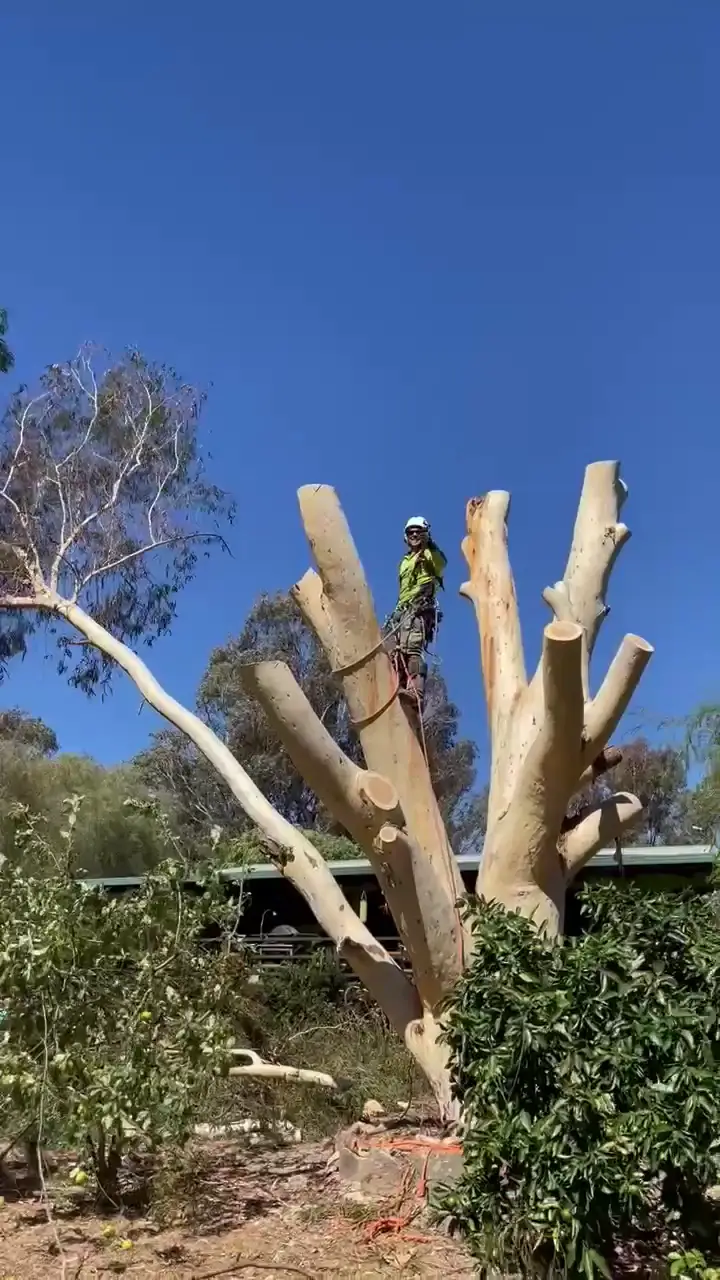
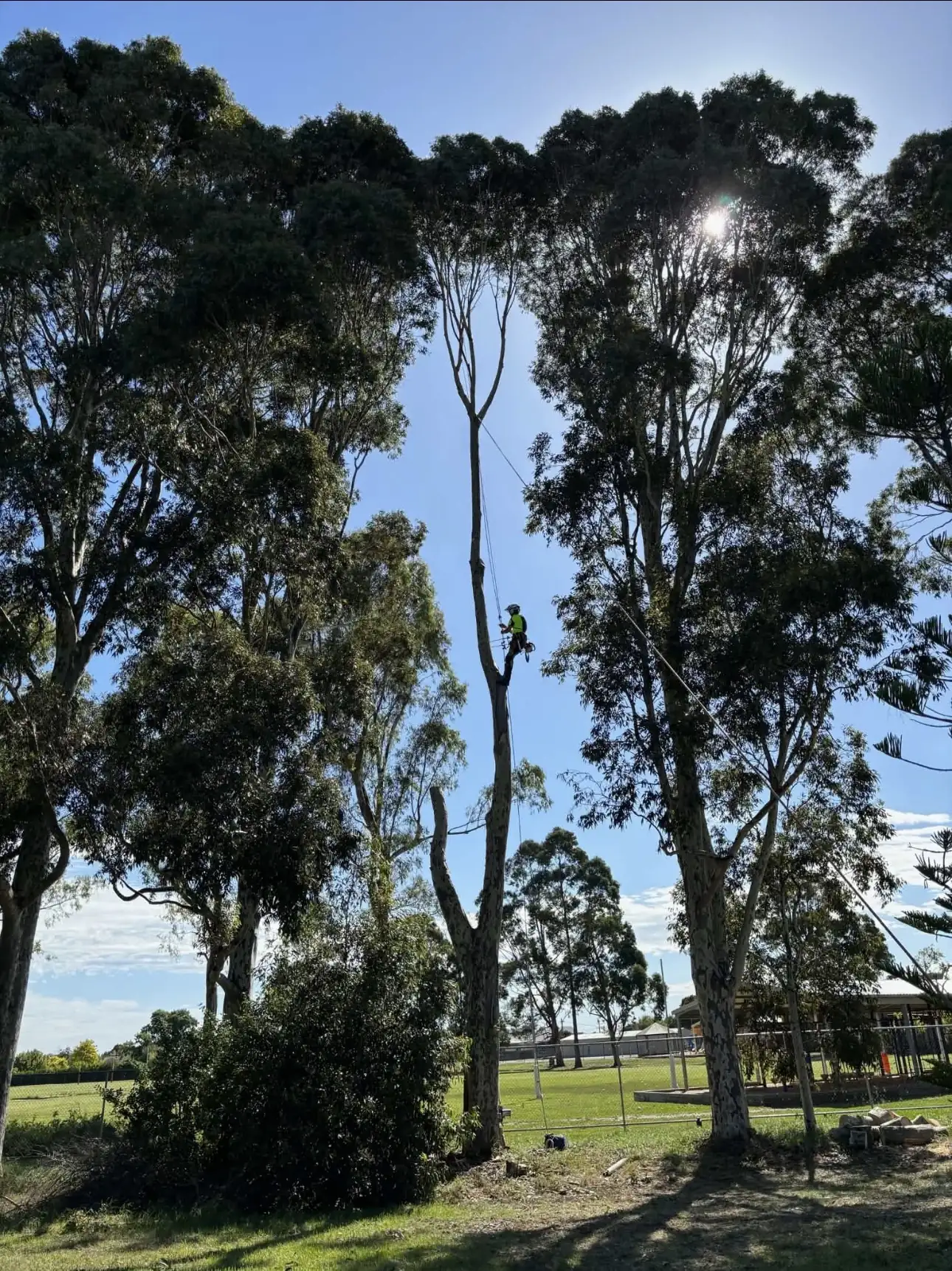
- Our team brings down the bigger trees first.
- The mulcher goes in last and grinds over what is left standing or lying.
- The ground is left covered, tidy and ready for whoever comes next.
Step three catches people out. The mulcher is the finisher, not the first one in. Large timber comes down in controlled pieces, and then the machine works over the rest. That order is why the finished block looks tidy instead of ragged.
The first step sets both the method and the price. It happens on site, costs nothing and never relies on pictures. A picture hides a soft patch, a gully under the lantana or an old fence line. Walking the land shows them.
A block that runs along a boundary affects the neighbours too. Our team is glad to explain the work to them, which keeps things friendly. Everything agreed is written into the quote, so there are no surprises on the day.
Underground lines are part of that early check. Business Queensland says underground electricity cables could be almost anywhere you dig, and that damaging them can disrupt services and injure people [7]. It points to Before You Dig Australia, a free service that covers electricity, gas, water and telecommunications [7]. The mulcher works at the surface, but we still want to know what runs beneath it.
Land that suits forestry mulching
The machine earns its place where growth is thick and the ground is awkward. It is a good match for:
- overgrown acreage, paddocks and fence lines
- tracks and fire breaks that keep closing over
- house blocks that must be opened up before building
- steep slopes where footing is poor
- dense regrowth under and around trees you want to keep
- sites being readied for a shed, a driveway, a dam or solar
Not every job means taking everything. On many blocks the plan is to keep the best trees and clear the thick growth around them. The machine can drive through the middle of the trees and leave the standing ones alone, so the property ends up open but not bare. Say which trees matter to you when Drew visits. A favourite gum or a shade tree by the house is easy to plan around, and very hard to put back once the machine has been through. It also helps to say what you want the land to look like in a year, because that shapes how much is cleared today.
Wet weather changes the plan. Heavy gear on soaked ground does damage, so barring a genuine emergency, the job waits a week or two for the ground to firm up. Where a lawn or garden sits close, mats under the tracks can be priced in. Whether to have them is up to you, and you hear about it at the start.
Drew and his team were absolutely fantastic. They were patient while we worked with council for the appropriate approvals, on time and very professional. Drew was also happy to assist us with adding on additional pruning and palm removal. Will recommend to everyone and definitely use again in the future.
When another method does the job better
No method wins everywhere. Here is how three common ways of clearing scrub compare.
Three ways to open up a block
| Method | Where it fits | What to weigh |
|---|---|---|
| Forestry mulching | Thick regrowth, steep ground, big areas | Bigger trees come down first, and the cut material stays on the block |
| Cutting and carting away | Sites that must be bare, or where the timber has to leave | More handling, more loads and more exposed soil |
| Hand clearing | Small patches and tight corners a machine cannot enter | Slow on thick growth and risky on a slope |
Hand work wins in a tight corner. Carting wins when you want bare dirt. Mulching wins when the growth is thick, the ground is steep or you want the soil left covered. Drew will tell you which he would pick for your block, even when the answer is not the one that uses our machine.
Why the operator stands well away
Chewing through woody growth is violent work. Chips, bark and bits of stem fly. A cutting head can catch something hidden in the scrub, such as an old wire or a rock. With remote control, the operator is not sitting in that.
That one change shapes the whole job. The person steering stays well back from the cutting, and the machine can climb ground that would be a poor place for a person on foot. It is also why dense, steep scrub is a job for a trained team with the right gear. Please do not try it with a hired machine or a saw of your own.
Want this looked at on your own property? The on-site quote is free.
What the mulch does for the ground
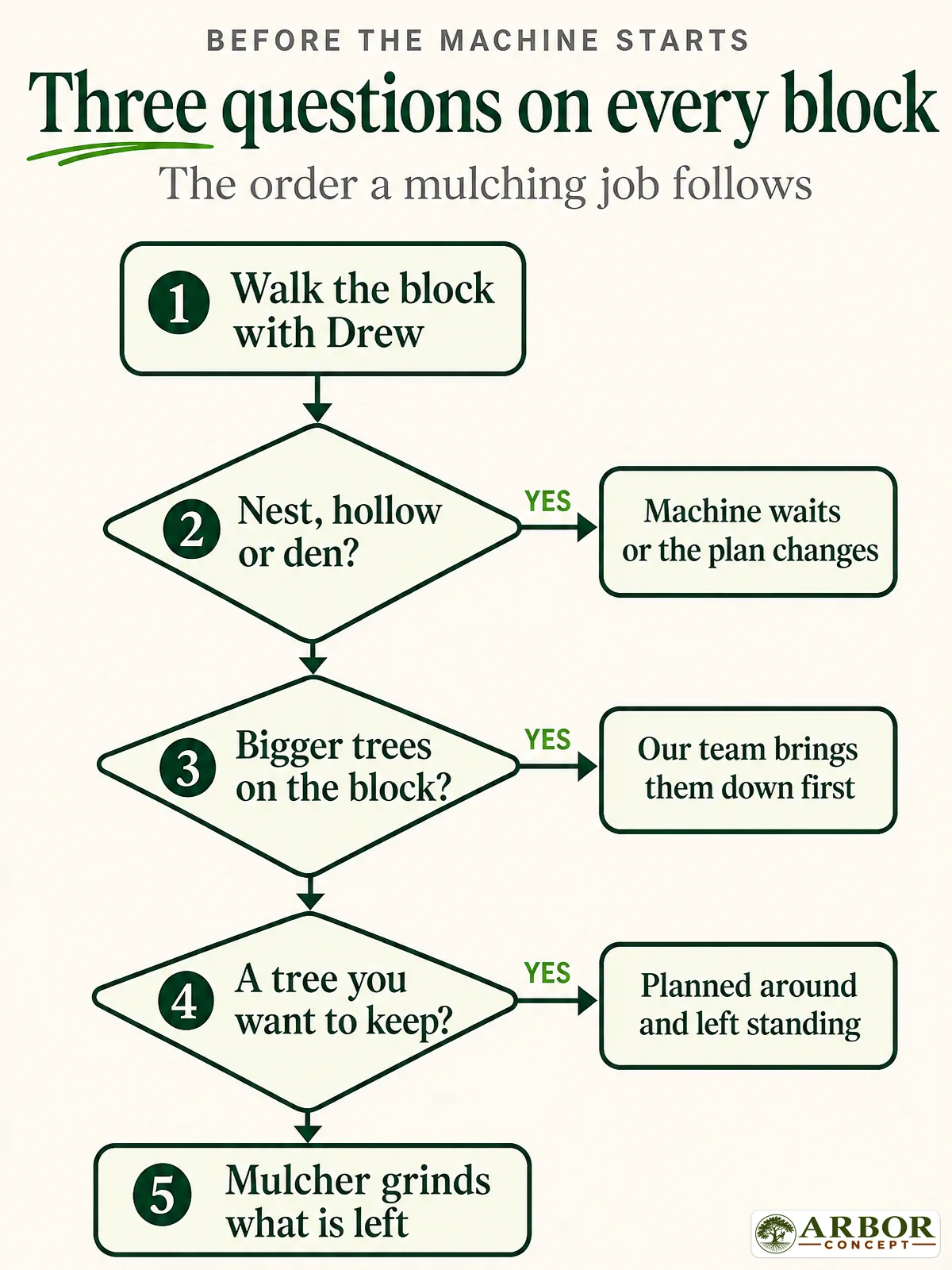
Bare soil is the weak point after any clearing. The Queensland Government says surface cover is a major factor in controlling erosion, because it softens the blow of raindrops on bare ground [5]. Its test plots tell the story. The plot with the least cover lost most of a heavy storm’s rain as runoff, along with a great deal of soil, while plots with far more cover lost much less [5].
The same page notes that soil left bare under trees still erodes [5]. So cover matters, not just the presence of trees. A mulched block starts with its soil covered, which is a better first day than a scraped one.
It is not a full erosion plan. Water still runs downhill, and the page says runoff gathers and speeds up as it flows [5]. Steep ground, a gully or a driveway cut can still need thought. That is one more reason the walk-through comes first.
After the machine leaves
- Leave the mulch where it lies, especially on slopes.
- Decide early what goes on the cleared ground next.
- Tell Drew where water runs after heavy rain.
- Keep vehicles off the block until the ground is dry.
- Raking the cover off to leave bare dirt for months.
- Clearing a long way ahead of any building or planting.
- Ignoring a gully that carries water after storms.
- Driving on the block while it is soaked.
Grinding scrub still counts as clearing
Some people think that if nothing is hauled away, nothing needs checking. The rules do not read that way. City of Moreton Bay says work can still be classed as clearing when a tree is left standing, for example when the understory is removed or native vegetation is thinned [4].
The state sets out several routes. It says its laws allow many routine, low-risk jobs to go ahead under a vegetation clearing code, and it lists exempt work, codes, area management plans and development approvals [1]. Clearing under a code involves telling the government first [1].
Exempt work is the lightest route. It needs no approval and no notice, but it has edges. The state says an exemption may not apply where the land carries development conditions, a covenant, an offset, a declared area or a history of unlawful clearing [2]. It also says you cannot join several purposes together to make a wider cleared strip [2].
Other laws sit alongside. Protected native plants may need a clearing permit. Koala habitat protections apply only to lots inside a particular regional plan area, and some local governments have their own laws [3]. A free property report shows what is mapped on your land [6].
Treat these pages as a starting point. Rules shift, and they vary from place to place. Do not assume yours does or does not apply. Ask first, and our team can talk you through what applies before any cutting starts.
They were very prompt and professional the guys were all friendly the job was done with ease and they cleaned up afterwards, I thought it was value for my money I am very happy with this experience thank you so much Guys
Animals and fire, before the machine starts
A machine that grinds in one pass cannot stop for an animal it has not seen. So the looking comes first.
City of Moreton Bay advises checking for nests, hollows and animals before clearing. Where wildlife is present, it says a licensed spotter catcher should supervise and work may pause until animals can be moved safely [4]. The same page says removing dead habitat trees is also clearing [4]. On our jobs, should the team spot a nest, a den or a resident animal, the machine is held back and the plan changes until the animal is safe. Sometimes that moves the day. Mention any nests you already know about when Drew visits.
Koala habitat adds a firm layer. The Queensland Government says the Koala Conservation Plan 2017 requires sequential clearing and koala spotters present during clearing, even for exempt work [8]. Its purpose is to help stop koalas being injured or killed [8].
Fire is the other thing to plan around. The Queensland Government says its clearing laws let landholders on certain land clear for bushfire preparedness without an approval, for tasks such as firebreaks, fire management lines and trimming woody plants where the tree survives [6]. It adds that purposes cannot be combined to widen the clearing, and that local laws, animal breeding places and koala habitat can still apply [6].
Fire breaks and fence lines are common jobs for the mulcher. Knowing where those lines may legally run before the machine arrives saves a second visit.
When to bring in a team, and when you can skip it
Some jobs need no one. A patch of long grass, a few weeds or light regrowth you can mow is not a job for a machine. A mower and an afternoon will do.
Bring in a team when:
- the growth is woody, thick or taller than a person
- the ground is steep, rocky or hard to reach
- the land is about to be built on, fenced or sold
- trees stand close to a house, a fence line or a boundary
- you are unsure what the council or the state allows
Here is how we run it. You speak straight to Drew. He walks the block, tells you honestly whether forestry mulching suits it, and quotes it free, there and then. Our team takes over from that point. Ask Drew about pensioner and local discounts when he visits.
Our how we quote page explains how prices are set. The full land clearing service page shows the other ways we open up a block. If a block of yours needs looking at, get in touch and describe the ground.