Cabling and bracing.
You want to fix your tree, not lose it. Cabling and bracing supports a tree high in the canopy to reduce the risk of over-extension and failure. We use a non-invasive system that is adjustable and lets the tree keep moving and flexing. It is not practised much in Queensland, and many people never hear about it because they are only offered removal.
When it is an option.
- 1
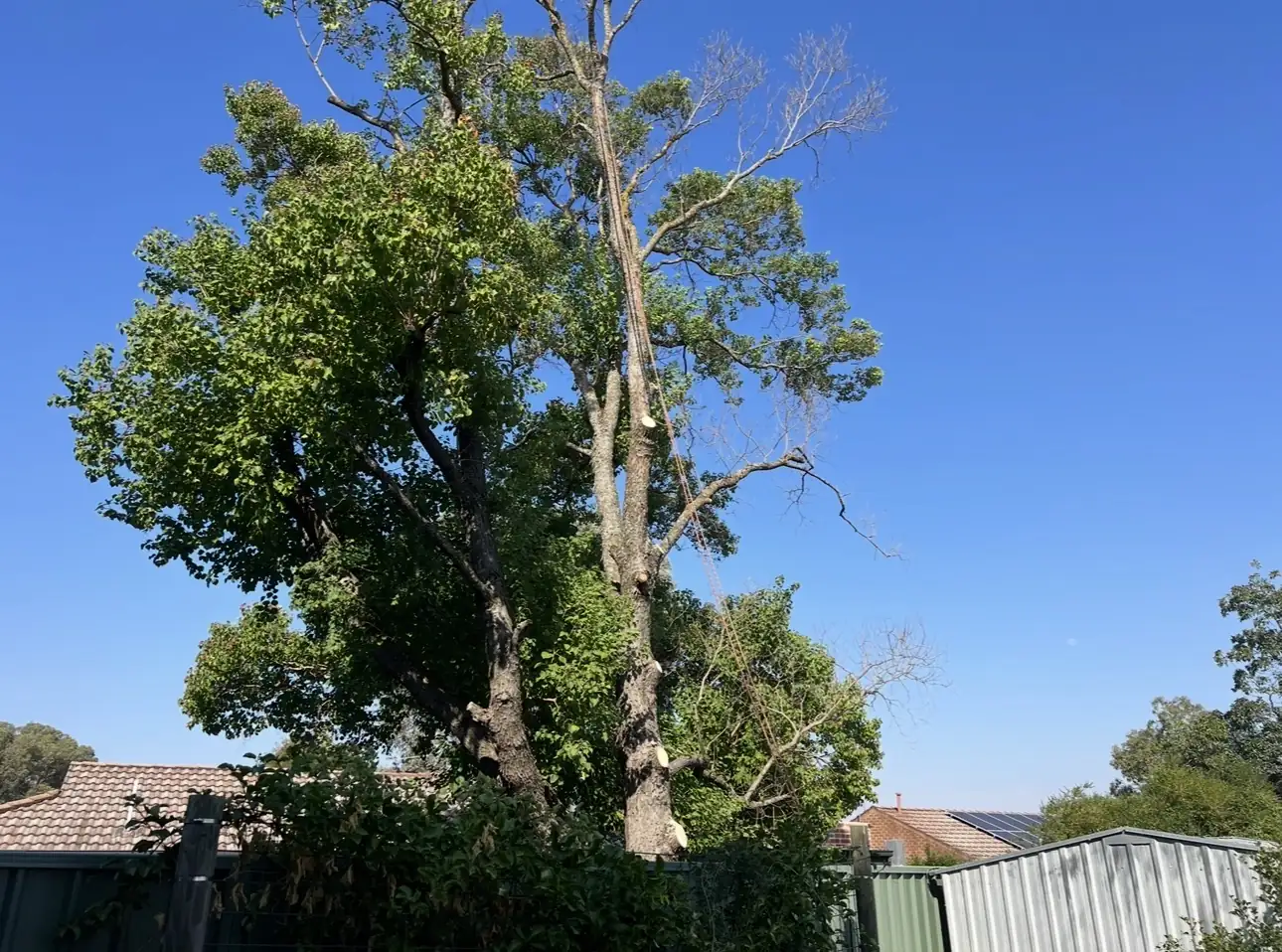
A large tree over a house or yard has a giant co-dominant stem: two main stems that split in a weak V.
- 2
A big limb is heavy, long or leaning and at risk of failing.
- 3
The tree is healthy and worth keeping, but one part of it is a risk.
- 4
You love the tree, and want to keep it for its shade, its birds or its place on the property.
How it works.
- 1
Our team looks at the whole tree: its health, its structure and what sits underneath.
- 2
First our team goes up and prunes, taking the weight off the limb or limbs that need bracing. That lightens the load.
- 3
Then the brace is installed, high in the tree between the limbs. It shares the load and reduces the risk of failure.
- 4
About 12 months later we come back and check how tight the brace has become. That shows how much weight the tree has put on, so we can prune again or adjust the cable.
Non-invasive by design.
Older fixed braces use steel and bolts drilled through the tree. A fixed brace is a last resort. We use a dynamic, non-invasive system instead: nothing is drilled through the tree, and the tree can still move and flex, but without over-extending. It is adjustable, so it can be tightened or loosened as the tree grows.
What the brace is made of.
A hollow-braid rope of strong synthetic fibre, lightweight and flexible. It is UV and water resistant, does not corrode, and is strong but stretches slightly, which allows natural tree movement. A shock absorber is fitted with it, to give long-term support. The system we use is the Cobra dynamic bracing system.
What it can and cannot do.
Cabling and bracing lowers the risk. It does not fix a tree that is dead, rotten or failing at the base, and some trees are best removed. We tell you honestly which one yours is. The main thing is that it is installed correctly, which is why we check it again.
Why it is worth asking.
People up here love their trees, and the birds that live in them. If you are only ever told to remove a tree, you never find out there was another way. It gives you peace of mind. Ask before you cut.
Questions, answered.
What is cabling and bracing?
A support system fitted high in a tree, between limbs or stems, to reduce the risk of over-extension and failure. We use a non-invasive, adjustable system, after taking weight off the limbs that need it.
What is the difference from the older braces with bolts?
Older fixed braces use steel and bolts through the tree, and a fixed brace is a last resort. Our dynamic system is non-invasive: nothing is drilled through the tree, and the tree can still move and flex without over-extending.
What is the brace made of?
A hollow-braid synthetic rope that is lightweight and flexible, UV and water resistant, non-corrosive, and strong but able to stretch slightly. A shock absorber is fitted with it. We use the Cobra dynamic bracing system.
Does a braced tree need checking?
Yes. We come back after about 12 months to check how tight the brace has become. That shows how much weight the tree has put on, so we can prune again or adjust the cable.
Can a weak tree really be saved?
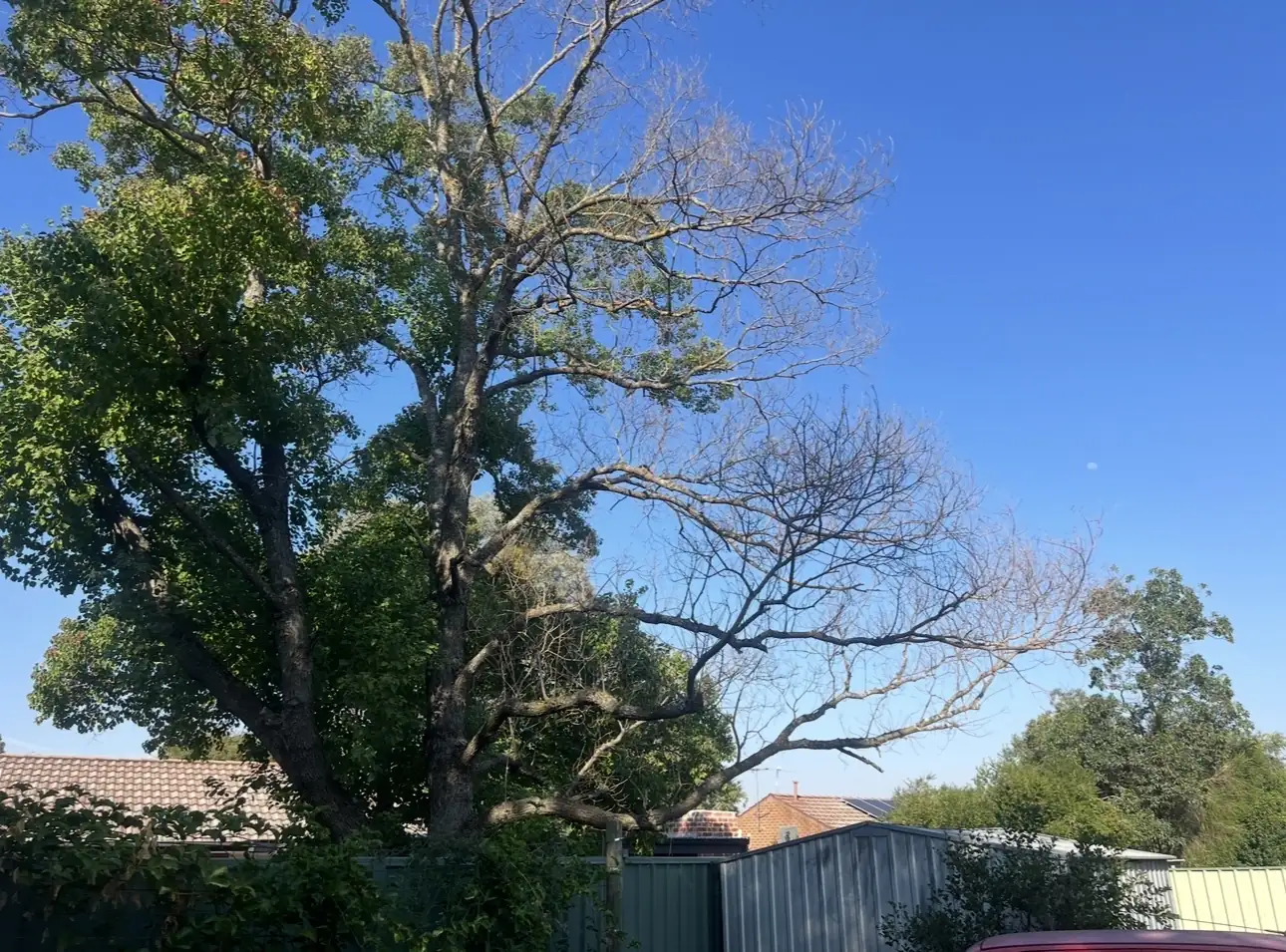
Often it can, if it is healthy overall and the weakness is in its structure, such as two big stems splitting in a V over a house. It cannot save a tree that is dead, rotten or failing at the base.
Is it common?
It is not practised much in Queensland, and many people never hear about it because they are only offered removal. People up here love their trees, so it is worth asking before you cut.
See also.
Get a free quote
Tell Drew what needs doing and where. Send a message and he will get back to you with a free on-site quote. Our team gets everything sorted from there.