Tree safety and tree management.
Most tree trouble gives a warning. Dead limbs, cracks, a lean, fungus at the base. Spotting it early is far cheaper and safer than dealing with a tree that has dropped a limb. Drew looks at where the tree is, what it could hit and how to reduce that risk, and our first option is always to keep the tree if it can be kept. We are not there to just tell you to remove it.
What tree safety and management means.
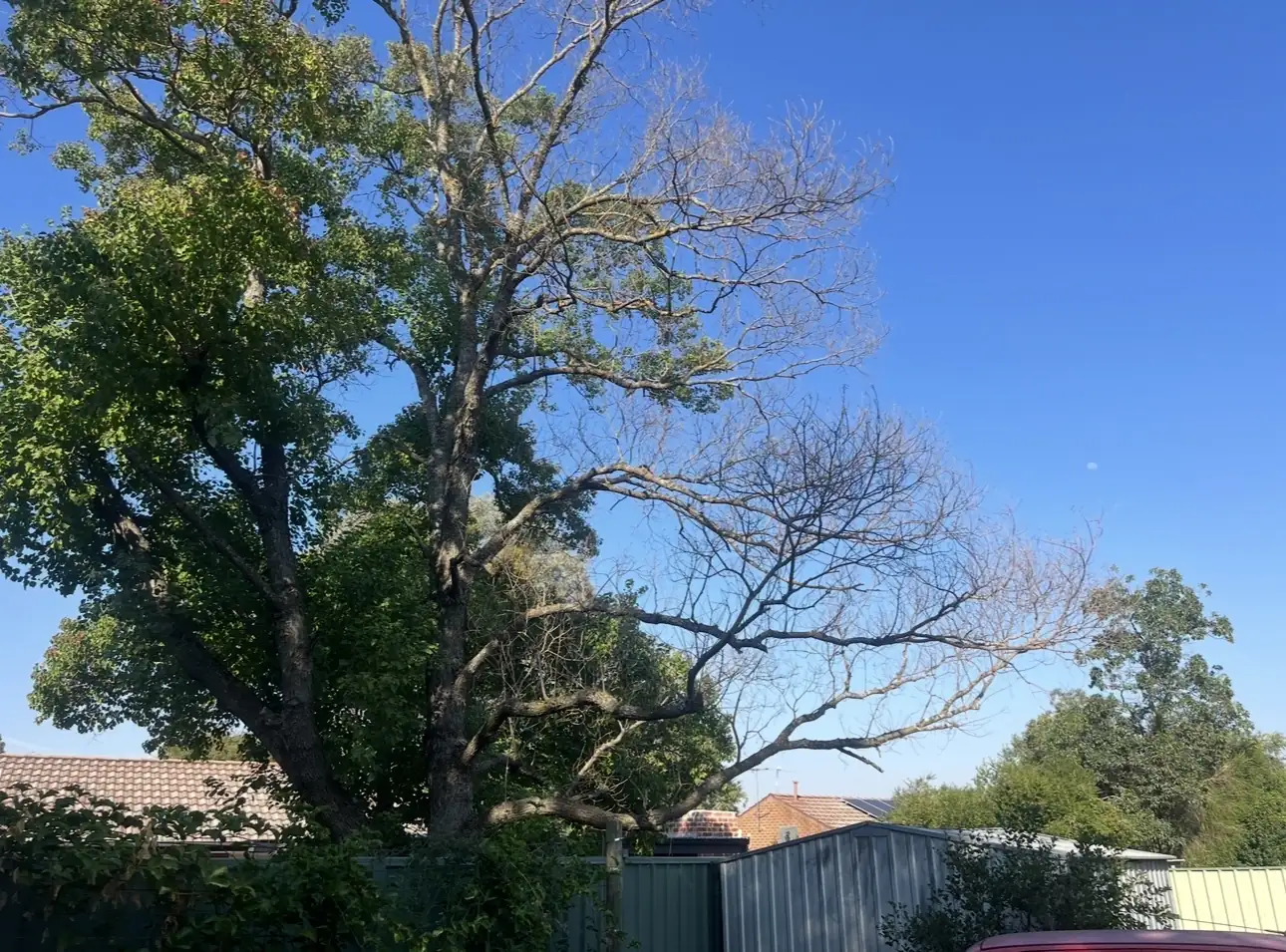
It is about helping the tree and protecting what is around it. Where is the tree, and what could it hit? How can that impact be reduced? What is the plan? Can the tree be kept, and what can be done to help it?
Signs a tree may be unsafe.
- 1
Dead limbs, or a crown that is thinning and dying back.
- 2
Cracks or splits in the trunk or where branches join, and branches rubbing into each other.
- 3
A lean that is new, or the ground lifting around the roots, or root damage.
- 4
Fungal growth, decay and hollows in the trunk.
- 5
Stressed leaves: small or thin leaves can show a tree is struggling.
- 6
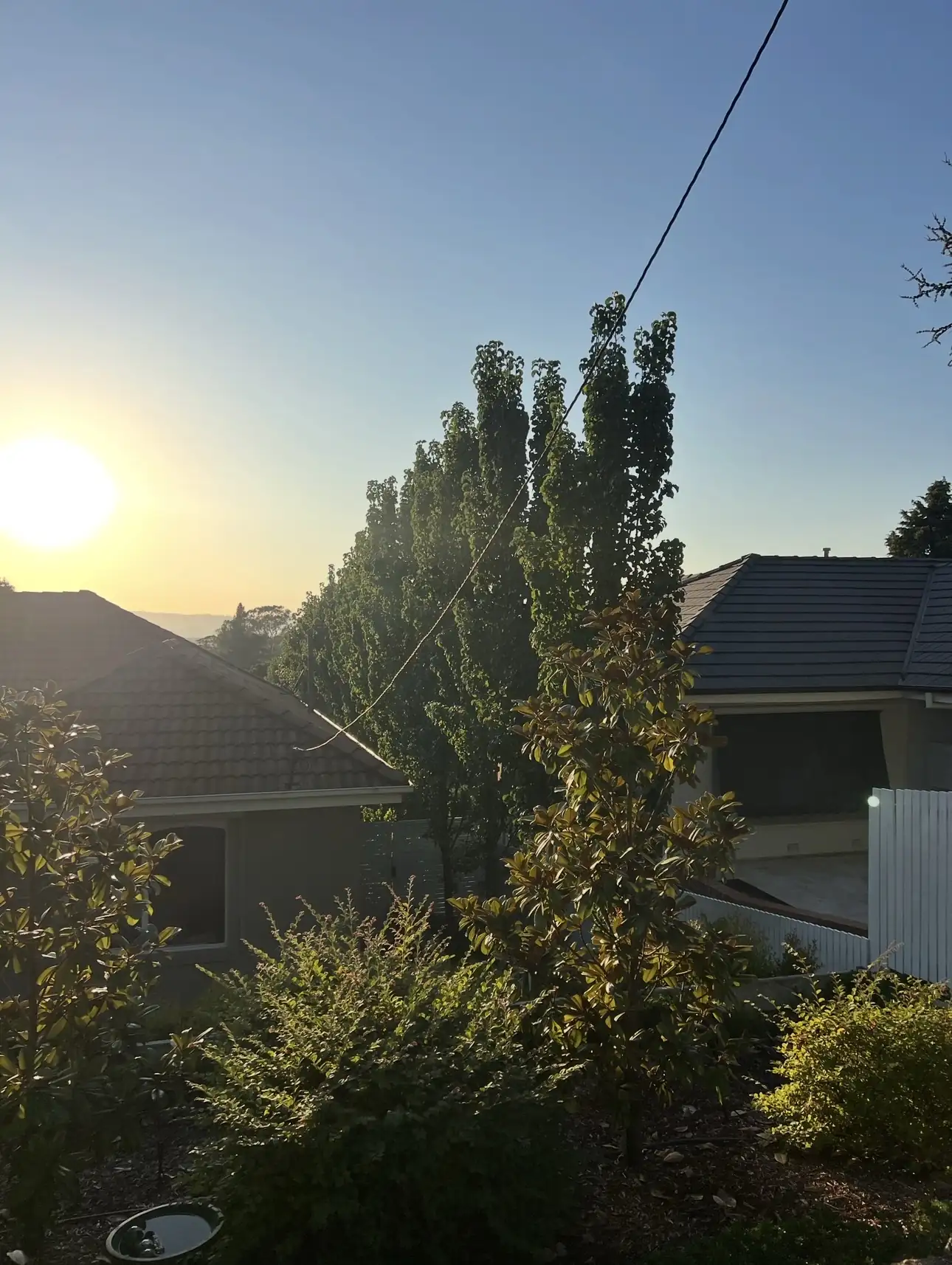
Big branches hanging over the house, a pool, a play area or a power line.
- 7
Damage from a recent storm, even if the tree still looks fine.
What we look at.
There is no one-size answer, because trees differ. To work out how risky a tree really is, and to explain it so you can understand it, we look at:
- 1
The type of tree, the wood it has and how it reacts.
- 2
Whether it grows fast, slowly or at a medium pace, whether it is prone to decay, and whether it is hardy.
- 3
Whether it is structurally sound, has hollows, or has been attacked by pests or disease.
- 4
The ground. If it is very dry, a mulching plan, feeding and watering can help. Too much water causes problems too.
- 5
Where it is, and what the risk is if it fails.
What you get.
- 1
Practical advice and solutions from 20 years in the industry, in plain words.
- 2
The options: monitor it, prune it, support it with cabling and bracing, or remove it.
- 3
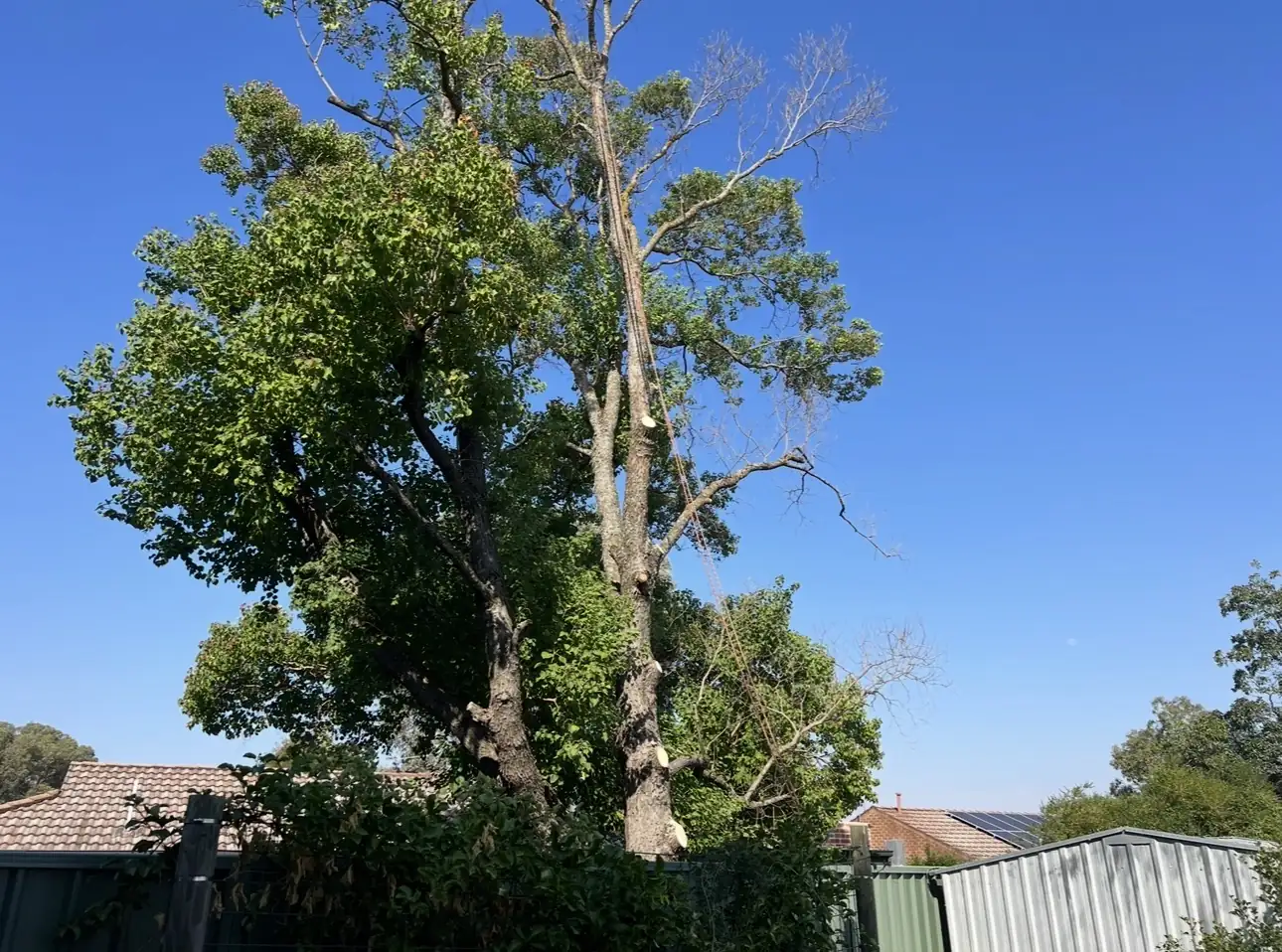
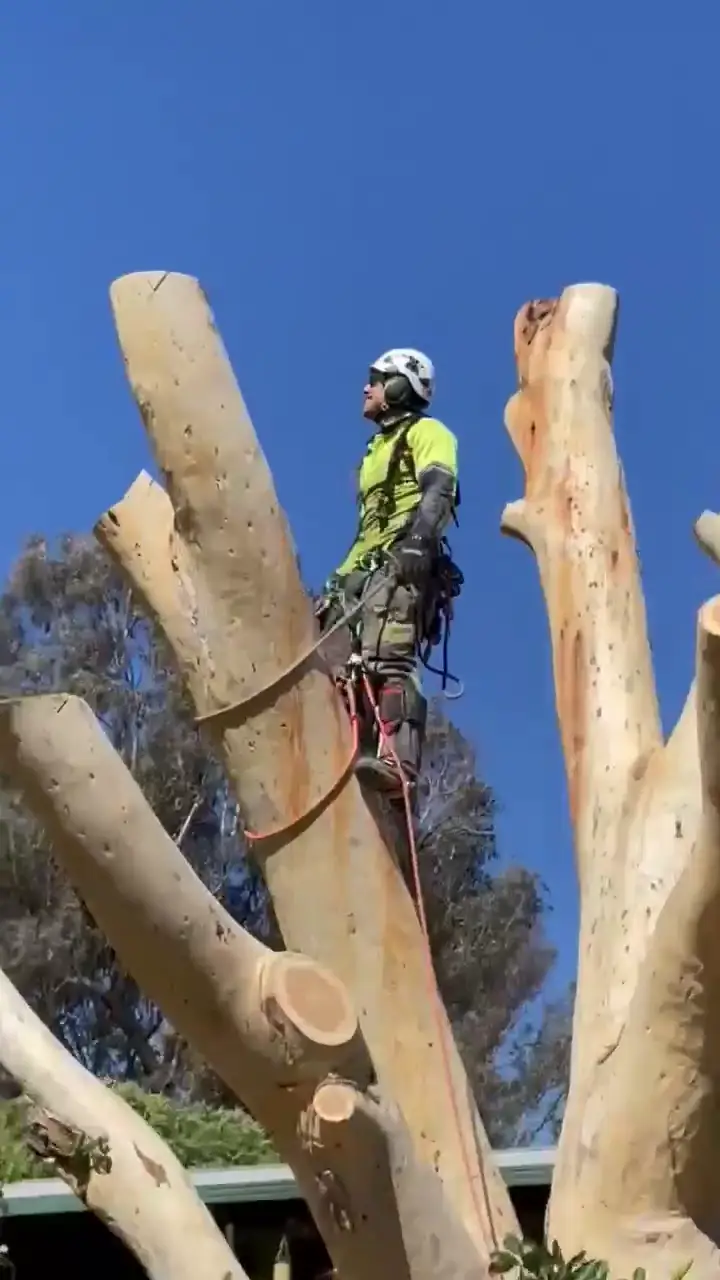
If it helps, our team climbs the tree and takes photos, so you can see what we see and talk through how to reduce the risk.
- 4
A free quote on site for the work you decide on, and nothing you do not need.
Keeping the tree you love.
A tree can be sentimental, such as one planted by your grandfather. Then we do everything we can to keep it: pruning, cabling and bracing, mulching the garden bed, and treating the tree if something is wrong with it.
Properties with lots of trees.
Some customers want to open up the yard, or keep one large tree. Our team looks at the species and what is going on around them. A very invasive tree, like a fig, can suck the moisture out of the ground and take over, while you may want to keep a large gum. Our team works through the trees with you to find the best option, so the right one thrives.
Who we help.
Home owners, farms, businesses, schools and councils. Our team has done planning for schools, where the school gets a tree report and our team carries out the pruning or removal the report calls for.
The quick-fix trap.
The big mistake is cutting a tree right back for a quick fix. Fast-growing evergreens can be back to the same height in 12 to 18 months, only now it is more dangerous. If it is not done correctly the first time, the problem returns. We explain this before we cut anything.
Neighbours and insurance.
- 1
Overhanging branches: you can generally trim a neighbour's tree back to the boundary, but it is best done properly. Ask Drew first.
- 2
Insurance: in general, your insurer deals with the damage to your own property, and a neighbour's insurer with theirs. Check your policy.
- 3
Our team has done a lot of insurance work, including storm damage.
If you think a tree is dangerous.
Give a qualified arborist a call to come and look. Drew's call is free and with no obligation. Keep people, pets and cars away from underneath until it is checked.
What customers say.
“Drew gave me a quote to remove a pine that split and advice on another tree that was looking at doing the same.”
“They were patient while we worked with council for the appropriate approvals, on time and very professional.”
“Drew was fantastic. Responsive, efficient, knowledgeable and accommodating.”
Questions, answered.
How do I know if a tree is dangerous?
Look for dead limbs, cracks or splits, branches rubbing together, a new lean, ground lifting around the roots, fungal growth, hollows and decay, and stressed leaves. If you see any of these near your house, call Drew. A call is free, with no obligation.
What is a tree management plan?
It is a plan for the trees on your property: what is dangerous and should come out, what can be saved by pruning, cabling and bracing or mulching and feeding, and what to keep an eye on. The aim is to keep your place safe and keep the trees worth keeping.
Do you write tree reports?
You get practical advice and solutions from 20 years of experience, and our team does the work. If you need a formal written report, for a school or council for example, we work to a report from a consulting arborist and carry out what it specifies.
Can a tree be saved instead of removed?
Often, yes, and that is always the first option. Pruning, weight reduction, cabling and bracing, mulching, feeding and treating a pest or disease can all keep a tree. If it cannot be saved, it can sometimes stay as a habitat tree.
How often should trees be checked?
Large trees near houses, roads and play areas should be looked at regularly, and after any severe storm. We can put you on a list to give you a call in 12 months to see how the tree is going.
Why not just cut the tree right back?
It is a quick fix, but fast-growing evergreens can be back to the same height in 12 to 18 months, and more dangerous. Done properly the first time, the problem does not come back.
Can I trim my neighbour's tree?
Generally you can trim overhanging branches back to the boundary, but it is best done properly, and the neighbour usually appreciates a chat first. Ask us: our team is happy to talk to your neighbours for you.
Does insurance cover tree damage?
In general, your insurer covers damage to your own property, and a neighbour's insurer covers theirs. Check your policy. Our team has done a lot of insurance work, including storm damage.
See also.
Get a free quote
Tell Drew what needs doing and where. Send a message and he will get back to you with a free on-site quote. Our team gets everything sorted from there.