Tree pruning.
Most people just ask for a couple of branches trimmed off. Good pruning does more than that: it makes a tree stronger and safer, lets light into the yard and keeps branches clear of the house. It is not hacking limbs off. Our team takes what needs to go and leaves the tree able to cope, and we explain each cut before it is made.
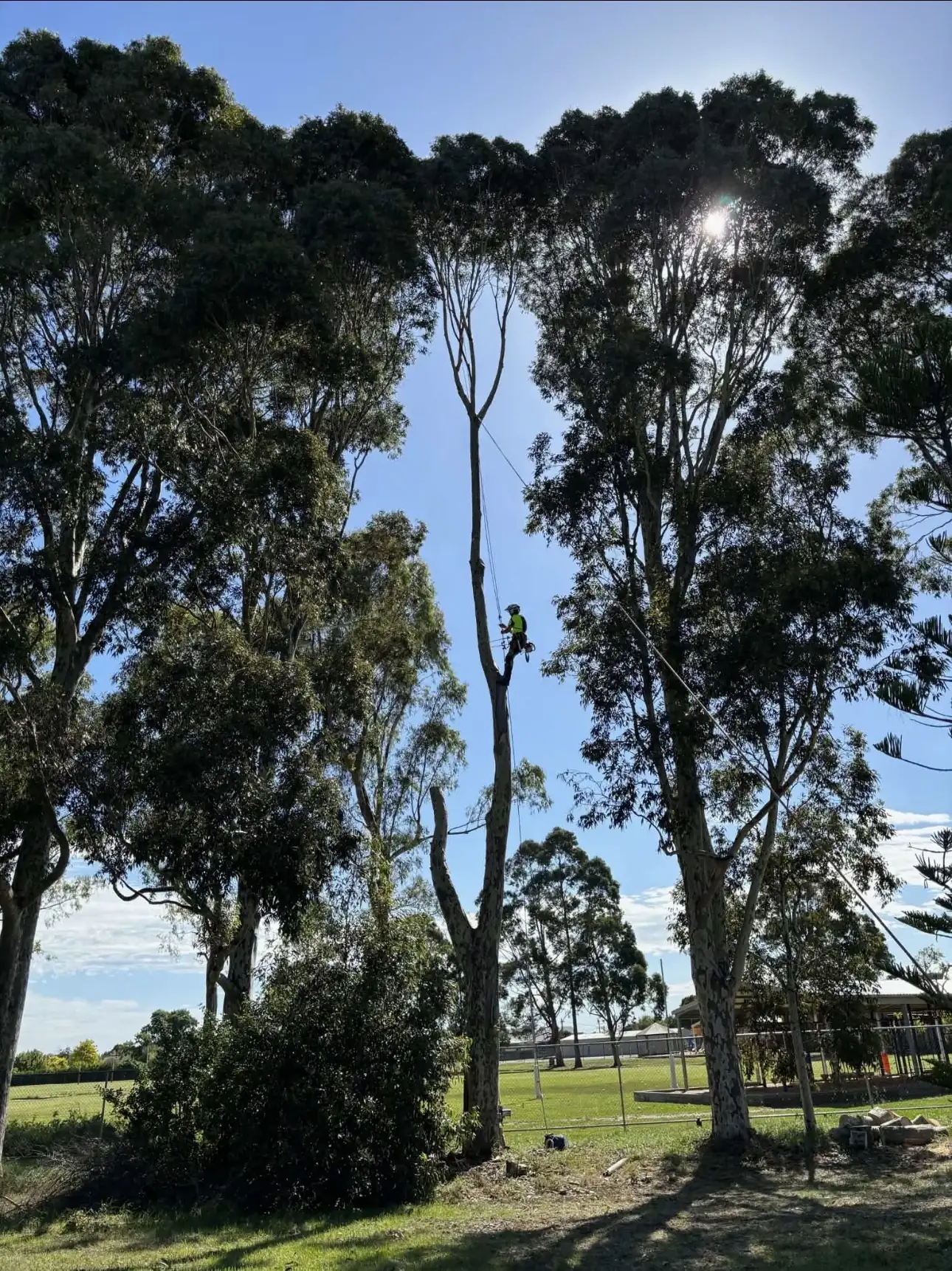
The pruning we do.
- 1
Crown reduction: reducing the size of a tree that has outgrown its space.
- 2
Crown lifting: removing the lowest branches to raise the canopy.
- 3
Weight reduction: taking weight off a heavy limb or stem, so the tree is less likely to fail.
- 4
Crown thinning and deadwooding: letting light and wind through, and taking out dead wood.
- 5
Clearance from buildings, over fences, roofs and neighbours' yards.
- 6
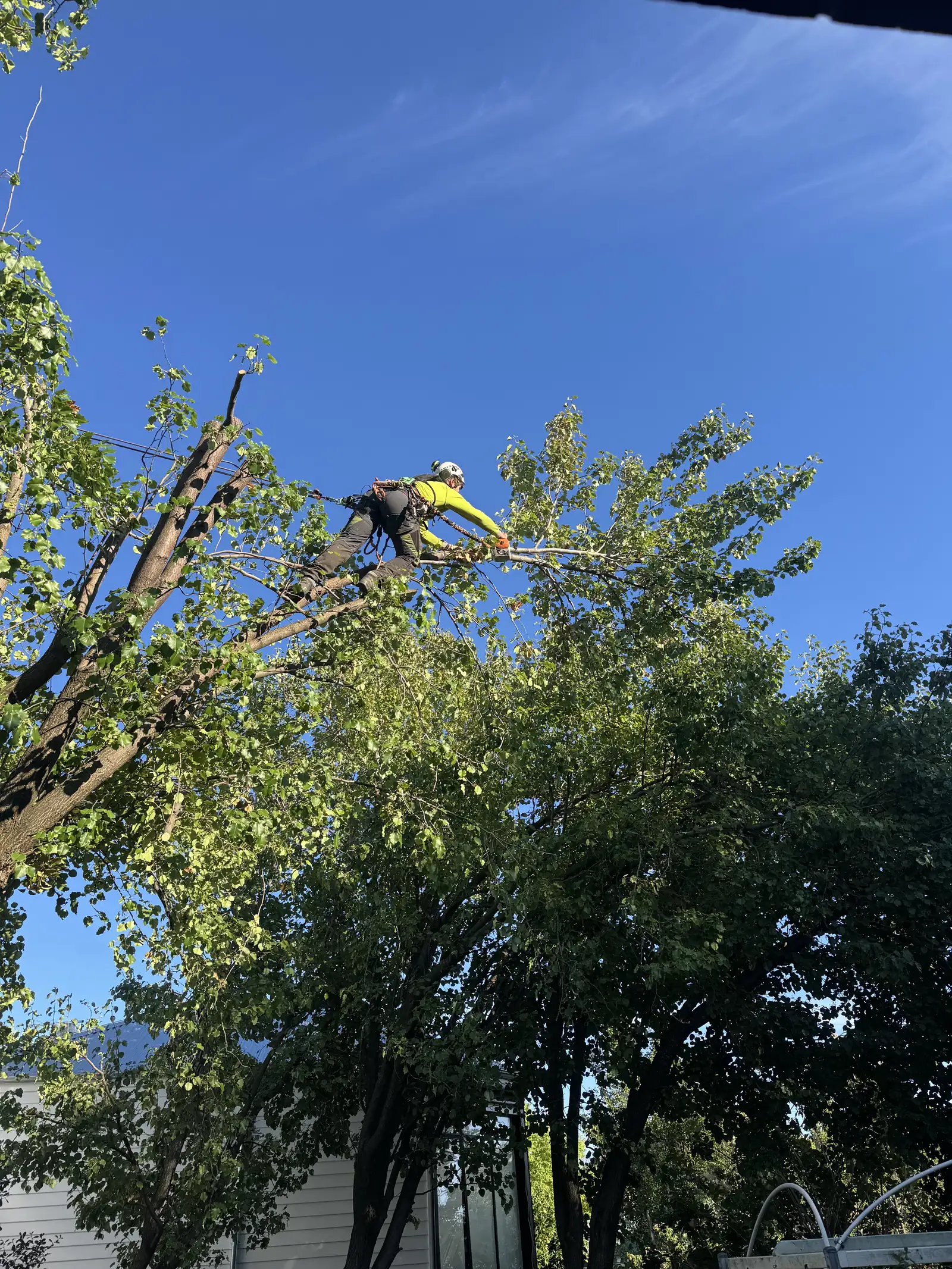
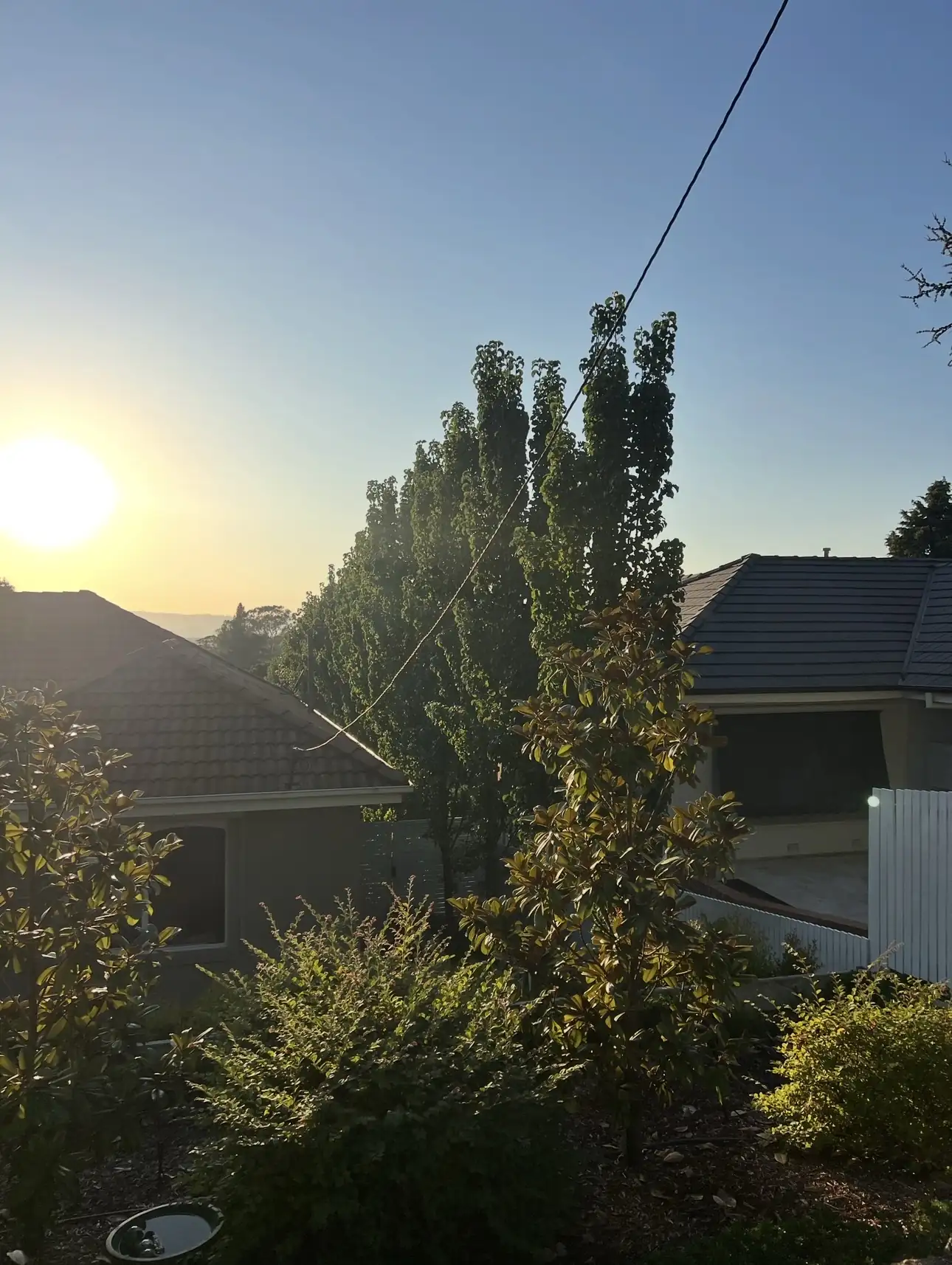
Service wire clearing, to keep trees clear of the power lines to your house.
- 7
Fruit trees, and pollarding where it suits the tree.
- 8
Hedges, from reductions and reshaping to regular maintenance.
How a pruning job goes.
- 1
You talk straight to Drew, who comes out for a free on-site quote and looks at the whole tree: its health, its structure and what it is near.
- 2
Our team makes a plan, tackling the biggest risk first, and explains what will happen when each branch comes off.
- 3
Dead wood comes out, along with crossing and rubbing limbs. Weight is taken off the ends of branches, not stripped from the middle.
- 4
Cuts are made at the branch collar, in the right spot, so the tree can heal without a big wound.
- 5
We never over-prune, because that creates more problems than it fixes. The clean-up is done the way you agreed.
How much comes off.
A small share of the canopy at a time. Our limit is around 15 percent of the canopy volume, done in stages, unless the tree really needs more. Knowing what needs to come off, and what does not, comes from experience.
What bad pruning does.
- 1
Lion-tailing: stripping the branches from the middle of a limb and leaving the weight on the end. All the load sits on the union, and it can fail in wind.
- 2
Lop cutting: chopping branches off at random, which opens the tree to decay.
- 3
Epicormic growth: the tree reacts with a flush of shoots that have no structure, like a limb without ligaments. They are far more likely to snap off in high winds.
Checking the tree while we are up there.
Our team looks at the unions in the tree for cracks, bark trapped inside the join and dominant stems, and for cockatoo and other bird damage, and tells you what we see. If the tree is struggling, we work out why. It might be termites, or ground that is too dry and needs mulching, or too much or too little water, which causes the same reaction. Then we make a plan to fix it.
Trees we prune most.
Gympie messmate, bloodwood, tallowwood, swamp gum, farm trees, African tulip, poinciana and jacaranda, and more.
Near power lines, roofs and neighbours.
- 1
Branches near power lines can be pruned with the right approvals. Sometimes the power has to be shut off, which is expensive. We tell you early if a tree is heading towards a line, so it can be sorted before it gets costly.
- 2
Over roofs, pools and neighbours' yards, the right safety precautions are used, and our team talks to the neighbours when it helps.
How often.
Most trees about every 12 to 18 months, hedges every three to six months. Trees keep growing, and a big growth spurt or a run of weather can put on weight or snap a branch, so a regular check keeps things safe. Some grow back fast: a poinciana can come back in eight or nine months, and palms drop seed pods every three to six months.
Do you need a permit?
Pruning done to Australian Standards by a qualified arborist generally does not need a permit. Permits can be needed to remove trees in some areas, and heritage-listed and protected trees are different: cutting them without the right approval can lead to charges. Check before any cut on a protected tree.
What pruning can and cannot do.
Pruning can cut leaf litter, reduce the risk of failure and let more light onto your lawn and plants. No arborist can guarantee a tree is 100 percent safe, but we can give you clear guidance. Sometimes pruning and removal cost nearly the same, and pruning can even be the harder job. If a tree is healthy and in a good spot, we will say so.
What customers say.
“We have used them from pruning, maintenance and emergency tree removal. I find them reliable, knowledgeable, helpful and thorough.”
“Drew and his team are very efficient and professional, taking care not to damage any property. They clean up the area once finished.”
“Drew was great to deal with from the very first call. He stayed in touch throughout the job and sent photo updates along the way which was great.”
Questions, answered.
When is the best time to prune a tree?
In Queensland you can prune pretty much any time of year. Dead or dangerous branches should come off straight away.
Why not just cut my tree in half?
It is a quick fix that gives you privacy, but it becomes a job you repeat about every six months, pulling the tree back to the same stumps. If the regrowth gets away, the tree is full size again with limbs that have no structure, which is dangerous. We can open the canopy and bring light in by reducing and thinning instead.
How often should a tree be pruned?
Most trees about every 12 to 18 months. Some grow back faster: a poinciana can be back in eight or nine months, and palms drop seed pods every three to six months.
Do I need a permit to prune?
Pruning done to Australian Standards by a qualified arborist generally does not need a permit. Protected and heritage-listed trees are different, and cutting them without the right approval can lead to charges, so check first.
Can I prune it myself?
Many people try, and many fall and make the tree worse. It is quite dangerous. Chat to Drew first.
Can you prune near power lines?
Yes, with the right approvals. Sometimes the power has to be shut off, which is expensive. We will tell you early if a tree is heading towards a line, so it can be sorted before it gets costly.
What if I do not like how it looks afterwards?
That is why we explain each cut before making it, and make a plan, which can include photos marked up with where the cuts go. You are welcome to stay and watch, and to say if you want less taken.
What can pruning fix?
It can cut leaf litter, reduce the risk of failure and let more light onto your lawn and plants. No arborist can guarantee a tree is 100 percent safe, but we can give you clear guidance.
See also.
Get a free quote
Tell Drew what needs doing and where. Send a message and he will get back to you with a free on-site quote. Our team gets everything sorted from there.