Palm tree maintenance.
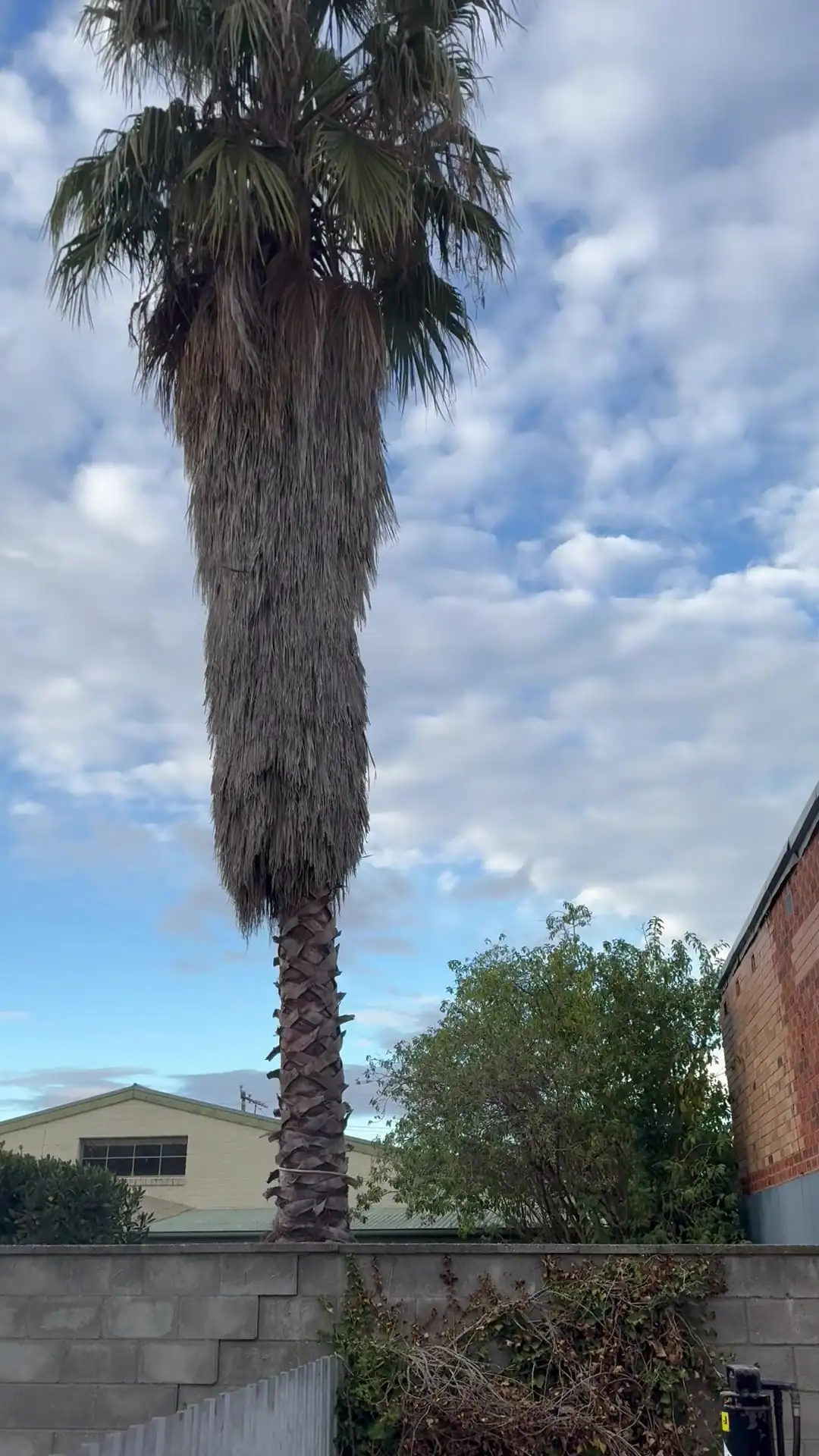
Palms are everywhere in Queensland yards, and they need looking after. Most calls are simple: all the dead fronds need to come off, and the palm needs cleaning up. Dead fronds and seed pods drop onto roofs, cars and pools, and tall palms are hard and risky to work on without the right gear. Our team cleans, tidies and removes them, with a crane when it makes the job safer and cleaner.
What we do with palms.
- 1
Palm cleaning: taking off dead and dying fronds so the crown is clean.
- 2
Removing seed pods and old flower stalks before they fall on paths, cars and pools.
- 3
Pruning and tidying the crown so the palm looks neat.
- 4
Removing whole palms that are too big, too close, rotten, diseased or leaning.
The palms we see most.
Cocos palms and phoenix palms are the most common in this area.
Why the seed pods matter.
Many palms stand in pool areas, and the seed pods are heavy: a cluster can weigh up to 30 kg. One falling can seriously hurt someone. Falling pods and fronds can also crack pavers and damage structures, and some palm seeds are poisonous to pets and other animals if they eat them.
How a palm clean-up goes.
- 1
You talk straight to Drew, who looks at the palm and its surroundings and quotes on site.
- 2
Our team climbs the palm, or uses an elevated work platform, and takes off the dead and dying fronds and the seed pods.
- 3
We do not over-trim. If you ask for more than the palm can take, we advise the best way to protect it, and clients usually trust that advice.
- 4
The fronds, trunks and seed heads are mulched and taken away. If you would rather burn them or keep them, that is fine. Drop-and-leave jobs are possible too, and you do the clean-up.
How often.
To keep palms as spick and span as possible, every three to six months. Every three months is the usual rhythm. The seed pods and fronds grow back fast, though small, so a regular clean-up keeps the yard safe and neat.
Removing a palm.
- 1
A palm that is rotten, diseased or leaning needs to come out.
- 2
A crane is the best way when there is access. The palm is secured, lifted and carted away in big sections, usually in about an hour. It is cleaner and safer, and often costs about the same as doing it by hand, because of the labour it saves.
- 3
Where no crane can reach, the palm is taken down in sections, or climbed and rigged down.
- 4
When a palm comes out, the stump is poisoned so it does not grow back. For hardy palms, the stump can be treated for a couple of weeks before it is ground out, to kill the roots.
Why use a qualified arborist for palms.
Unqualified palm work can bring down fronds on people, take out gutters, smash pool pumps, damage fences and sheds, break pavers and hit overhead lines. Near houses, pools and fences, we assess the job first and use the right equipment for it, with a crane where possible.
Bats, snakes and other visitors.
Palms that are not maintained get messy and become dirty, and bats, snakes and other creatures start sheltering in them. A properly pruned palm leaves less shelter, so keeping palms pruned helps keep them away.
Do you need a permit?
Usually not for palms, but it can depend on the palm, such as some phoenix palms, and every area is different. Check with your council before removing a palm.
What customers say.
“He did an excellent job cutting down 2 palms, very professional. The mess was all cleaned up and taken away with no effort.”
“Had Drew here for my palm trees. I can’t recommend him highly enough. Great job and great price and really nice guy.”
“Drew removed a problem palm for me last year before it caused any damage. Great quote, quick and efficient and great outcome.”
Questions, answered.
How often should a palm be cleaned?
To keep it as spick and span as possible, every three to six months, and every three months is the usual rhythm. Seed pods and fronds grow back fast, though small.
Why remove the seed pods?
They are heavy: a cluster can weigh up to 30 kg, and many palms stand over pools and paths. One falling can seriously hurt someone. They can also crack pavers, and some palm seeds are poisonous to pets and other animals if eaten.
Why use a crane to remove a palm?
It is cleaner and safer. The palm is lifted out in big sections, often in about an hour, with far less mess and no risk to what is underneath. It often costs about the same as doing it by hand, because of the labour it saves.
What happens to the fronds and trunk?
They are mulched and taken away. If you would rather burn them or keep them, that is fine. Drop-and-leave jobs are possible too, and you do the clean-up.
Will the stump grow back?
When a palm is removed, the stump is poisoned so it does not regrow. Hardy palms can have the stump treated for a couple of weeks before it is ground out, to kill the roots.
Do palms attract bats and snakes?
Palms that are not maintained get messy, and bats, snakes and other creatures start sheltering in them. A properly pruned palm leaves less shelter.
Do I need a permit to remove a palm?
Usually not, but it can depend on the palm, such as some phoenix palms, and every area is different. Check with your council before removing one.
See also.
Get a free quote
Tell Drew what needs doing and where. Send a message and he will get back to you with a free on-site quote. Our team gets everything sorted from there.