What is land clearing, and what does a job involve?


What is land clearing? It is the job of taking trees, scrub and regrowth off a block so the land can be built on, fenced, farmed or simply used. Block clearing means exactly the same thing.
This guide covers the names people use, how a job runs from the first visit to the last pass, and what the law counts as clearing in Queensland. It also covers looking after the soil, plus a checklist to run through before any machine turns up.
No two blocks are alike. Steep, wet, rocky or overgrown ground each changes the method. A look at the real block always comes before a price.
Short answer first, then the detail. Clearing is about getting a piece of land ready. Everything below is about doing it in the right order.
What is land clearing in plain words
Land clearing is taking the trees and scrub off a block. That is the whole idea. The reason varies. Someone wants to build. Someone wants a fence line, a track or a dam. Someone bought a place that had grown over and wants it usable again.
So what is land clearing in practice? It is a short chain of jobs. Walk the land. Agree what stays. Remove what goes. Deal with the timber. Leave the ground ready for the next trade.
Typical jobs look like this:
- a house block cleared before building starts
- acreage or rural land that has grown over
- paddocks, fence lines and tracks
- an overgrown back yard or a forgotten corner
- a block being tidied for sale
- a site for a shed, driveway, dam or solar
It is not the same as tidying a garden, and it is not the same as pruning. It is bigger, and it changes the land, which is why the rules matter. More on those below.
Land clearing, block clearing and other names
You will hear a handful of terms. Most mean the same job at a different size.
Names you will hear
| Term | What people mean | Usual setting |
|---|---|---|
| Land clearing | Removing trees and scrub so land can be used | Acreage, paddocks, rural blocks |
| Block clearing | The same job on a house lot | Building blocks, back yards |
| Site clearing | Getting a spot ready for a shed, driveway or dam | Any block with a plan for it |
| Forestry mulching | A method: scrub ground up where it stands | Steep, thick or hard to reach ground |
The first three are names for the job. The last is one way of doing it. We use both, and the right one depends on the block.
How a land clearing job runs
Here is the order we work in. It does not change much from block to block.
A clearing job, start to finish
- Drew walks the block with you and agrees what stays and what goes. The quote is done on site.
- We check for fences, boundaries, underground services and anything that needs approval.
- The trees come down and the scrub is cleared.
- The timber and green waste are dealt with the way you agreed.
- The block is left ready for the surveyor, the builder, the fencer or you.
Slope and access shape the whole plan. A flat paddock with a wide gate is simple. A steep hillside, a narrow driveway or a block with a creek along one side needs more thought, and sometimes a different machine. Weather plays a part as well, because wet ground slows everything and can damage the land.
Step one matters most. A walk on the land shows things a photo never will: a soft patch, a hidden gully, an old fence line, a tree you would rather keep. Everything is written into the quote, so you know what you are agreeing to.
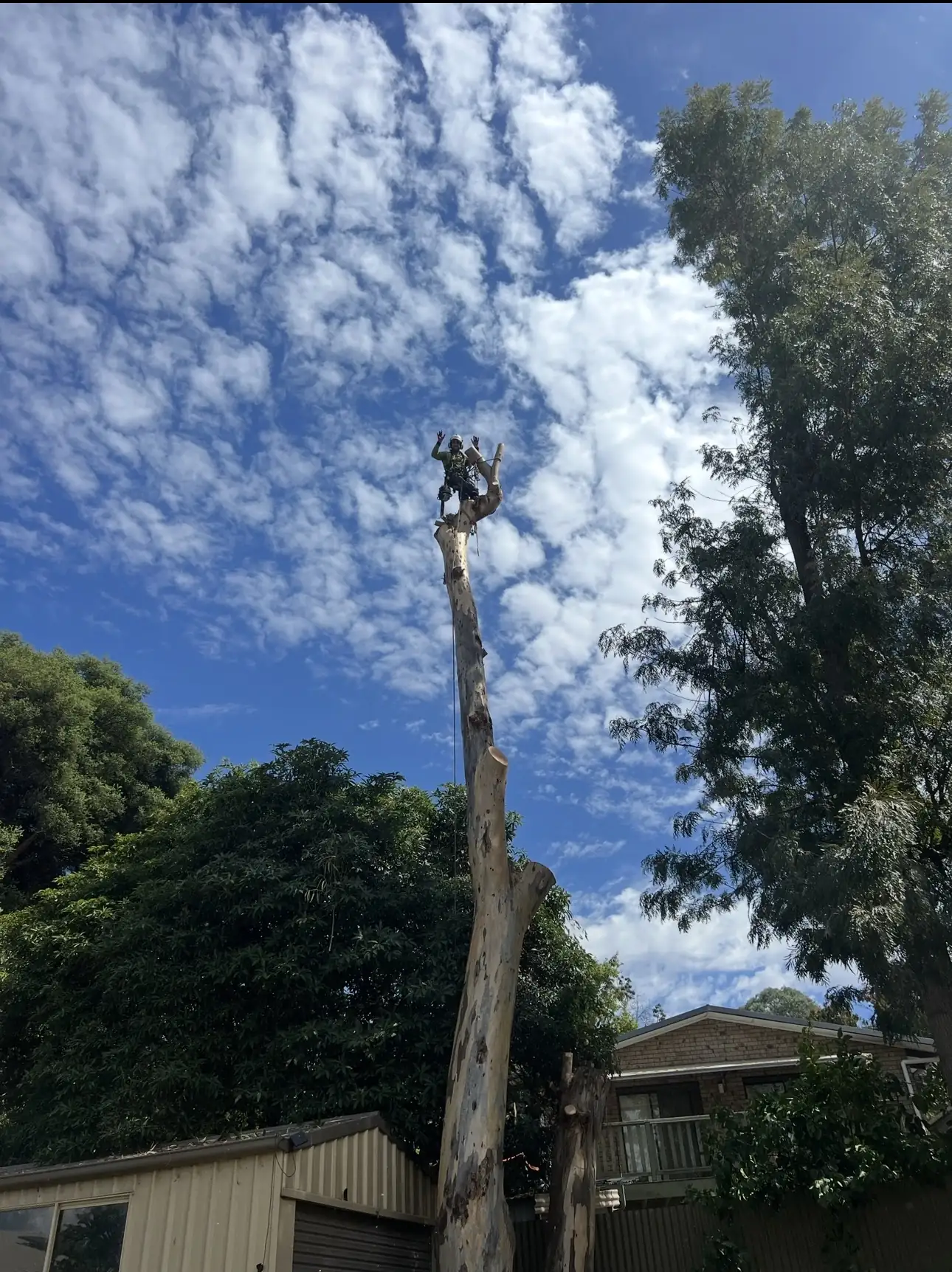
Safety gets its own step. Before the machine starts, we assess the site and the job for risks. If the work sits near a road, traffic management is arranged. Neighbours are told what is happening and when, and we are glad to explain the job over the fence if they ask. Small courtesies like these keep a clearing job calm.
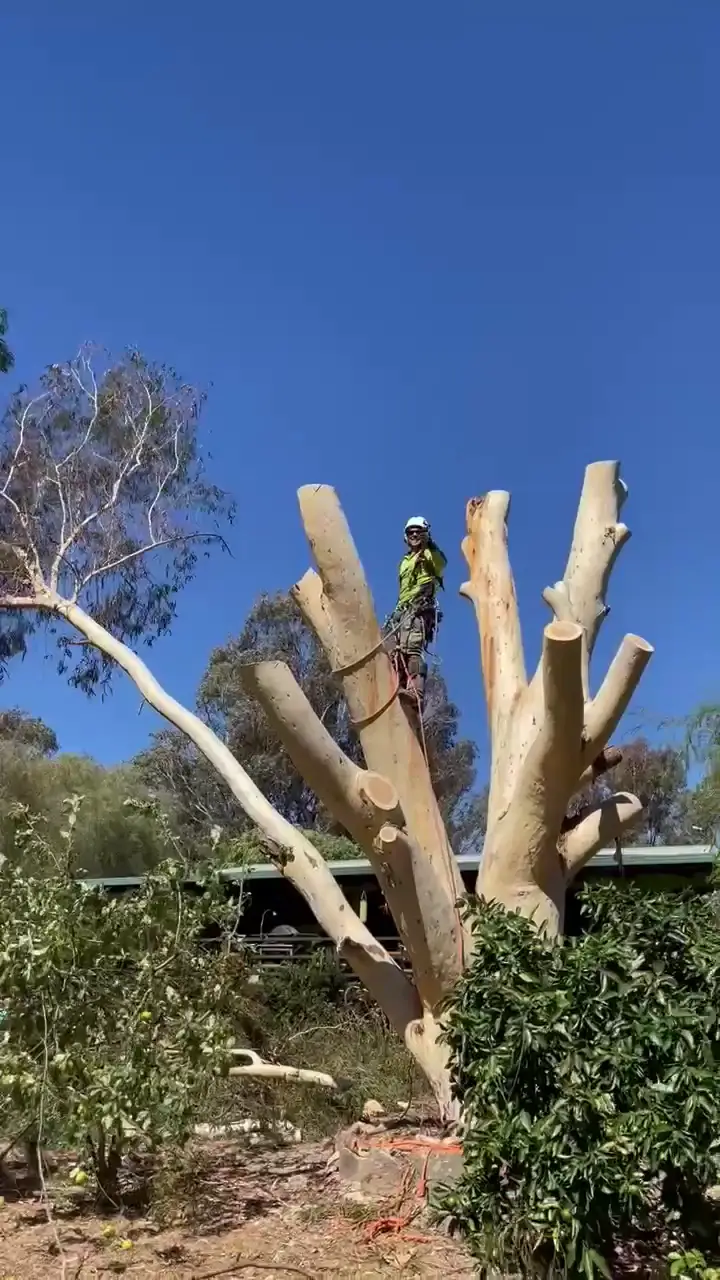
Our team plans what stays as carefully as what goes. A good tree on the edge of a building site can be the best feature the finished place has.
Drew was fantastic. Responsive, efficient, knowledgeable and accommodating. Will definitely be calling on Drew and his team again.
Forestry mulching: scrub ground up where it stands
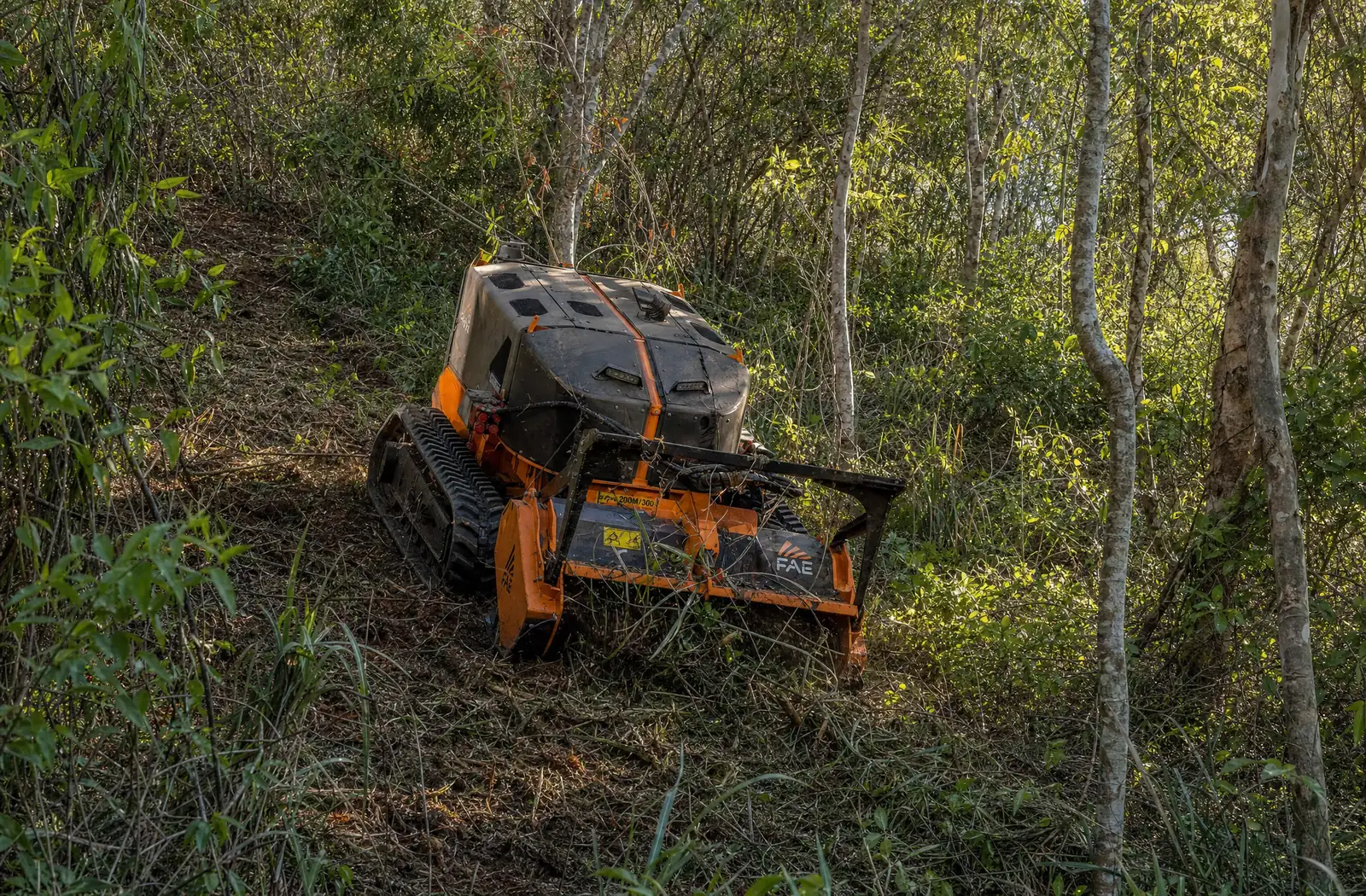
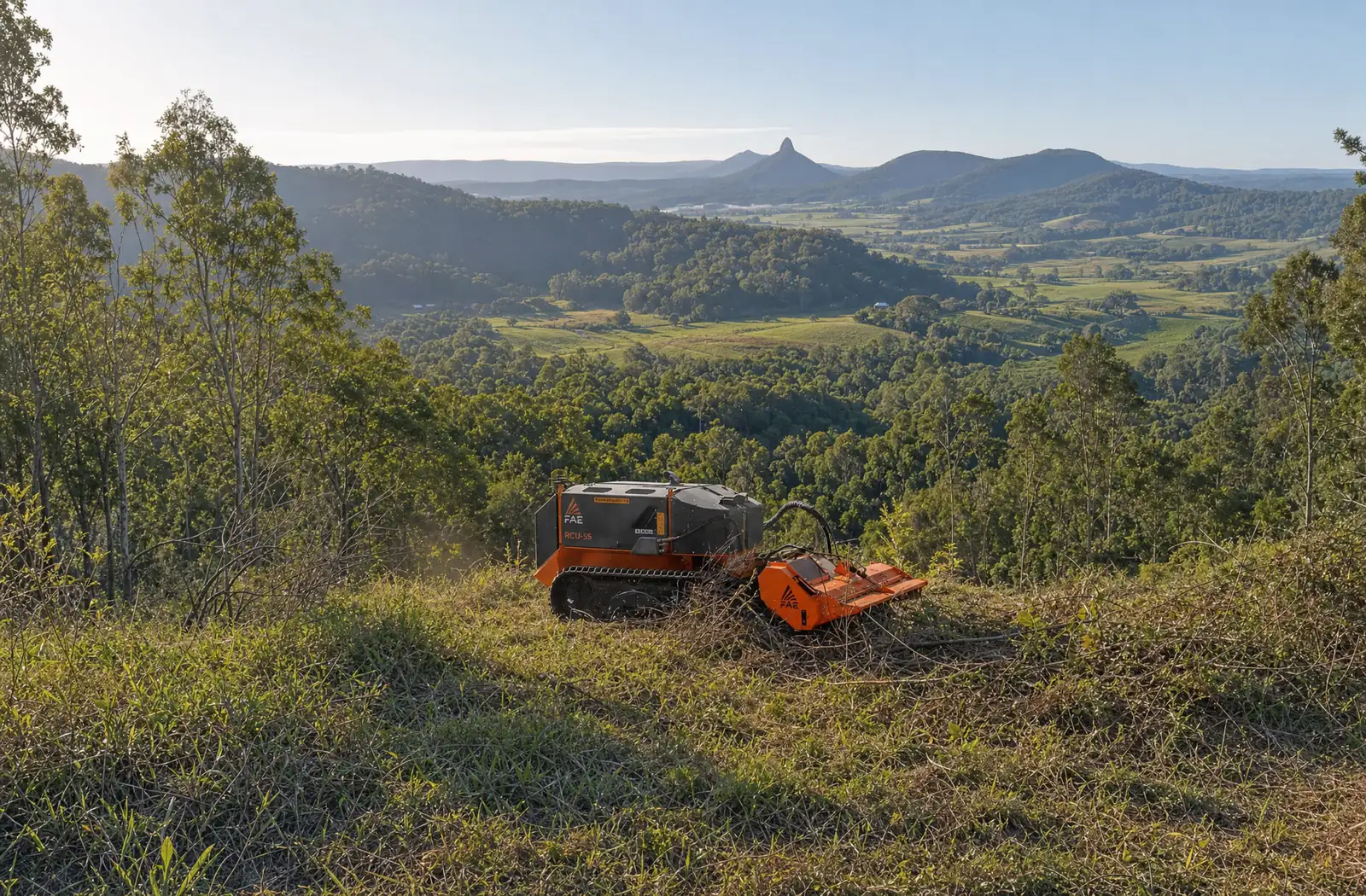
Forestry mulching is one of our clearing methods. A tracked machine grinds trees and scrub into mulch right where they grow. There is far less to haul away, and the ground is left covered rather than bare.
Our machine is driven by remote control. The operator stays well back from the cutting. That also lets it work on steep hills and in dense growth where people and normal machines cannot go safely.
It does not suit every block. Big timber might be taken down first and the mulcher comes in last to grind what remains. Drew will say which method suits your land. You can read the full detail on our land clearing page.
What the law counts as clearing in Queensland
Many people are surprised by how wide the word is. The Queensland Government says clearing includes removing, cutting down, ringbarking, pushing over and poisoning vegetation, and destroying it in any way, including by burning, flooding or draining [1]. Lopping a tree, meaning cutting or pruning branches without removing the trunk, is left out [1].
The word vegetation has a meaning too. It means a native tree or plant. Grass, non-woody herbage and mangroves are left out [1].
The state rules reach most types of land, freehold land among them [3]. Clearing falls under one of a few headings: exempt activities, clearing codes you must notify first, area management plans, and development approvals [2]. Which one applies depends on the purpose, the type of land and how the vegetation is mapped [2].
Councils add their own layer. On the Sunshine Coast, the council says removing protected vegetation can need a permit, and protection can come from the planning scheme, covenants, overlays, drainage easements or conditions of a development approval [4]. It also says exempt clearing may still need to be notified to council [4].
Some areas carry extra limits. The same council says koala priority areas have strict clearing restrictions [4]. The state goes further for South East Queensland, where koala habitat in priority areas cannot be cleared unless an exemption applies [8]. Koala spotters and staged clearing are still required for exempt work [8]. Each council has its own wording, and the details get updated. Do not assume a rule does or does not cover your land. Check before anything is cut, and we will help you sort out what applies.
Wildlife is part of the picture too. Before any cutting, our team checks for nests, hollows and dens. If an animal turns up, we pause or change the plan so it is not hurt. Tell Drew early if you know something lives on the block.
Want this looked at on your own property? The on-site quote is free.
Checks to make before you clear
Most clearing trouble starts with a skipped check. Run through these first.
Before the machine arrives
The Queensland Government points landholders to a free property report and vegetation map as a first step [2], and the framework page lists the same questions: which vegetation is regulated, whether a notification or permit is needed, and which other laws may apply [3].
Underground lines need care too. A cable can lie almost anywhere on a block, says Business Queensland, and a strike can cut services and hurt people [7]. Its answer is a free lookup, Before You Dig Australia, which shows pipes and cables for power, gas, water and phone lines [7].
Separate rules also protect certain native plants in the wild, such as threatened ones, although plants in gardens are not covered [6]. In some mapped areas a survey by a qualified person comes first. Some jobs are exempt, including firebreaks [6]. Do not guess here. Ask.
A quote should spell all of this out. When you compare clearing quotes, ask a few plain questions:
- Which method is planned, and why does it suit this ground?
- What happens to the timber and the green waste?
- Who checks for approvals and underground services?
- What happens if the weather turns, or the job changes on the day?
Honest answers to those tell you more than the total at the bottom of the page. If a quote cannot answer them, ask again before you sign. A clear plan on paper is the best sign that the work on the ground will go the way you expect, and it gives you something to point to if anything changes.
Look after the soil once the scrub is gone
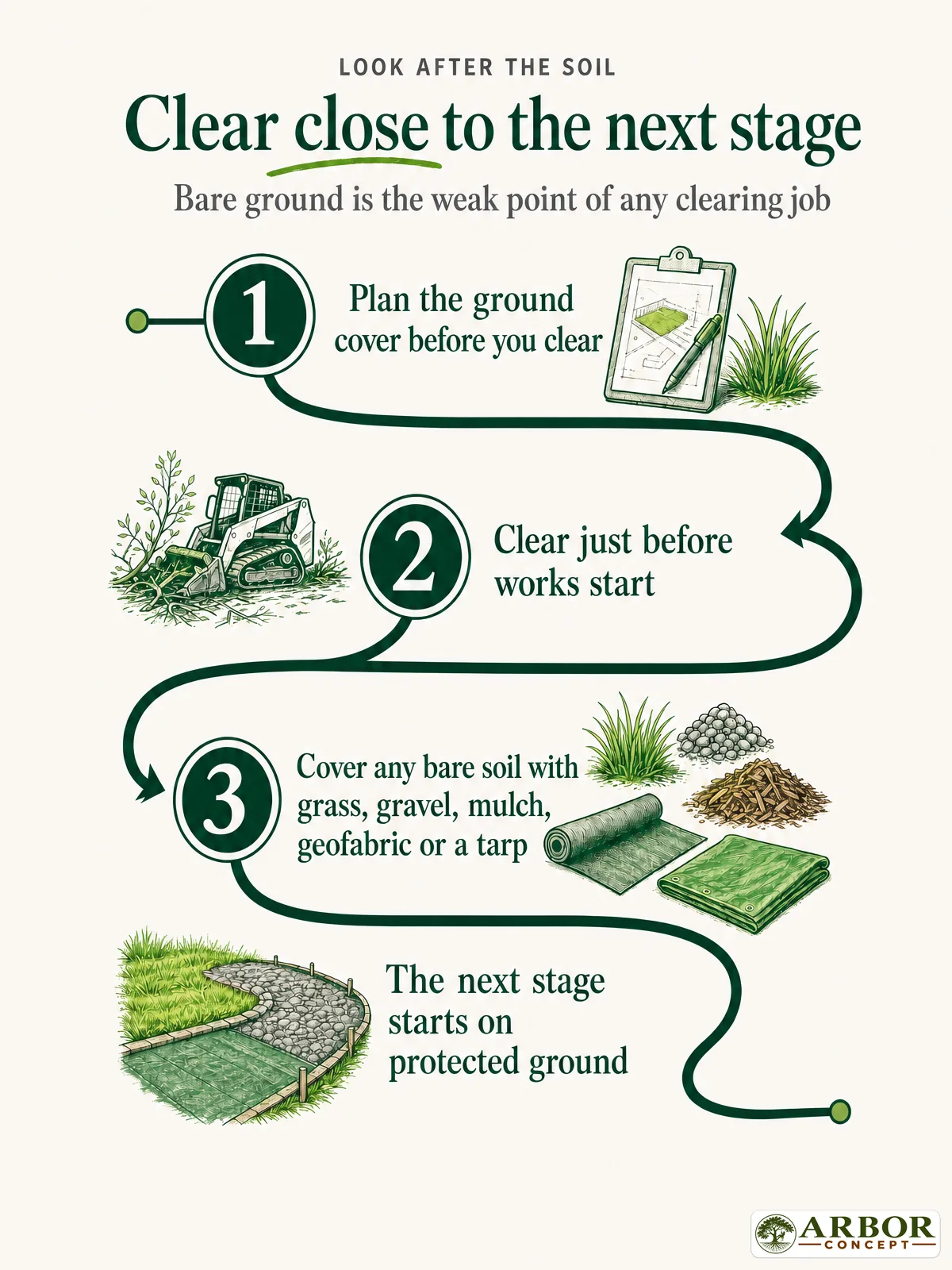
Bare ground is the part people forget. Much of the sediment that washes into waterways comes from the exposed soil of cleared land, and the best defence is to leave as little soil exposed as you can [5]. The council’s advice to builders is to clear only just before works start [5].
Plan the cover before you clear. Grass, gravel, mulch, geofabric or a tarp can all protect bare soil until the next stage is in [5]. Mulch from the clearing itself is a handy way to do it, which is one reason the ground-up method suits many blocks.
Weather matters as well. Heavy gear on soaked ground makes a mess of the land and the machine. Unless there is a real reason to rush, we wait for the ground to dry. If a fine lawn sits near the work, track mats can be quoted in, and that is always your choice.
Clearing: good habits and bad ones
- Clear close to the date the next stage starts.
- Decide on the ground cover before the machine arrives.
- Keep a note of what was agreed about the timber.
- Leave the good trees you want to keep, and say so up front.
- Clearing months ahead and leaving the soil bare.
- Working on soaked ground to save a week.
- Starting before you know what the council or state requires.
- Trying steep or dense ground with a chainsaw yourself.
Drew was great to deal with from the very first call. He stayed in touch throughout the job and sent photo updates along the way which was great. Drew and his team got there on time and did a fabulous job. Prices are reasonable and you can see there is a sense of pride in their work, super easy to deal with, polite and friendly. Thanks Drew and team, i am very happy with the end result.
Where the timber and green waste end up
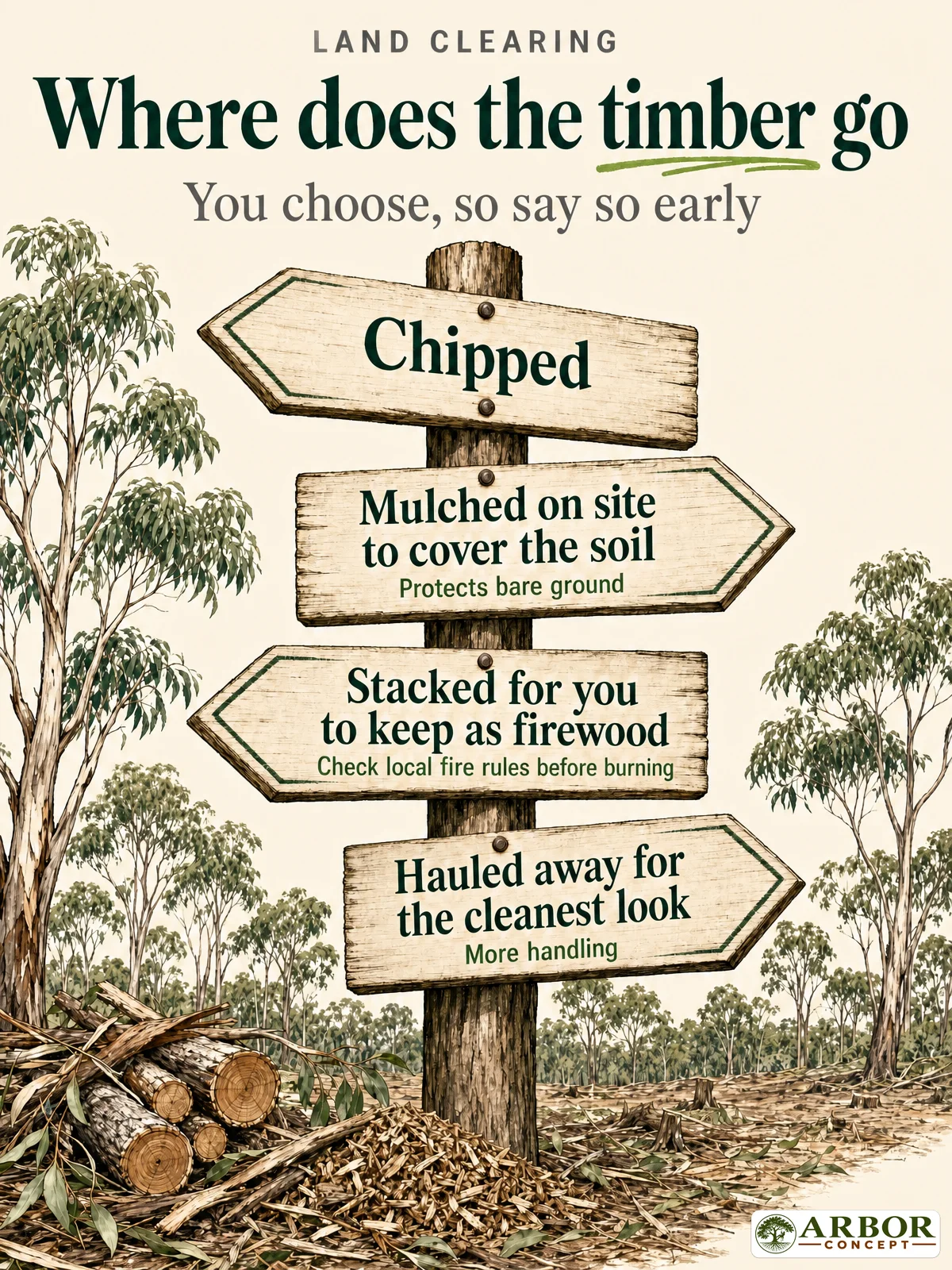
Every clearing job leaves a lot of plant material. You choose what happens to it. It can be chipped, mulched on site, stacked for you to keep or hauled away. Say which you want early. A job that leaves the mulch on your block is built differently from one that takes everything off.
Think about the finished block as you decide. Mulch spread back over bare ground covers the soil. Stacked timber gives you firewood to burn later. Hauled-away waste leaves the cleanest look but means more handling. Pick the one that suits what you plan to do with the land.
Large logs can also stay where they fall on rough parts of the block. Do not burn piles of cleared vegetation without finding out what the local fire rules allow, since those can differ by area and by season.
When to call in a clearing team, and when to skip it
A few weeds, a patch of long grass or a small shrub are no reason to hire anyone. Grass and non-woody herbage fall outside the clearing laws anyway [1]. A mower and an afternoon will do.
You do need one when:
- the growth is dense, tall or woody
- the ground is steep, rocky or wet
- trees stand near a house, fence, line or boundary
- the land is going to be built on, fenced or sold
- you are unsure what the council or state allows
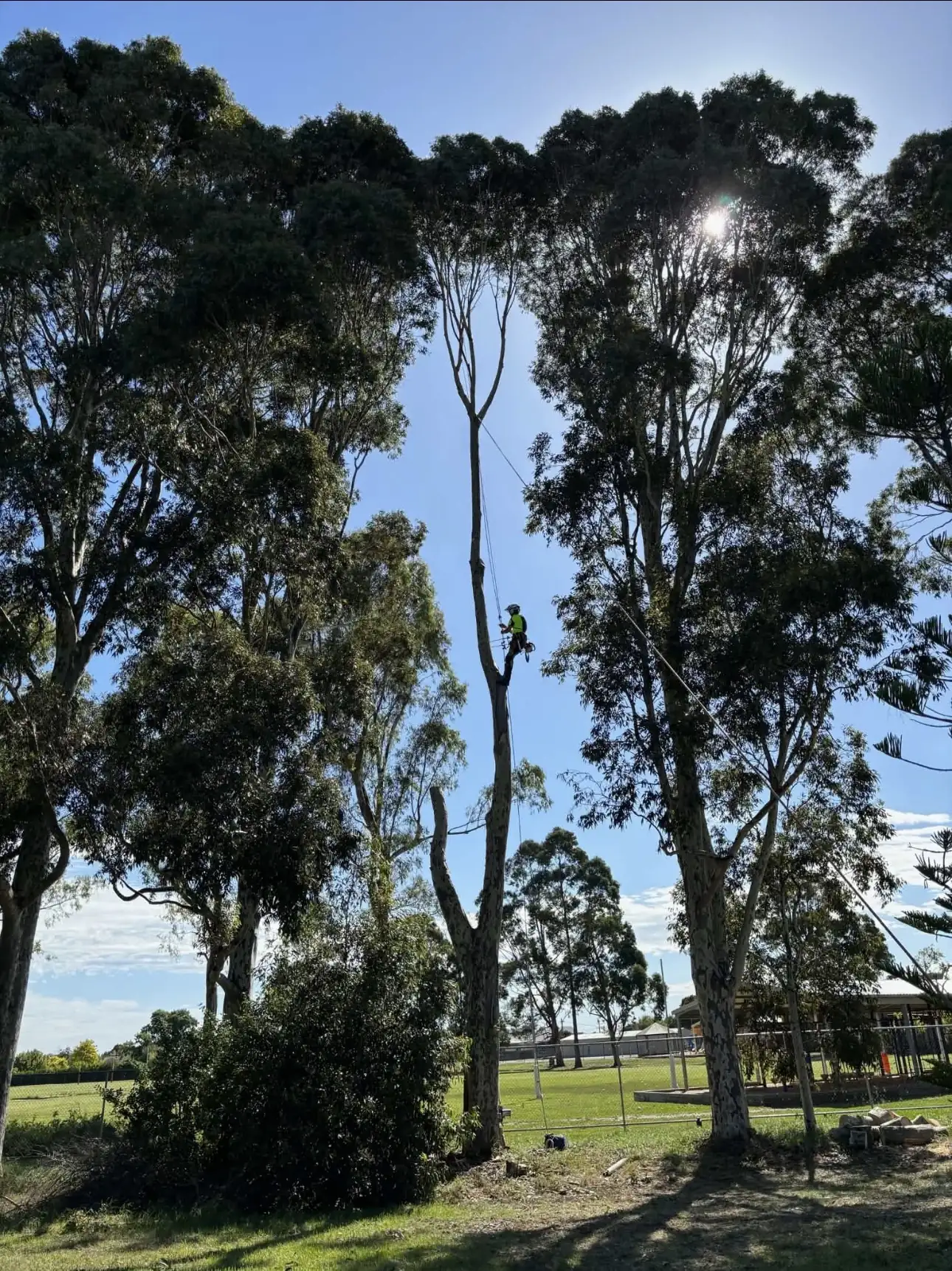
Dangerous work like felling large trees or driving heavy machines on slopes is for a qualified arborist and the right gear, not for the owner with a borrowed saw.
Here is how we handle it. You speak straight to Drew. He visits the block and gives you the quote at no charge. After that, our team does the clearing. Ask about pensioner and local discounts while he is there. To see how we put a price together, read our how we quote page, or get in touch and describe your block.