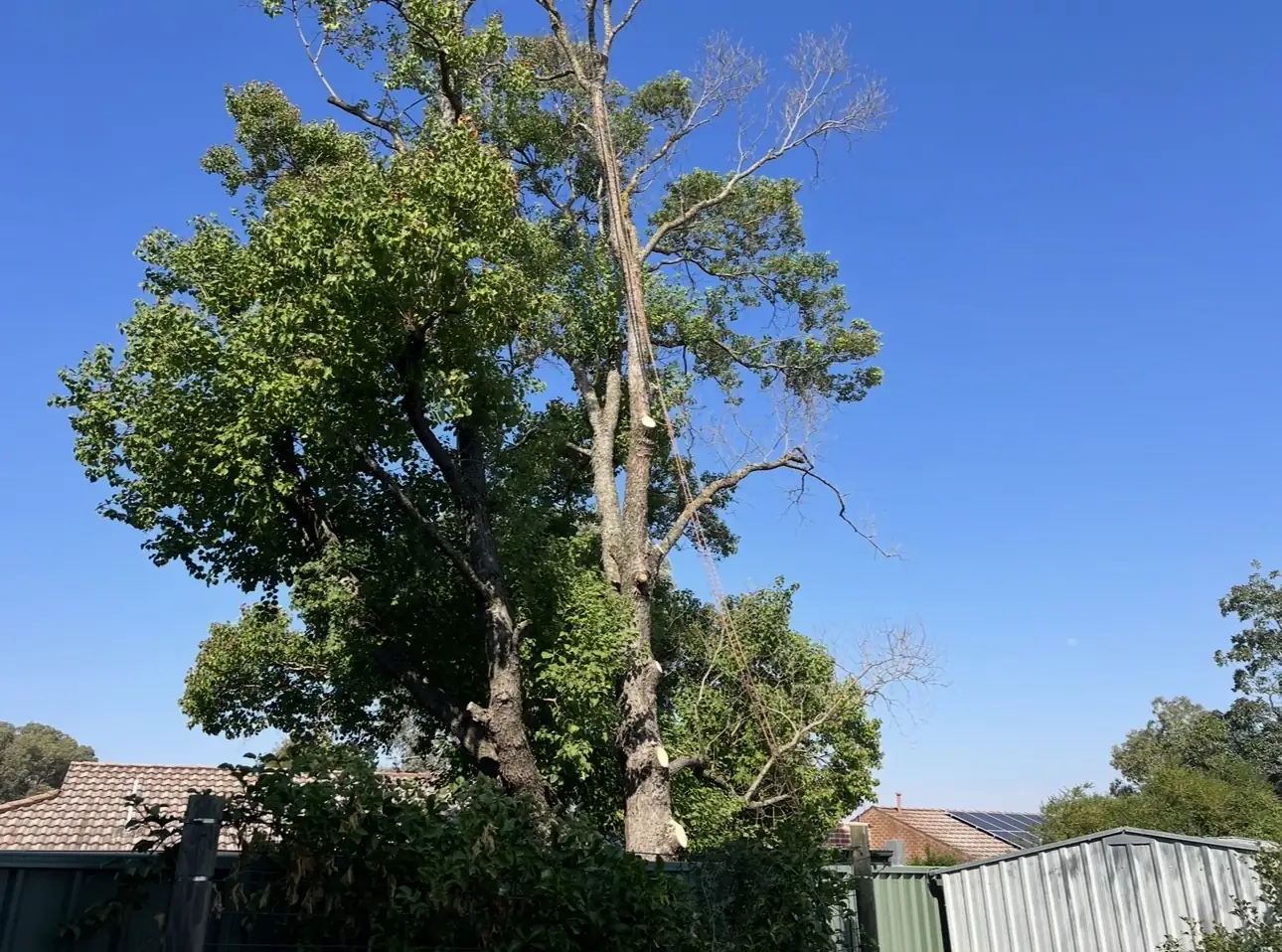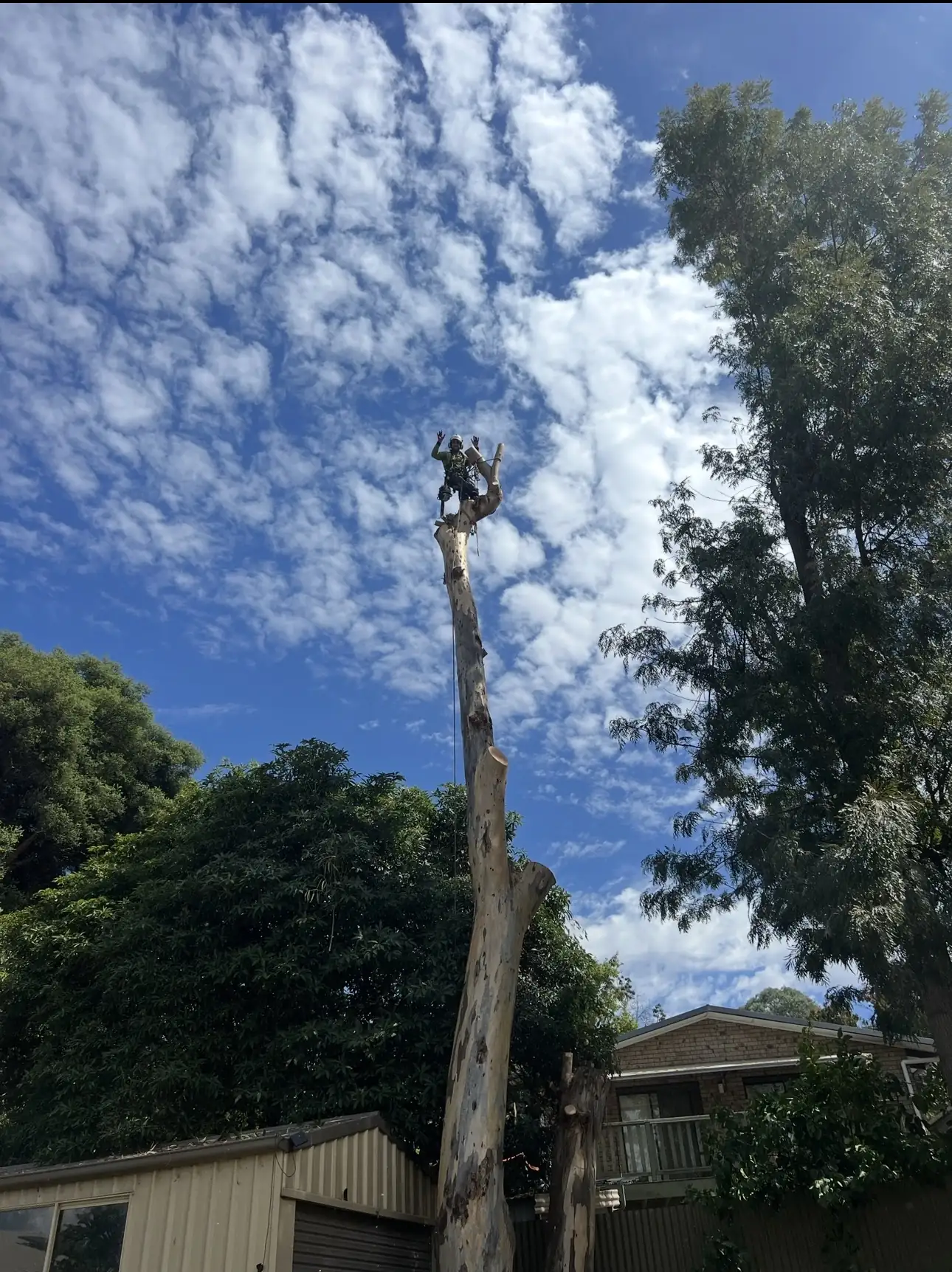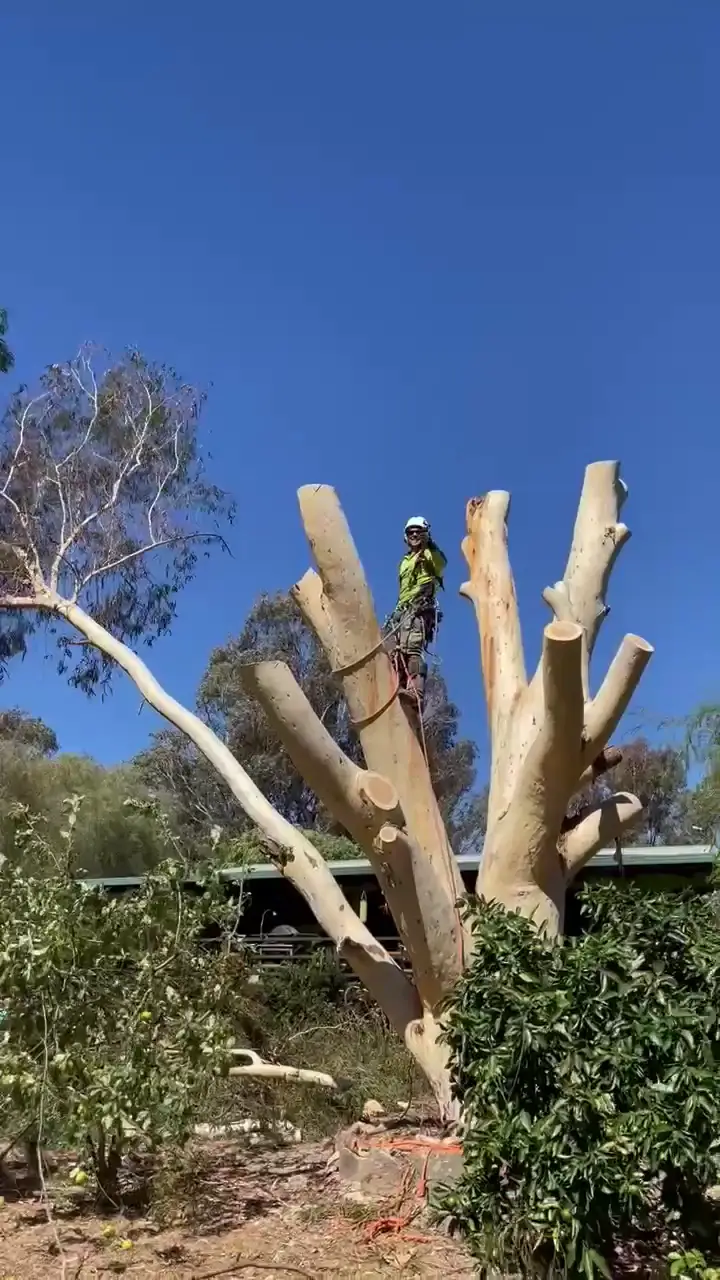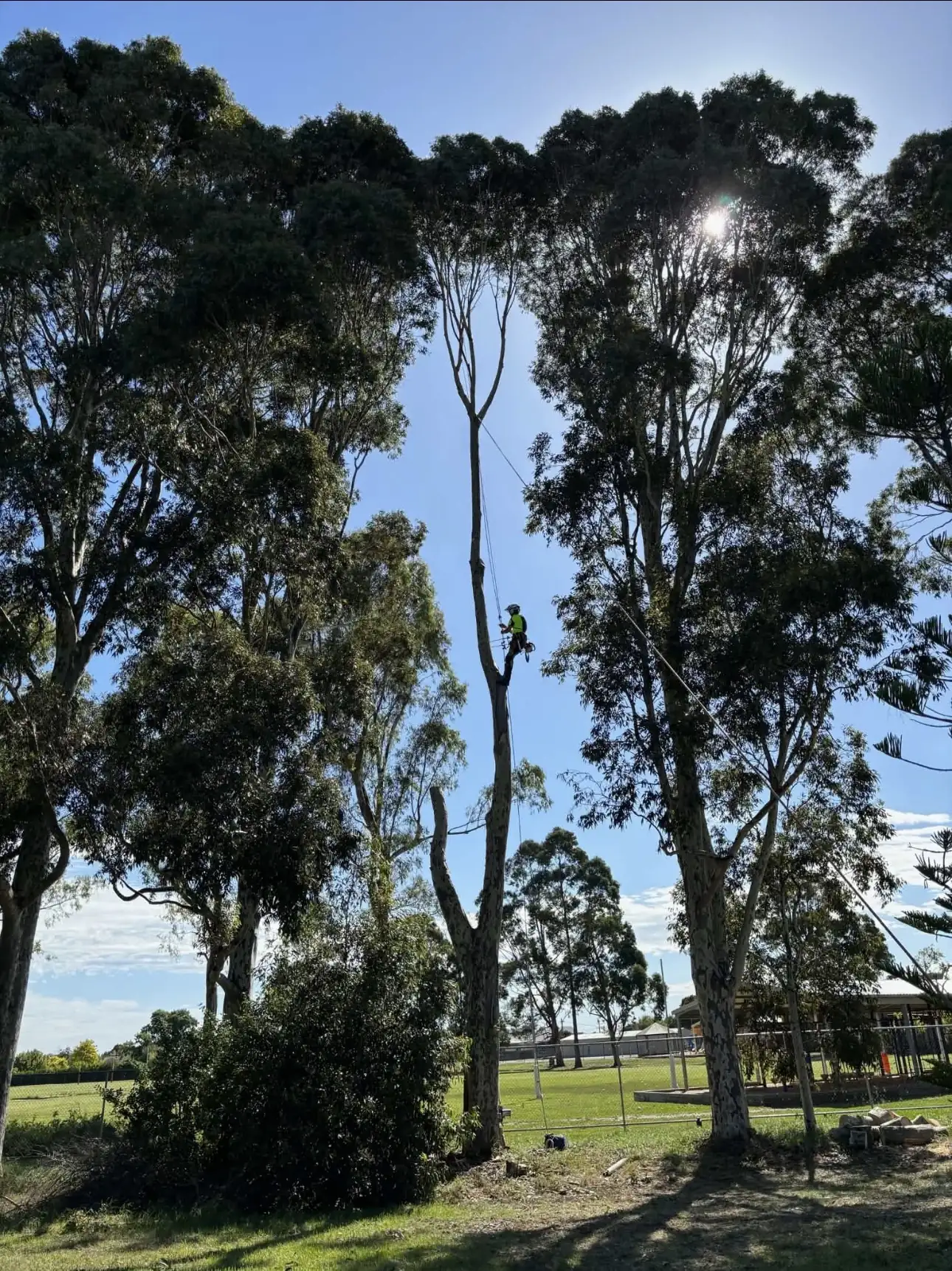
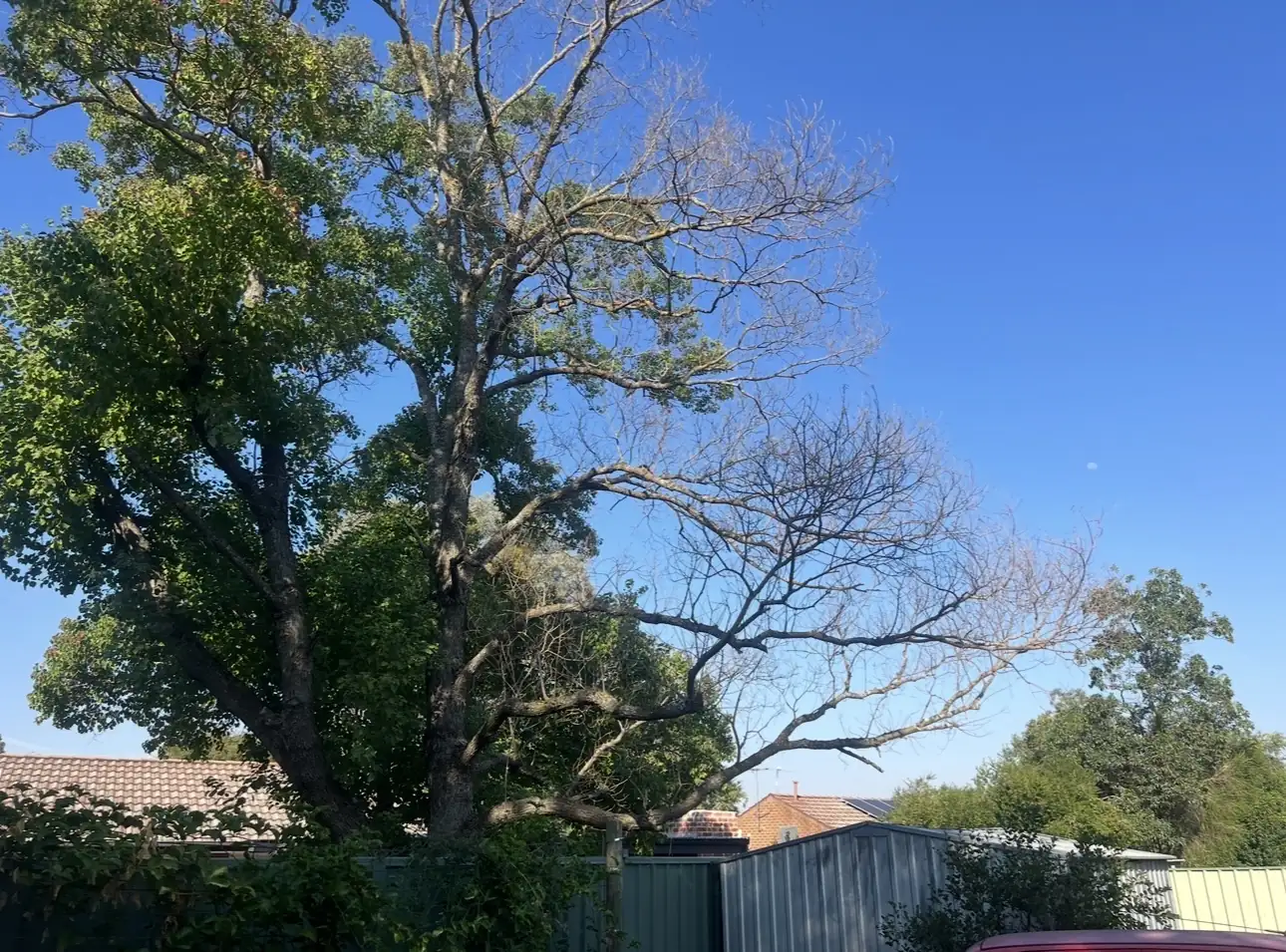
What is a hazard tree, and is one standing in your yard?

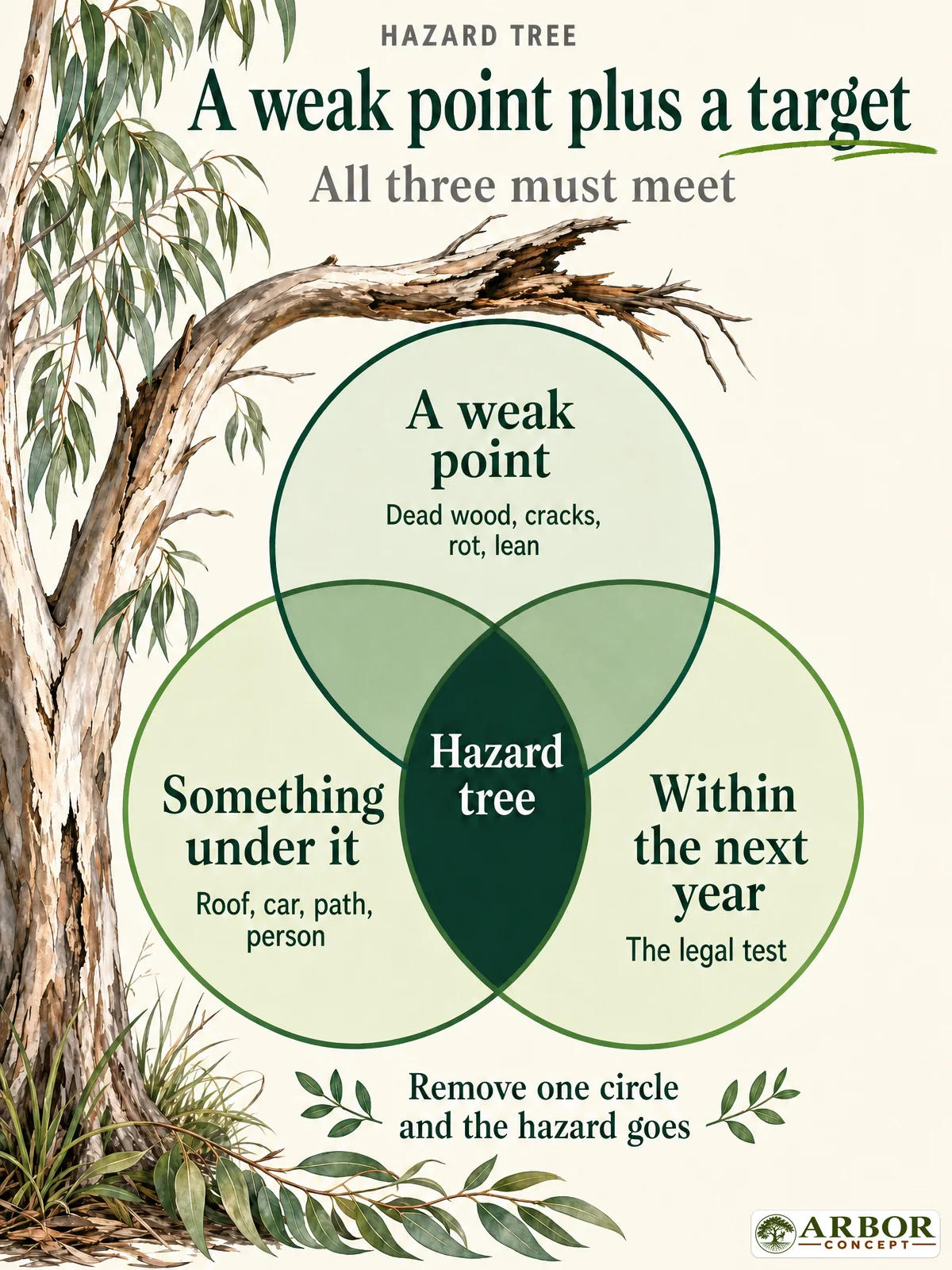
What is a hazard tree? It is a tree with a weak point and something valuable under it. The weak point might be dead wood, a crack, rot or a lean. The valuable thing might be a roof, a car, a path or a person. Remove either one and the hazard goes.
This guide sets out the test in plain steps. It covers the warning signs, the way Queensland law looks at a tree that may hurt someone, what to do after a storm, and what a council will and will not do.
A guide can point at the signs. Only a look at the real tree, its roots and what stands under it can say how serious they are.
Most trees are not hazards. A tall gum with sound wood in an open paddock is just a tree. The label means something narrower than most of us think.
What is a hazard tree? Two parts, not one
A hazard tree has two parts. The first is a defect: something wrong with the tree that makes a failure possible. The second is a target: a person or a thing that would be hit if the tree or a limb let go.
No target, no hazard. A rotten tree in the middle of a big empty paddock is a sad tree, but it threatens no one. The same rot beside a bedroom wall is a different story.
No defect, no hazard either. Size alone proves nothing. A big tree with sound wood and a good shape can stand through weather that drops a smaller, weaker one.
So what is a hazard tree in practice? A defect plus a target. We don’t ask “is it big?” We ask what has gone wrong in the wood, and what sits beneath. Tree safety and management is the work of answering both questions, then choosing the lightest fix that makes the risk small enough.
The legal yardstick: serious harm within a year
Queensland does not use the words hazard tree for neighbour matters. It uses a plainer test. Within the next 12 months, a tree should not be likely to seriously injure anyone on the neighbour’s land, or seriously damage that land or the property on it [2].
The tree-keeper is usually the registered owner of the land the tree grows on [1]. A tree that is mostly on your land is your responsibility, even when it stands on the boundary [1]. The duty covers the whole tree, and that includes the roots [1].
Liability follows from this. If a tree from your land damages a neighbour’s property, you may still be liable as the tree-keeper [1]. The same page suggests checking the insurance of whoever you hire before they work on a tree [1]. Our team is public liability insured.
None of this means your tree is a problem. It means the owner is the person who needs to know the rules.
Think of it as a yearly question. Once a year, ask whether this tree could hurt someone in the next twelve months. If the honest answer is maybe, it is time for a closer look.
Warning signs in the tree itself
Check from the ground. Never climb a tree to inspect it.
Eight signs worth a closer look
A leafy crown can hide trouble, so look again after a dry spell or after leaf drop. One sign on its own is rarely a verdict. A dead twig is nothing. A dead limb as thick as your arm over a carport is something. Two or three signs together, on a tree with a target under it, is the moment to get in touch.
Chose Drew and the team as they had great reviews. Wasn’t disappointed at all. Drew gave me a quote to remove a pine that split and advice on another tree that was looking at doing the same. They were able to get it done quickly and to a great standard. Very happy with the service.
What stands under the tree changes the answer
The same defect can be harmless in one spot and serious in another. Work out what a failure would hit.
Targets and the question to ask
| Under the tree | What a failure could do | The question to ask |
|---|---|---|
| A roof or bedroom wall | Break the roof and put people inside at risk | Does a heavy limb, or the whole tree, lean over it? |
| A car space or driveway | Crush a vehicle or block the way out | Do you park under the crown every day? |
| A pool, fence or shed | Smash fittings and leave a costly clean-up | Which limb is nearest and how sound is it? |
| A seat or play area | Hurt someone who is sitting or playing | Could you move the seat while the tree is checked? |
| A power line | Cut the supply and create a live hazard | Do branches reach the line? Leave it to the experts. |
| A neighbour's land | Create the legal duty described above [[2]](#source-2) | Does anything lean or hang across the boundary? |
Moving a target can cut the risk as fast as cutting the tree. Shifting a seat or a car space costs nothing. Until a qualified arborist has checked the tree, keep people, pets and cars out from under it.
Remember the ground too. Roots hold a tree up, and you cannot see them. Digging, trenching or paving near a trunk can damage them. A tree that stood well for decades can turn risky after building work nearby.
A safe ground check you can do in minutes
You do not need tools. You need a few minutes and a phone for photos.
Walk-around, step by step
- Step back until the whole crown fits in view. Look for bare limbs and any change in shape since last time.
- Walk slowly around the base. Check for cracks, growths, hollows, lifted soil and new gaps in the ground.
- Look at the joints where big limbs meet the trunk. Note splits and any rubbing.
- Look up at what hangs over the house, the pool, the fence and the lines. Do not stand under a limb that looks weak.
- Take photos from the same spots each season, so changes show up.
- Keep the photos, and show them to Drew when he visits.
A tree changes slowly, so memory is a poor judge. A picture from last season settles whether a lean is new. Put the date on each one.
If it helps, our team climbs the tree and takes close photos, so you can see what we see. We can then talk through how to reduce the risk.
Want this looked at on your own property? The on-site quote is free.
After a storm
Storm damage can hide. A tree can stand through the night and still carry a crack or a torn joint.
The morning after
- Keep people, pets and cars well clear of damaged trees.
- Take pictures of the damage from well back.
- Ask a qualified arborist to check torn bark, split joints and hanging limbs.
- Look again after the next strong wind.
- Climbing up, or taking a saw to a hanging limb.
- Pulling at a branch caught in the crown.
- Assuming that a tree still standing must be sound.
- Going near any branch that touches a power line.
Think a limb might land on your house? Reach out at any hour and Drew will talk it through with you. A middle-of-the-night call-out costs more, so when the job can safely wait for daylight, we will tell you so.
What a council will and will not do
Councils deal with trees on public land. Brisbane City Council, for example, takes requests about street and park trees that are damaged, split, leaning, dead or dying [3]. A qualified arborist then assesses the tree and decides what, if anything, should happen [3]. Work that is rated high risk gets priority [3].
Noosa Council asks a similar question of its own trees. It looks at whether a tree has dead, dying, diseased or defective branches that need work for safety, and its assessments are done by an arborist with a high-level qualification [4].
Private trees are a different path. Logan City Council lists dangerous or hazardous trees as a common type of neighbour dispute, and says it has no authority to settle those disputes [5]. The Queensland Government says to talk to your neighbour first, and to treat the tribunal as a last resort [2]. The tribunal can order steps such as an arborist’s report [2].
For overhanging branches there is a formal notice, which gives the tree-keeper a set time to respond [6]. It is not available where a vegetation protection order covers the tree [6]. Councils each set their own rules, and those rules are revised from time to time. Brisbane City Council tells owners to check if a tree is protected vegetation, because a permit may be needed before you prune it [7]. Sunshine Coast Council lists its exemptions in its planning scheme and runs an emergency line for urgent problems [8]. Ask yours before any branch comes off, and we will help you work through the steps. Not sure who owns the tree? Find out first, because one on a street verge may belong to the council.
Great price amazing service. The boys came out on 24hr notice after hours to help me with a cracked branch that was overhanging my house. They worked very quick and efficiently and great to deal with. Thanks for the good work
A hazard does not always mean removal
Many hazard trees don’t need to come out.
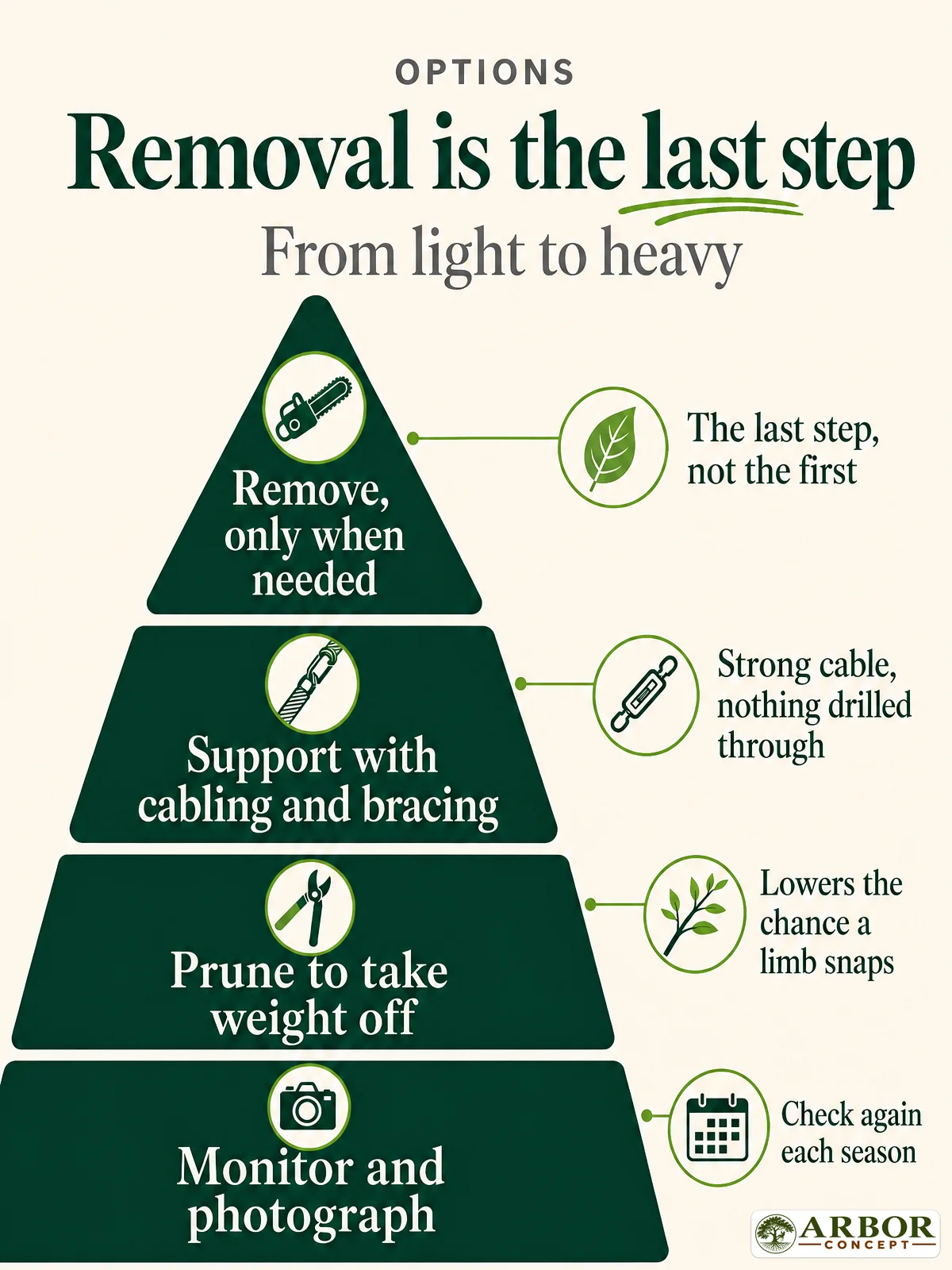
The options run from light to heavy. You can monitor the tree and check it again. You can prune it to take weight off. You can support it with cabling and bracing, using strong synthetic cable and nothing drilled through the trunk. If the ground is very dry, mulch, feeding and watering can help the tree cope. Removal is the last step, not the first.
A brace or a prune may fix the problem. When it can, we tell you, even though removal would be the larger job for us. Some trees matter to families, like one planted by a grandparent. For those we do all we can to keep the tree standing.
Pruning is often the middle path. Taking load off a long limb lowers the chance that it snaps. Cabling supports a heavy limb or stem high in the crown, so it is less likely to fail. Neither move removes the tree, and both can be checked again later.
The quick fix is a trap. Cutting a tree right back can look like a cure. Fast-growing evergreens can be back at the same height in 12 to 18 months, only now the new growth is weaker and more dangerous. We explain this before we cut anything.
Signs that call for an arborist, and signs that do not
You can relax about a small dead twig, a pile of leaves, or a tree with no target under it and no signs. Keep an eye on it and take photos each season.
Get a qualified arborist to look when:
- Any sign appears on a tree that has a roof, a car, a seat or a line beneath it.
- A lean is new, or the soil around the base lifts.
- Fungus, a hollow or soft decay shows near the base.
- A storm has passed and the tree has torn bark, splits or hanging limbs.
- You plan any work near a power line.
An arborist’s report is also what a tribunal may ask for if a neighbour dispute goes that far [2]. Drew does not write formal tree reports. When one is needed, a consulting arborist writes it, and our team carries out what it specifies.
What you get from us is simple. Drew visits at no charge, looks at the tree and at what is under it, and gives practical advice from 20 years of experience. Then he lays out the options. Our team does the work you choose, and nothing you do not need. Ask about pensioner and local discounts. Our pricing approach is explained under how we quote, and you can message us to book a free quote.
To make the visit quick, have a few things ready: your photos, when you first noticed each sign, and a note of what stands beneath the tree. In short, what is a hazard tree? A weak point with a target under it. Bring us both, and we will work out the rest together.