How often to trim a hedge so it stays thick

How often to trim a hedge depends on its age and its type. Most healthy hedges look and grow best with a light trim every three to six months, and a slow grower can manage on two trims a year.
This guide covers the first two years, formal and informal styles, the best time of year, and what to check before the shears come out. It also covers nests, neighbours and the point where a hedge needs a qualified arborist.
A few minutes beside the real hedge is worth more than any rule. Species, sun, soil and past cuts all change the answer, so we like to see the hedge before we suggest a rhythm.
Think of a hedge like a haircut. A little off, often, keeps it neat. One big chop after years of growth leaves gaps that take a long time to fill.
The short answer on how often to trim a hedge
For most hedges, we suggest a trim every three to six months. That keeps the shape tidy and the growth thick. Regular trimming thickens a hedge up, so it looks better from the outside as well as the inside.
It also costs less over time. There’s less to cut each visit, and you avoid chopping back a long way and leaving empty patches. Plenty of our customers settle into a routine: a set time in the diary, the same job each round, and often no need to be home.
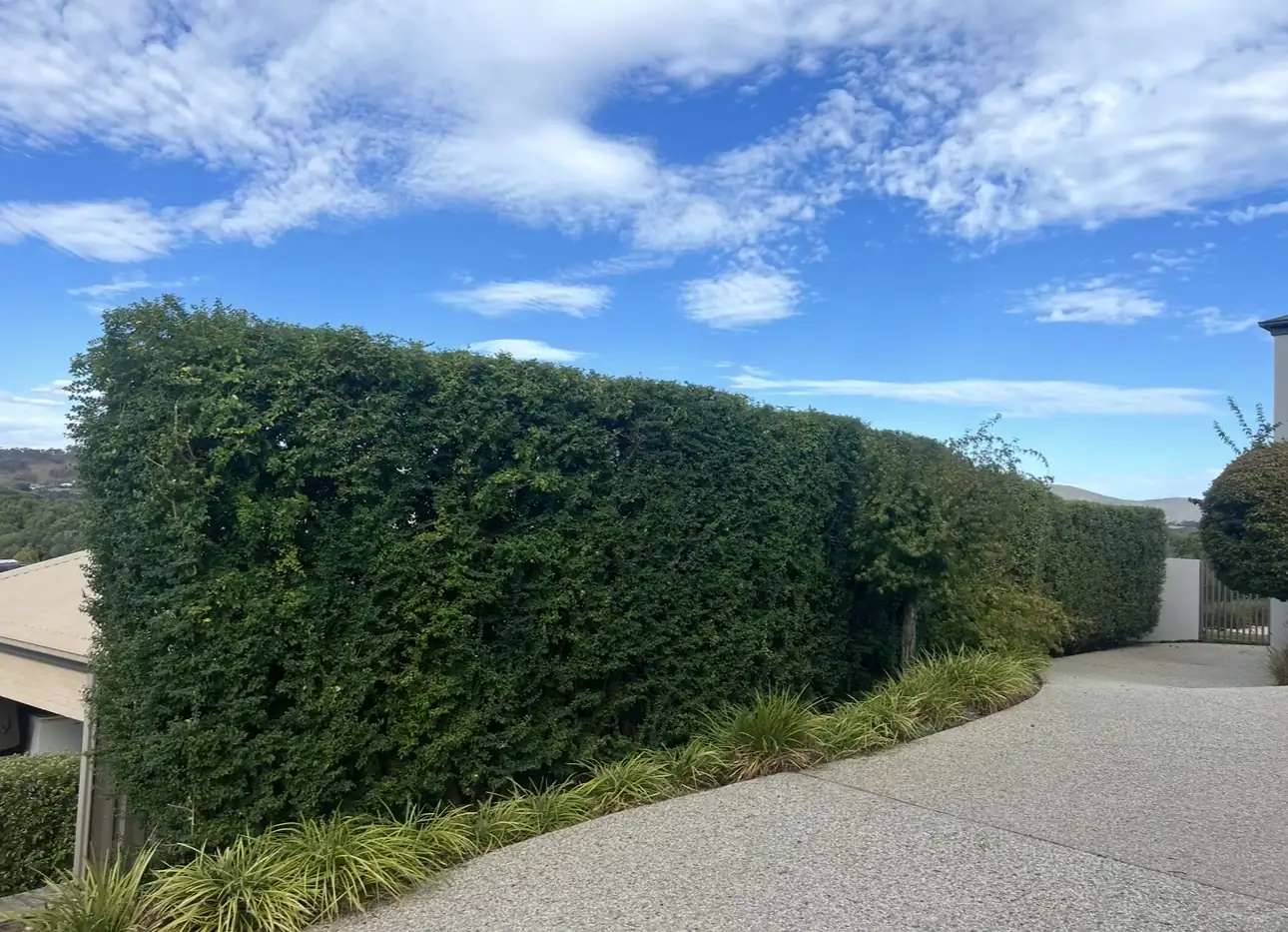
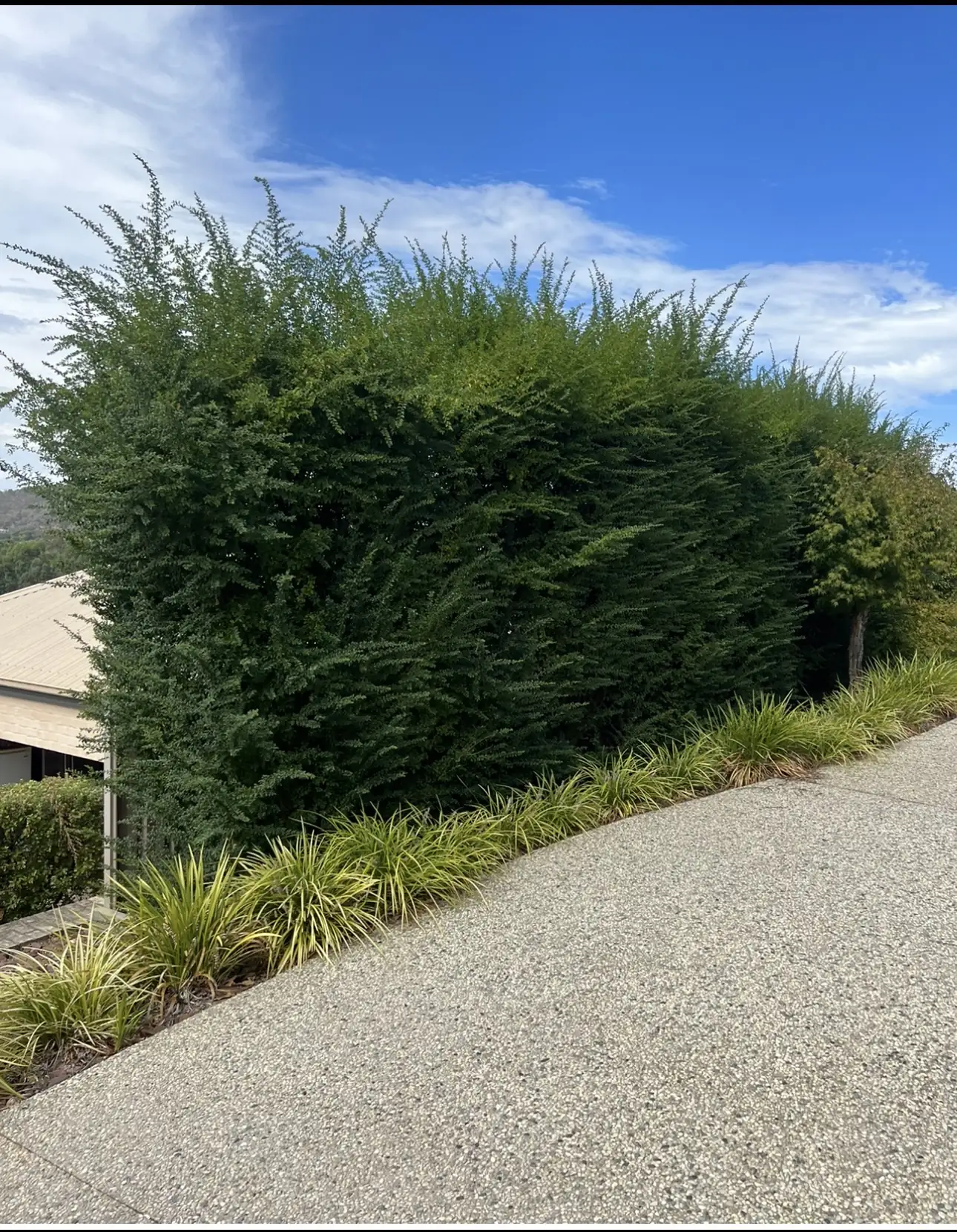
Your eye is the best guide to when it is time. The crisp line has gone soft. Single shoots poke out past the face. The top has lost its flat finish. Light no longer reaches the lower growth. Any one of those is a sign the next trim is due, and waiting longer only makes the next cut bigger.
Gardening Australia gives a similar picture. A young hedge in its second year can be pruned every three to four months, and a slow grower only needs two trims a year, in summer and autumn [1]. An established hedge gets ongoing pruning in autumn and again in spring [2].
The first two years set the habit
A new hedge is not trimmed like an old one. Its job in the early years is to branch out. Cutting a branch tip sends the plant’s growth signal to the next buds, so each cut can grow two branches where there was one [1]. More branches means a bushier hedge.
Advice on the very first cut differs. Some growers take the leading tip off at planting, to stop a leggy base [2]. Others leave a new hedge alone for about a year so it can settle in [1]. Both are chasing the same result: a hedge that is thick right down to the ground.
A hedge at different ages
Be patient. A hedge can take several years to become fully established [1]. The trims you do early are what shape it for the long run.
The plant itself sets the pace too. A fast grower such as a pittosporum can put on about a metre a year, so it will want attention more often [2]. A slow one such as a sasanqua camellia can take seven to ten years to form a thick hedge, and it is happy with far fewer cuts [2]. Fast growers are quick to fill a gap, but the same speed means they get untidy sooner. Slow growers hold a shape for longer, but they are slow to recover if they are cut too hard.
Formal and informal hedges keep different diaries
Hedges don’t all want the same rhythm. A tight, formal hedge with sharp lines needs sharp, frequent clipping. A softer, informal hedge can go longer between cuts [5]. Informal hedges also tend to flower for longer, because you are not clipping off the buds every few weeks [1].
So the right answer to how often to trim a hedge starts with a question: how neat do you want it? A hedge along a front fence, beside a path or round a pool usually earns a tighter schedule. A back boundary screen may be happy with less.
Choosing a rhythm
| Style | How it looks | Rhythm |
|---|---|---|
| Formal | Crisp edges, flat top, even face | Frequent light clips |
| Informal | Soft outline, more flowers | Less often, after the flowers |
| Privacy screen | Tall and full, agreed height | Regular, with a lift if it is tall |
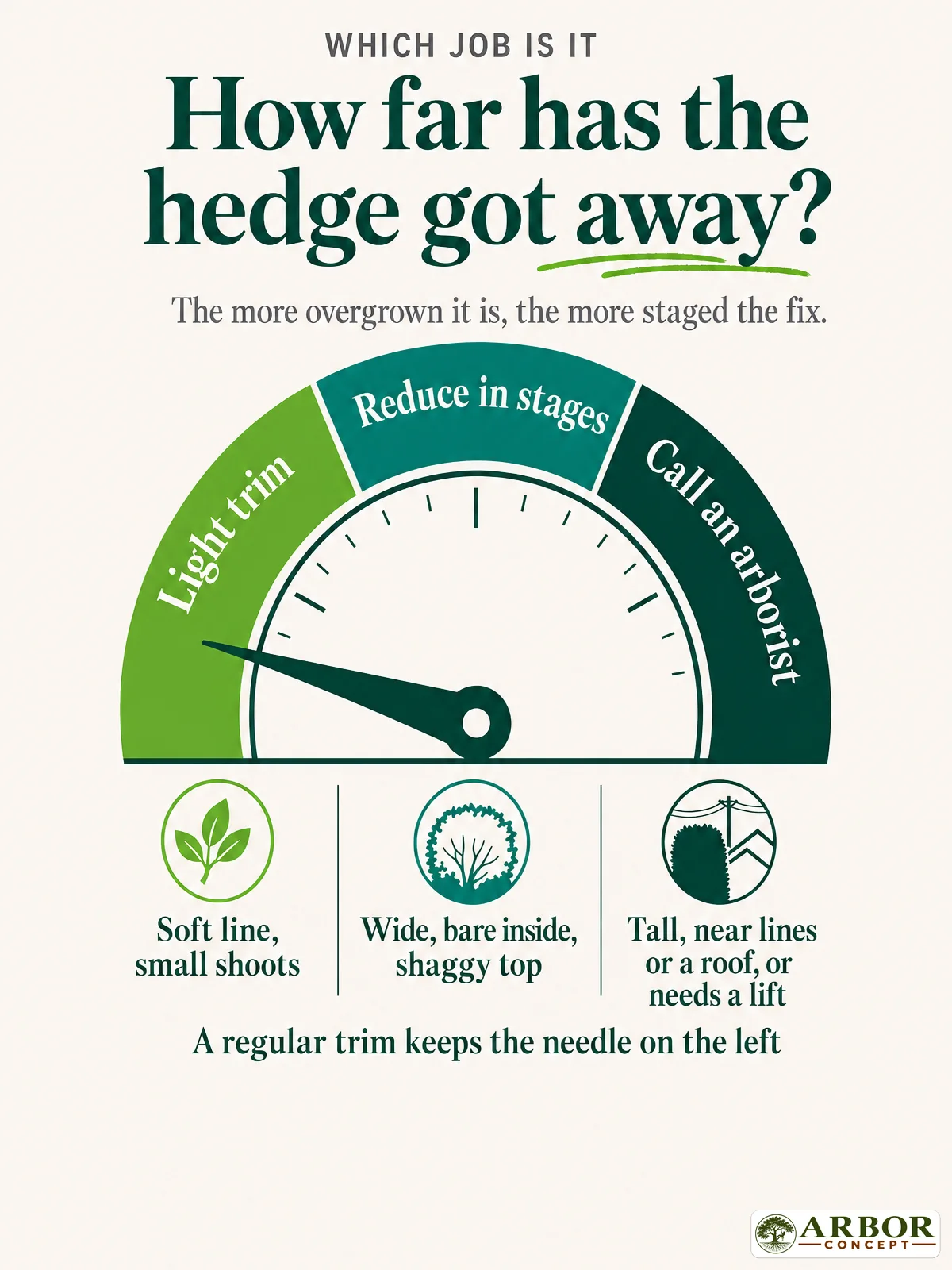
| Overgrown | Wide, bare inside, shaggy top | A reduction in stages, then regular |
Drew and his team are very efficient and professional, taking care not to damage any property. They clean up the area once finished. They’re also polite and courteous! I highly recommend these guys for any arborist job.
The best time of year to trim a hedge
The experts disagree a little here, and that is fair. Different plants and different climates react differently. One Gardening Australia presenter says to clip evergreens once their autumn growth spurt has finished, so the shape holds through the cooler months [3]. The same presenter warns that a spring cut only encourages new growth that needs trimming again in a matter of weeks [3].
Another episode suggests pruning in autumn and again in spring for an established hedge, after checking that no flower buds are forming [2]. A hedge that flowers, such as lauristinus or photinia, is cut after the flowers finish, and deadheading it keeps it compact right to the ground [9]. Put the two together and you get a sensible habit: look first, then cut. If the plant is about to flower, wait.
Before you cut
- Check for flower buds first.
- Look through the hedge for nests.
- Pick a mild stretch of weather.
- Step back often and look at the whole line.
- Clipping just before a hot, dry spell.
- Heavy spring cuts on evergreens.
- Cutting a conifer back into bare wood.
- Working from a ladder with a hedge trimmer.
Climate shifts the calendar as well. In warm, humid country many hedges grow for most of the year, so the gaps between trims are shorter than in a cool, dry place. That is one more reason a fixed date on a calendar is a weak guide. A hedge that grows hard through a wet summer may need a trim well before the next date you had in mind.
Weather matters as much as the calendar. Fresh cuts expose soft new growth, and a hot, dry spell can scorch it [5]. A cloudy, mild week is kinder to the plant than a heatwave.
What a good trim looks like
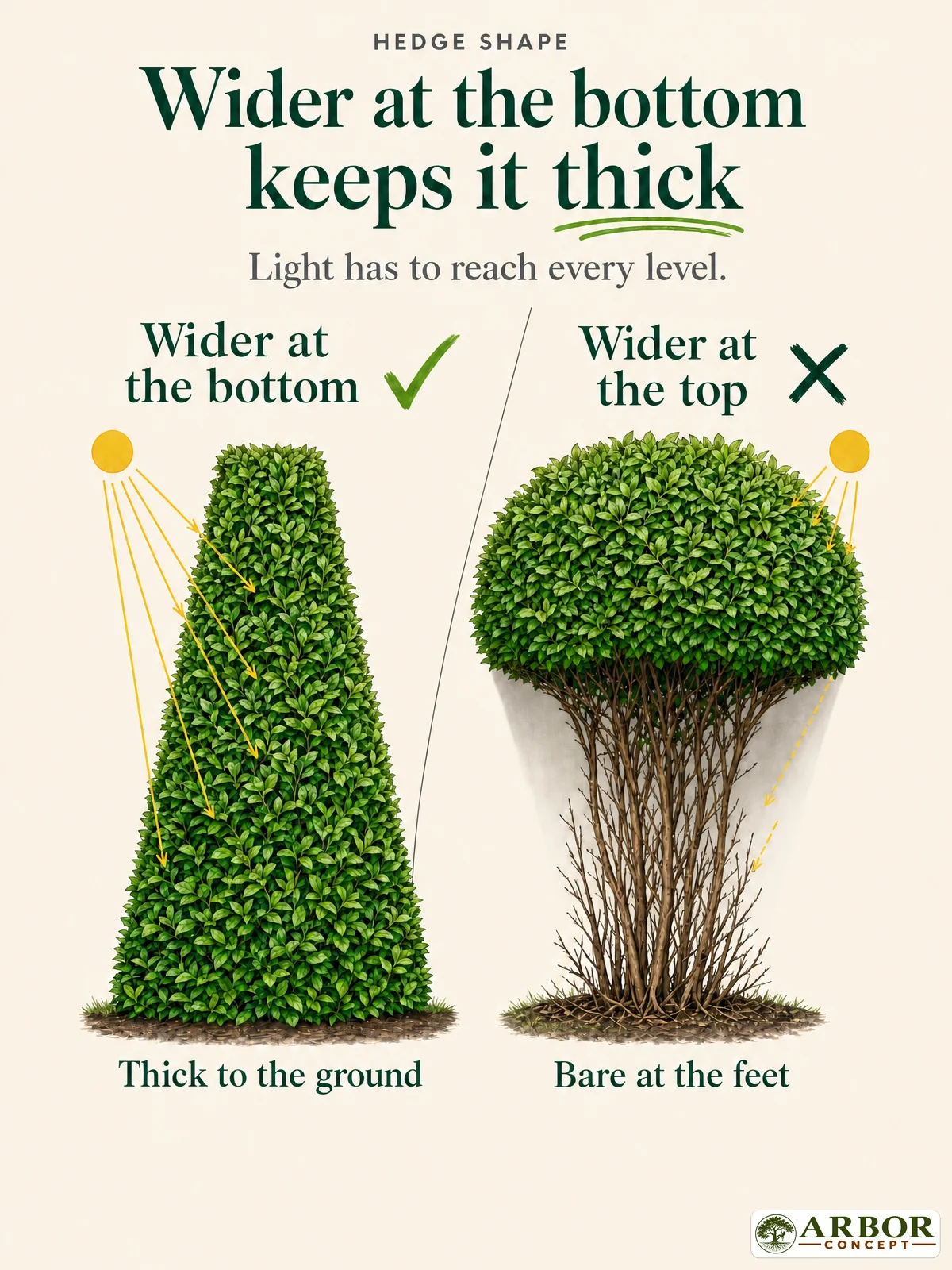
Shape does a lot of the work. A low hedge can have straight sides. A taller hedge should be cut on an angle, wider at the bottom than the top, so light reaches the whole hedge and the foliage stays thick at the base [5]. A hedge with a wide top shades its own feet and goes bare below.
Technique counts too. Shears run along the face of the hedge, not angled into it, because angling in ruins the finish [5]. A string line, or a nearby fence, helps keep the top level [5]. Large-leaved plants suit secateurs, which avoid half-cut leaves. Small, tight-leaved plants suit shears [1].
Gardening Australia adds that an informal hedge such as old man saltbush wants regular light pruning over the whole plant, and that working the front first lets you reach the top [8]. Our team cuts to a clean line, wider at the bottom than the top. Doing that every round is what keeps a hedge looking like a hedge, not a row of shrubs.
Want this looked at on your own property? The on-site quote is free.
Bringing back a hedge that has got away
Sometimes the answer to how often to trim a hedge is “far more often than it has been”. Once a hedge is overgrown, the fix is not one hard cut. Cutting an overgrown hedge down by half in one go can open big holes, and the result is rarely a good-looking hedge.
Gardening Australia shows a better way. In one example, a very old hornbeam hedge was renovated in stages: the top came down first, then one face was cut hard, then the other face the next year, which kept the plants alive [4]. A feed afterwards helped recovery, and thicker branches were cut with secateurs or loppers for a cleaner cut [4].
How a reduction runs
- We look at the species. Some shoot again from old wood, some do not.
- The top comes down first, to a height you agree.
- One face is cut back in the next round, then the other.
- A feed helps the hedge recover and fill in.
- After that, regular light trims hold the new size.
Waiting makes the job bigger. The longer a hedge goes untrimmed, the more there is to lose and the fewer options you have. A hedge kept up every few months can be cut lightly without a worry. A hedge left for years may need two or three rounds just to get back to a shape you like. Booking a regular trim, even a light one, is the surest way to avoid that.
Not every hedge can be cut back hard. Many, such as lilly pilly and murraya, shoot again from old wood. Conifers such as cypress generally don’t. Cut into bare wood and the brown patch stays. That’s why the plan comes before the cut.
Nests, neighbours and the rules
Before any cut, look for nests. All native birds and their nests are protected under the Nature Conservation Act 1992, and it is illegal to interfere with them without the right authorisation [6]. Birds do nest in hedges, especially in spring. Our team checks before cutting and works around a nest where we can. If we find one, we tell you and plan the day around it.
A boundary hedge also affects the people next door. The Queensland Government page on tree-keepers counts shrubs and bushes as trees and says a tree-keeper should cut branches that overhang a neighbour’s land, unless the tree is protected by a vegetation protection order [7]. It also says a tree on the boundary line is a shared responsibility [7].
Councils set their own local rules, and those rules move over time. Ask yours before you cut anything that might be protected. We never assume a rule covers your hedge. If you are unsure, bring it up on the visit and we will talk it through before anything is cut. ABC News gives the same advice for any shared tree: talk to the neighbour first, check your council rules, and agree who keeps the cuttings [10]. Our team is also happy to talk to your neighbours for you and explain the job.
Great experience, quick prompt service and clean up. Highly recommend.
When to get an arborist in
You don’t need one for every hedge. A low hedge you can reach from the ground, with no nests and no power lines nearby, is a fair job for a keen gardener with sharp tools.
Get a qualified arborist in when:
- the hedge is taller than you can reach safely from the ground,
- it needs a lift or platform to cut,
- it is close to power lines or a roof,
- it is badly overgrown and needs a staged reduction,
- you are not sure whether the plant will shoot again,
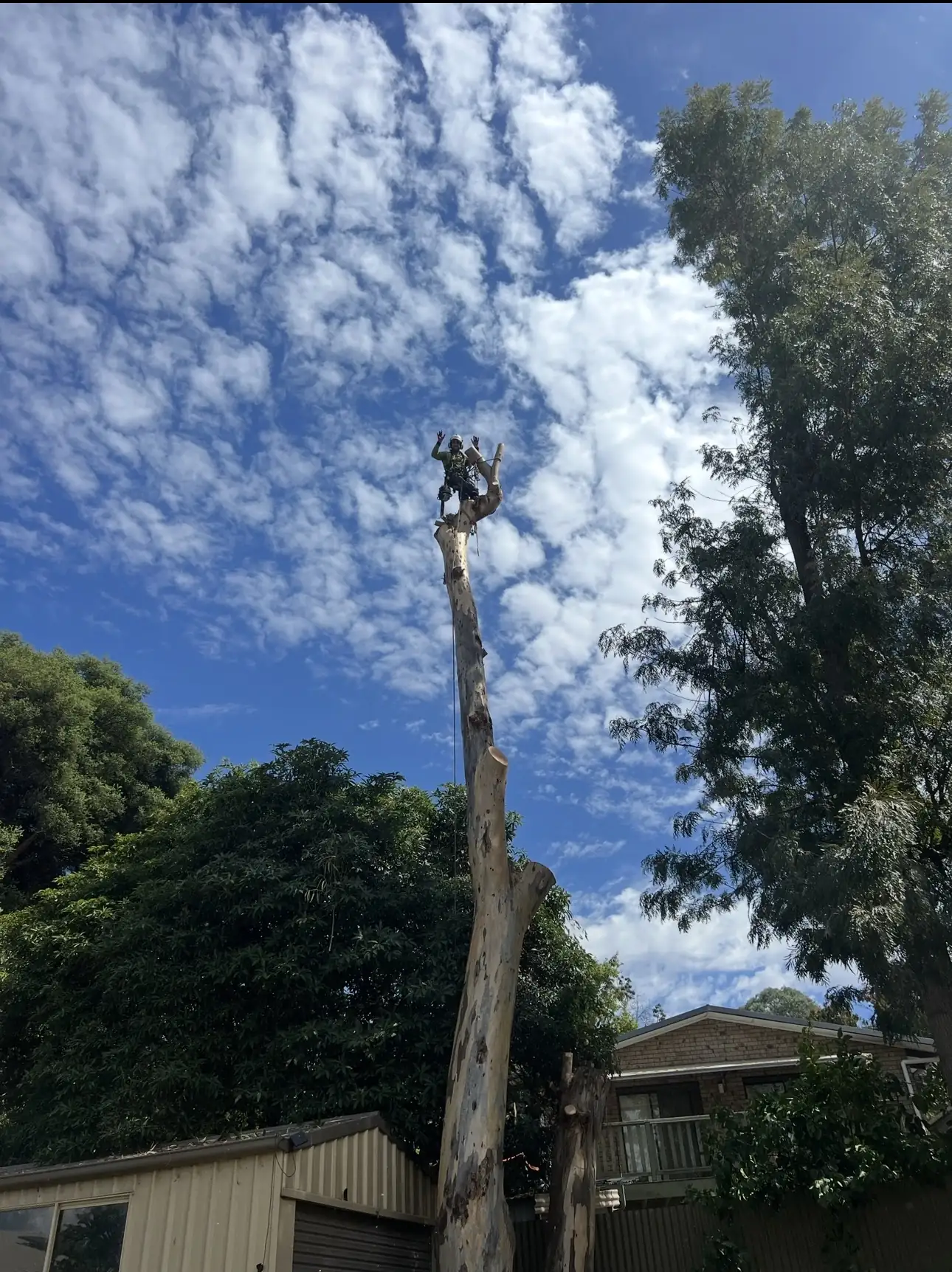
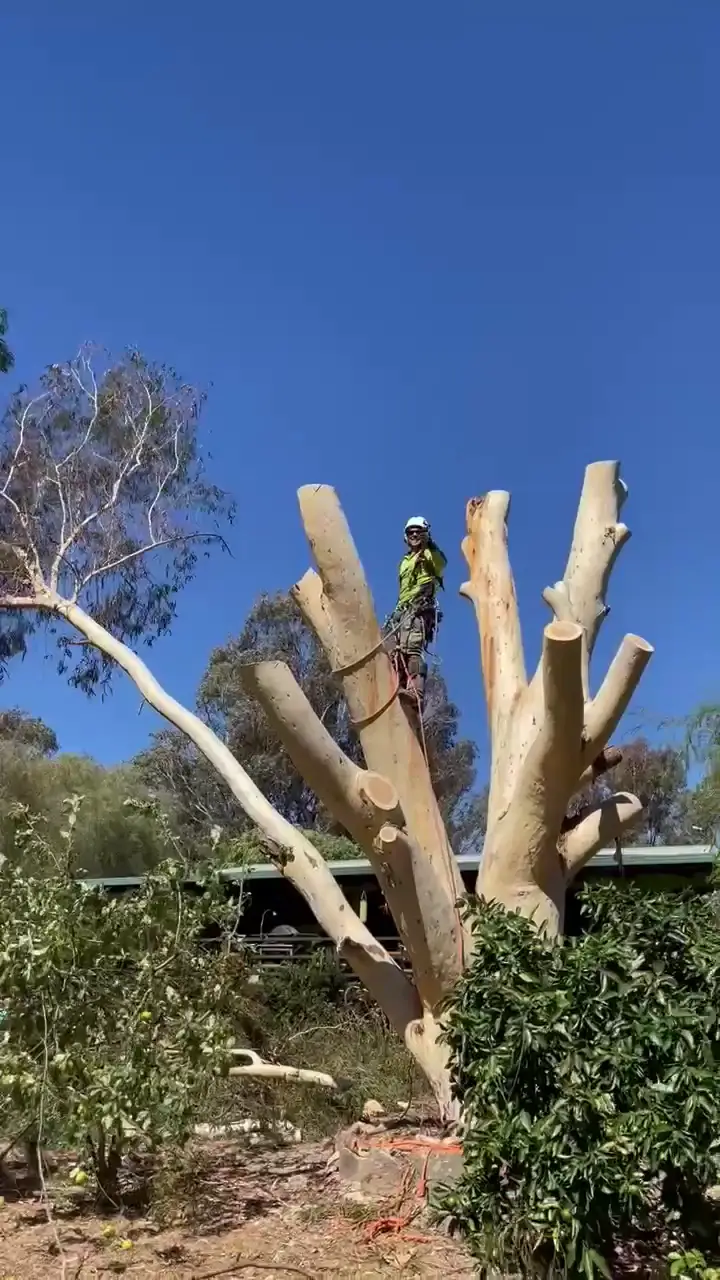
- it has grown into a small tree and is really a pruning job, or sometimes a removal.
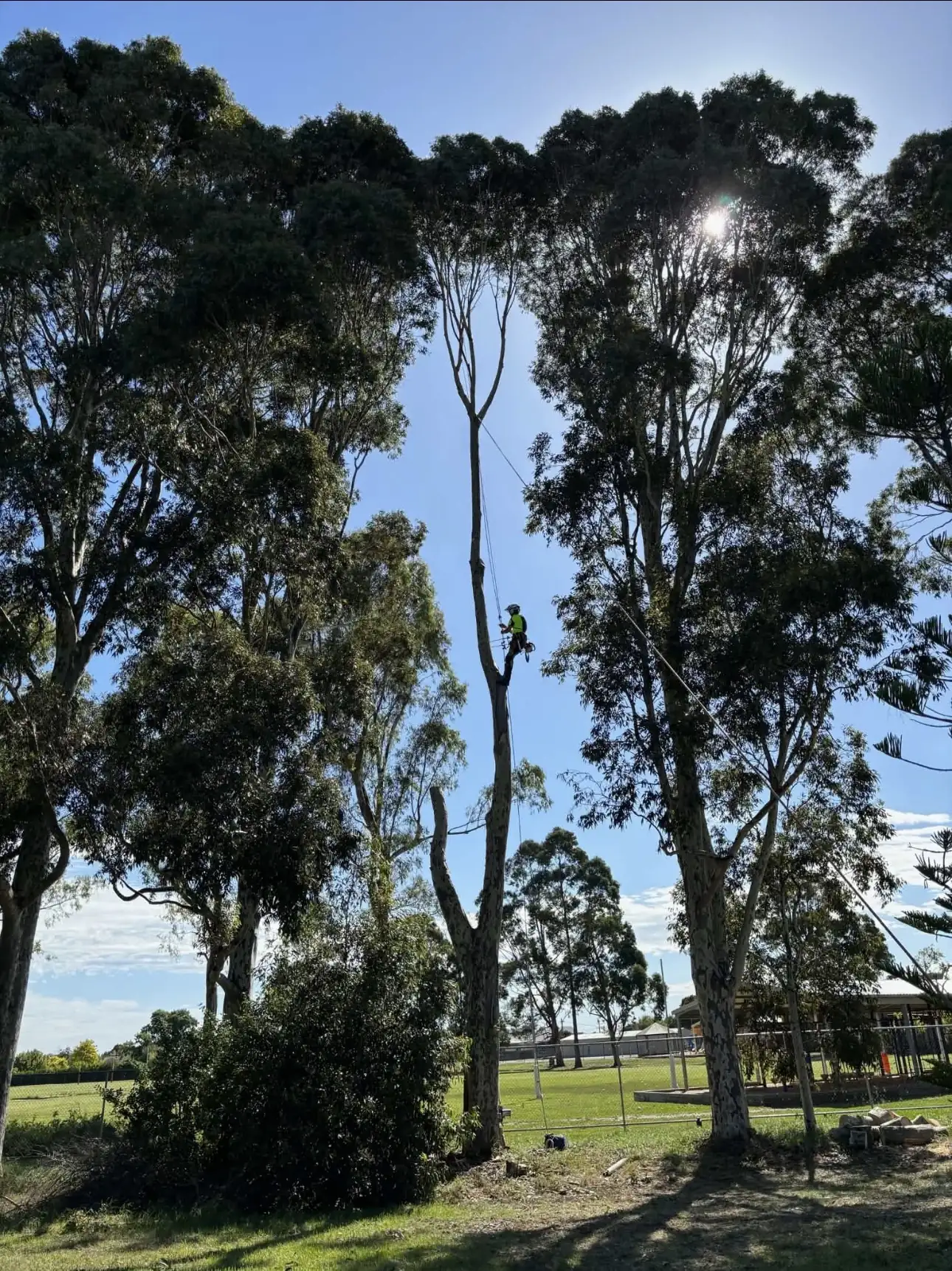
Hedge work looks simple, but it isn’t always safe. A hedge trimmer is a sharp, fast tool, and tall hedges tempt people onto ladders. Ladders and powered cutters don’t mix, and a fall from height is a serious injury. If the hedge is tall, we use the right gear to reach it from a stable position.
If your hedge has become a tree, the answer might be pruning rather than trimming. We will tell you straight, even if that is the smaller job.
How we look after hedges
Our hedge trimming covers regular maintenance, reductions, reshaping and big or tall hedges. Drew is your first contact. He looks at the hedge on site, hears what you want, and gives you a plan for the rhythm that suits it. Our team then does the work.
The on-site quote is free, and it is never done from photos. Photos cannot show the height, the access or the nests. Tell Drew what you want done with the clippings, and our team will take them away or leave them the way you agreed. You can read more on how we quote, or get in touch to book a visit. Pensioner and local discounts are available.