Stump grinding vs removal: which one fits your yard?


Stump grinding vs removal comes down to one question: what should that patch of ground do next? Grinding takes the stump down below the surface and leaves most of the roots to rot away. Removal means digging or pulling the stump and its main roots out whole.
This guide sets the two side by side. It covers what each method leaves behind, where each one falls short, and how the plan for the space should steer the choice. It also looks at roots, regrowth and what to check before any machinery turns up.
The right answer depends on the stump in your yard, so the real job needs a proper look first. Size, species, access and what is buried nearby all count. That is why Drew quotes on site and never from photos.
Most people have heard both terms and assume they mean the same thing. They don’t. A stump is a lump of wood above ground and a root system below it, and each method deals with a different share of that.
Stump grinding vs removal: what the words mean
In everyday talk, “stump removal” often just means “get rid of it”. For this guide we use the words more tightly. Grinding means a machine with a spinning cutting wheel chews the stump away from the top down. Removal means the stump and its main roots are dug or pulled out whole. There is a third path, which is to leave the stump and let it rot.
The mix-up matters because a quote that says “stump removal” might mean any of these. One business may mean a grind to below the surface. Another may mean a full dig with a machine. The prices, the mess and the finished ground will all be different, so the first job is to find out which one is on the page.
Our team grinds stumps, using a large tracked grinder. We say so plainly, so you know what you are comparing. The aim of this page is to help you weigh the methods fairly, whoever you hire.
Three ways to deal with a stump
| Method | What is left | Suits |
|---|---|---|
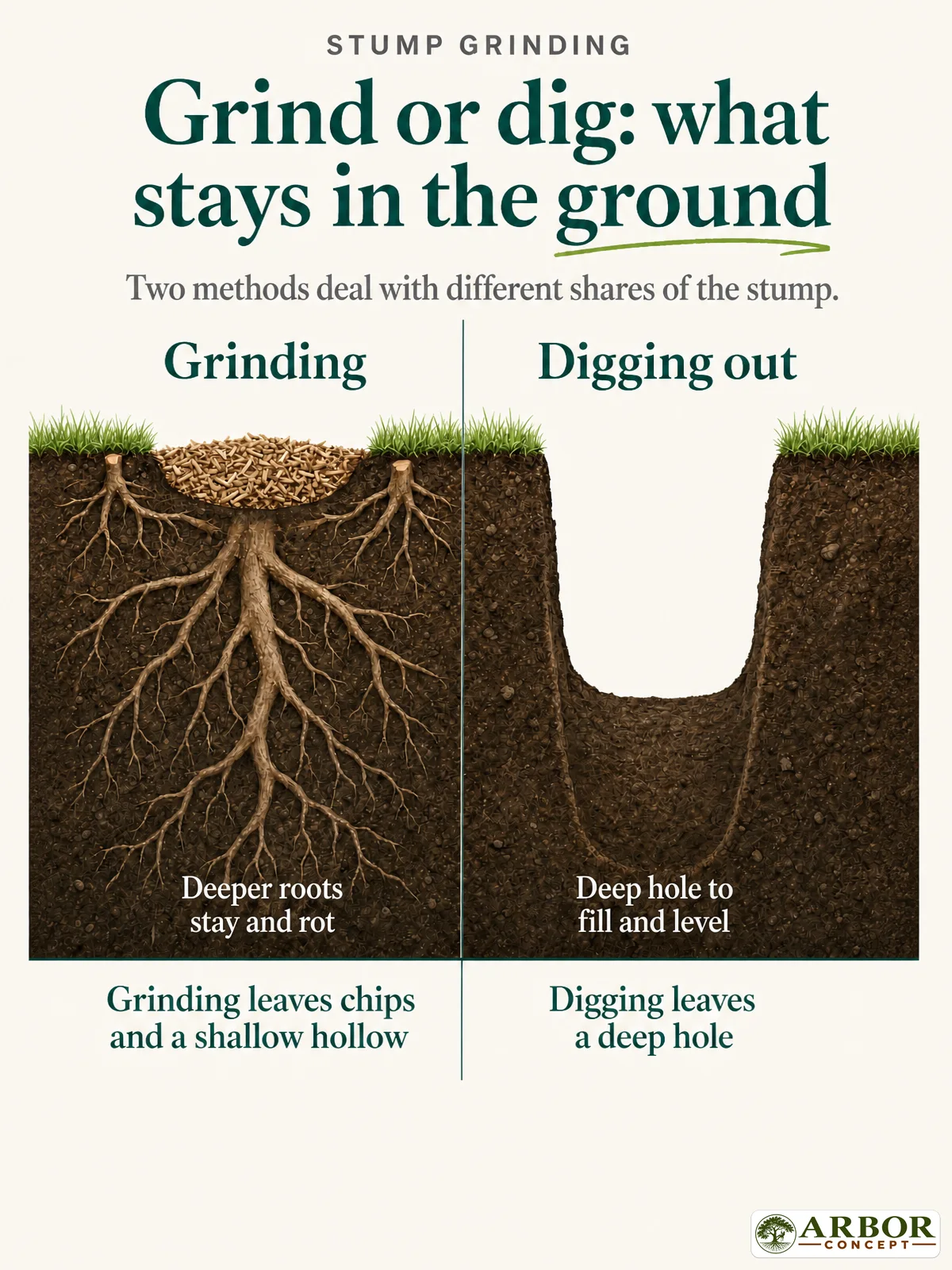
| Grinding | Chips in a shallow hollow, deeper roots rot underground | Most yards, any stump size, a fast result |
| Digging out | A deep hole, most of the roots gone | Small stumps, or a spot that must be fully clear |
| Leaving it to rot | A slowly softening stump | Out-of-the-way spots where time does not matter |
What stump grinding does
Grinding works down from the top. The wheel takes the stump to below ground level and also takes the larger roots that flare out near the surface. Gardening Australia names it as one of two usual finishes for a stump, the other being to cut the stump level and poison it [1]. The same guide says big tree jobs are best left to experts [1].
What it leaves is just as important. There is a heap of wood chips, and a hollow where the stump stood. The chips and the hole are often separate matters, and clearing the chips or filling the hole may be an extra, so it is always best to ask. Brisbane City Council describes its own tree replacements the same way: the stump is ground, then the hole is filled with soil, ready for the new tree [2].
Those chips are not waste. Left on site, they make mulch for garden beds. They can also fill the hollow, with extra soil on top. Or they can be taken away if you would rather. A tip run may cost money. One Queensland council says its tips do not offer free green waste disposal [3], and rules differ from council to council. All three choices are fair, and the right one depends on what you plan to grow.
The roots that lie deeper stay in the ground and break down over time. The soil above them can dip a little as they go. Neither is a problem for most lawns. Both are reasons to match the depth of the grind to the plan for the space.
What digging a stump out involves
Digging sounds clean and complete. In practice it is hard work. For a small stump, a person can dig a trench round it, cut through the side roots and lever it out. It is slow, heavy and practical only for smaller stumps.
Bigger stumps need machines. A digger or loader can cut large roots, but it may damage the surrounding yard and needs space to work. Pulling a stump with cables and a winch is another option in open country. Chains and ropes can slip or snap. A ute was never built to be a stump puller.
That last point deserves underlining. This is not a weekend job for a rope and a ute. Stump pulling and machine digging should be left to people with the training and the gear.
Extremely happy with the Removal of my tree and claen up afterwards, wouldn't know they were there.
The downsides of each method
Every method has a cost. The honest way to compare them is to lay the costs out.
Where each method falls short
Chips deserve a second look. Queensland Government garden advice says organic mulch can draw nitrogen from the soil as it breaks down, and that yellowing lower leaves are the sign [4]. Fresh chips mixed into the soil can do the same to a lawn or a young plant. The same page says mulch should stay clear of plant stems, or the stems may rot [4]. If you plan to grow something in the spot, take the chips away and bring in fresh soil. Redland City Council gives the same steer for trees. It does not recommend fresh woodchips at a tree’s base. It prefers well-composted mulch, kept off the trunk [7]. Sustainable Gardening Australia agrees that wood chips use up soil nitrogen as they break down. It suggests an organic fertiliser or blood and bone to make up for it [8].
Cost and time in stump grinding vs removal
We do not print dollar figures. A number on a page knows nothing about your side gate, your slope or the size of your stump. What can be said is how the price is built, and it is built the same way for either method.
Size comes first. Grinding is commonly priced by the width of the stump, and a deeper grind takes more time. The species and where the stump sits also count. Access comes next, because a machine that cannot get to the stump means more labour. Last come the extras: clearing the chips, filling the hollow, and any treatment against regrowth.
Time follows a similar pattern. A grinder clears a stump in one visit. Digging by hand can take far longer, and leaving a stump to rot takes years, with moisture, fungi and the species of tree all setting the pace.
Making two quotes comparable
- Ask what depth is included.
- Ask who clears the chips.
- Ask whether the hollow is filled.
- Ask how access will be handled.
- Comparing totals when one quote leaves out the clean-up.
- Accepting a price for a stump nobody has seen.
- Choosing a method by its name alone.
- Starting before the quote is agreed.
Want this looked at on your own property? The on-site quote is free.
Roots, regrowth and termites
Two worries come up often. Will the stump grow back, and does an old stump attract pests?
Regrowth first. Some trees are stubborn. Poinciana is a good example, and we often suggest treating the stump for a couple of weeks before it is ground out, to kill the roots. When we remove a tree, we treat the stump so it does not regrow. If you leave a stump alone, cut off any new suckers while they are small. That slowly uses up the food stored in the stump. Home chemical treatments call for care around people, pets and nearby plants, and fire in a stump can smoulder on out of sight. We do not suggest either as a do-it-yourself fix.
Pests next. Termites feed on dead timber, and in Queensland they are a fact of life. The Queensland Government’s termite advice for public housing tenants is short and clear: remove old tree stumps from your yard, and keep wood piles off the ground [5]. Grinding clears the stump and the larger surface roots. A stump left in place to rot is, among other things, a lump of old timber, and it is wise to keep an eye on it. On the other side, a dead stump that is stable can shelter insects, birds and small animals, so leaving it can be a fair choice. Inspect it regularly and take it out if it becomes unstable.
Plan the space and check what is underneath
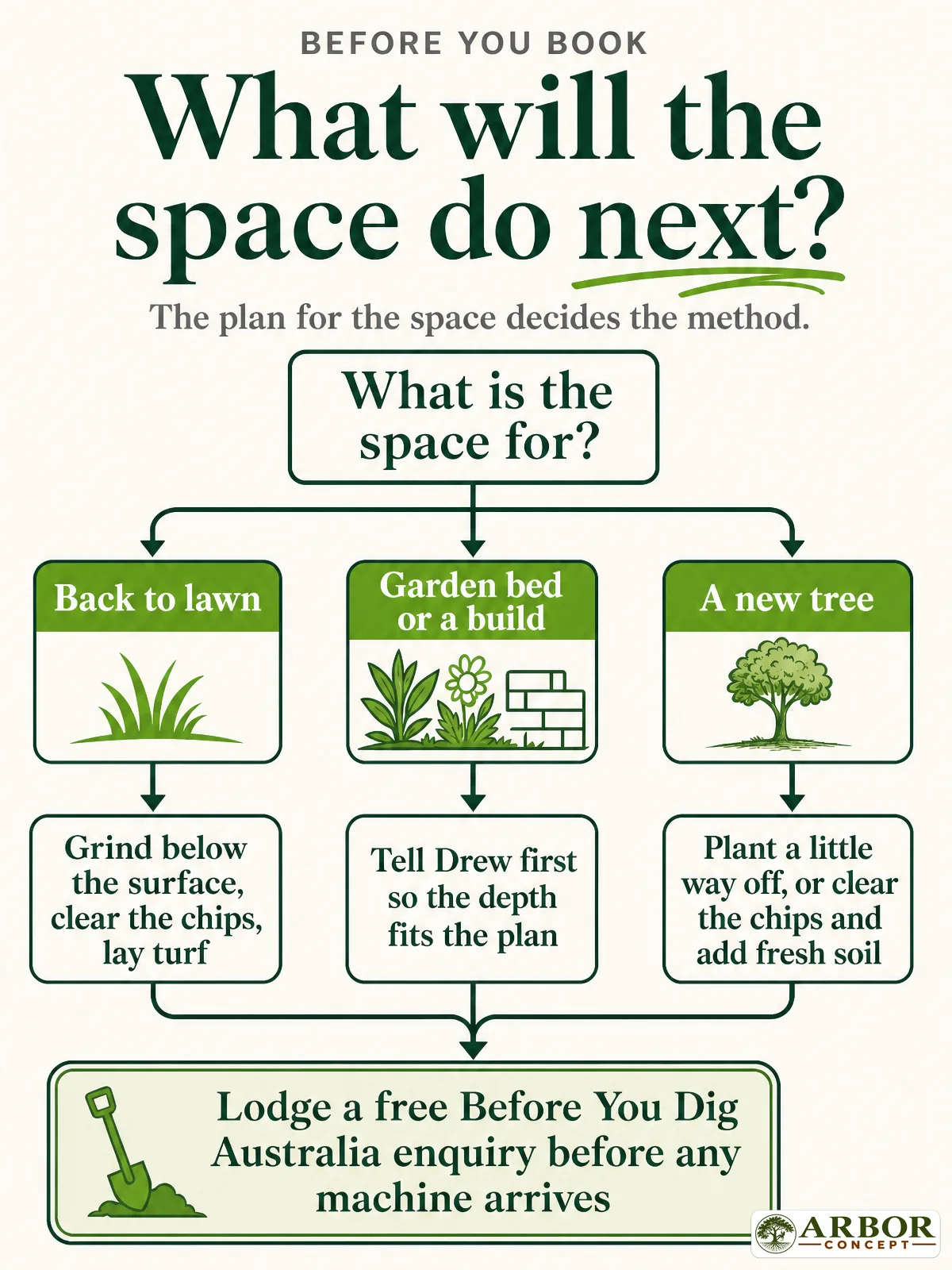
The plan for the space settles most of the argument.
If the spot is going back to lawn, a grind to below the surface with the chips cleared lets turf go straight over. If it will be a garden bed or a building site, tell Drew first, so the depth fits what is going in. If you want to plant a new tree, either plant it a little way off, in good soil outside the area of woody debris, or clear the chips and fill the hollow with fresh soil first, as Brisbane City Council does for its own replacement trees [2].
Before any machine comes, find out what is buried. The Before You Dig Australia service is free, and its FAQ says homeowners should check first, even on private property [6]. The plans it returns are indicative only and do not pinpoint the exact position of a pipe or cable. Home services often do not appear on them, so the service recommends a skilled locator, who can find things like an old septic tank or a line to a shed, and it reminds everyone that a duty of care remains [6].
Before you book a stump job
- Decide what the space is for: lawn, garden bed, paving or a build.
- Lodge a free Before You Dig Australia enquiry.
- Mark sprinklers, irrigation lines and any pipes you know about.
- Think about how a machine reaches the stump: gates, steps and narrow sides.
- Choose what happens to the chips: stay, fill or go.
Be ready for some settling. As old roots break down, the ground above them can sink a little. That is normal, and it is one reason to level and top up the area after a few seasons if the space matters to you. It is also a reason to grind to the right depth the first time.
The stump might also be left over from a tree that someone else took down. That is fine. Stumps of any size can be ground, whoever cut the tree, and several stumps in one visit are easier on everyone than several separate trips.
Think about nearby trees too. If a healthy tree stands close to the stump, ask before anyone cuts roots. Tablelands Regional Council says to get a qualified arborist’s view first, because cutting roots near a trunk can leave a tree unstable [9].
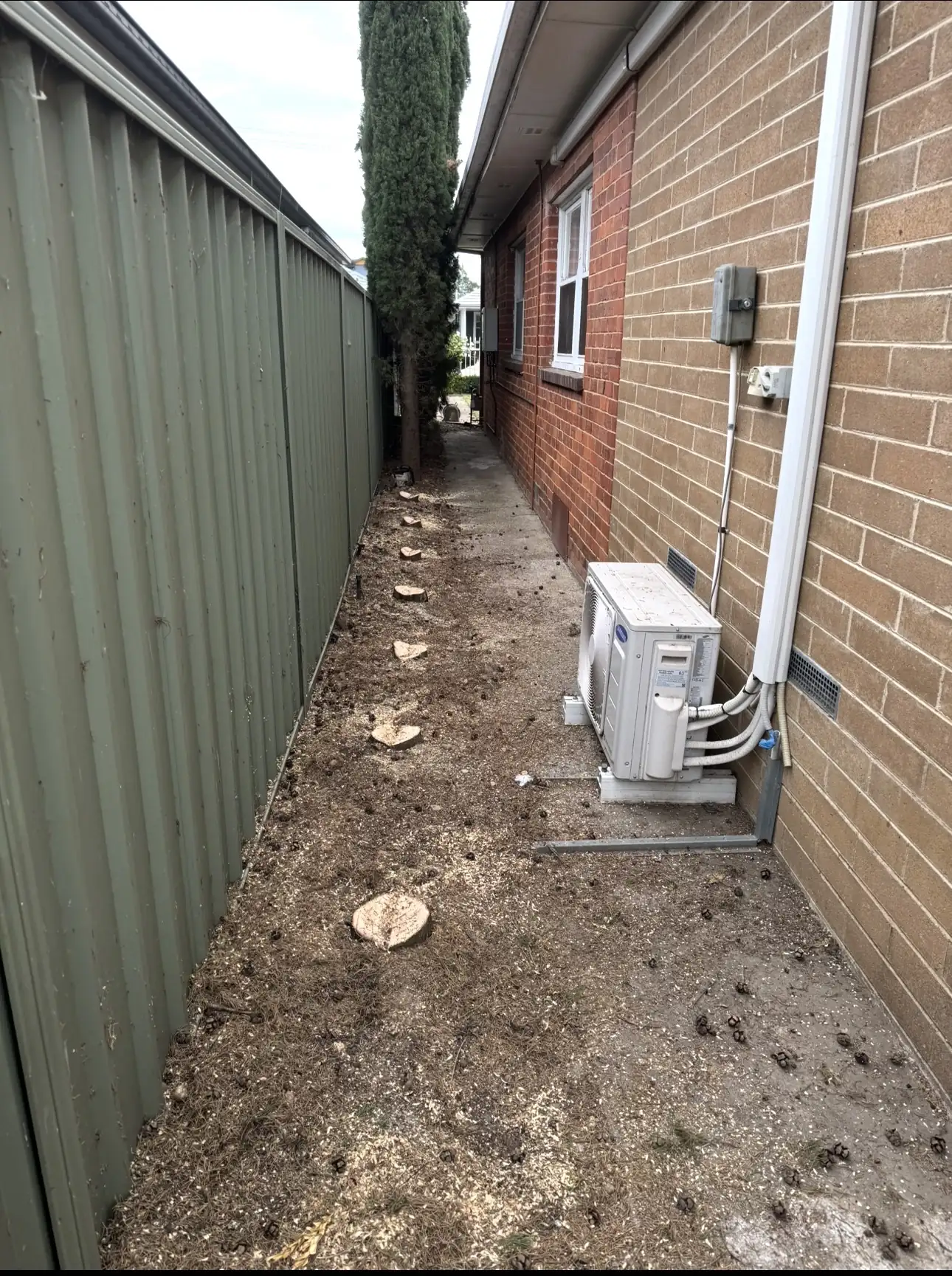
Tight access is a common worry. Gates, steps and narrow side passages do not always stop the job. Tell Drew about them when you get in touch, and we will say what is possible.
Drew was fantastic. Responsive, efficient, knowledgeable and accommodating. Will definitely be calling on Drew and his team again.
When to get an arborist in
Not every stump needs a professional. A small, dead stump in a back corner, with nothing planned for the spot, can simply be left. It will soften slowly, and it gives shelter to wildlife. Keep an eye on it, and act if it starts to move.
Get a qualified arborist in when:
- the stump is large, or the tree is still standing and needs to come down first,
- it sits near a fence, a slab, paving, a pool or buried services,
- it belongs to a species that regrows stubbornly,
- machine access is tight and needs a plan,
- you are thinking of pulling it with a vehicle or a rope.
If that is your plan, talk to an arborist before you try it.
How we handle stumps
Our stump removal is stump grinding with a large tracked machine. You talk straight to Drew. He walks out to the stump, studies the access, hears what you plan for the space, and quotes the job for free. Our team then checks for pipes, cables, sprinklers, fences and paving, and grinds the stump out.
The grindings are left or taken away the way you agreed, and the area is left tidy. If a tree is coming out as well, ask for the stump to be done on the same visit.
Our how we quote page explains the pricing principles. If you would like a look at your stump, get in touch and we will set a time. Pensioner and local discounts are available.