Safe dead tree removal that starts by testing the wood
Dead tree removal is a different job from taking down a healthy tree, because dry wood gives way without a warning. Drew inspects the tree first, then our team removes it by the method the wood can bear, and the free on-site quote costs you nothing.
- 20 years' experience
- Cert III qualified arborist
- Free on-site quotes
Drew and his team are very efficient and professional, taking care not to damage any property. They clean up the area once finished. They’re also polite and courteous! I highly recommend these guys for any arborist job.
Had Drew here for my palm trees. I can’t recommend him highly enough. Great job and great price and really nice guy. I’ll be having him back.
Drew was fantastic. Responsive, efficient, knowledgeable and accommodating. Will definitely be calling on Drew and his team again.
20years' experience
Dead tree removal by an arborist who reads the wood first.
Good dead tree removal begins with testing the wood, long before any rope goes up.
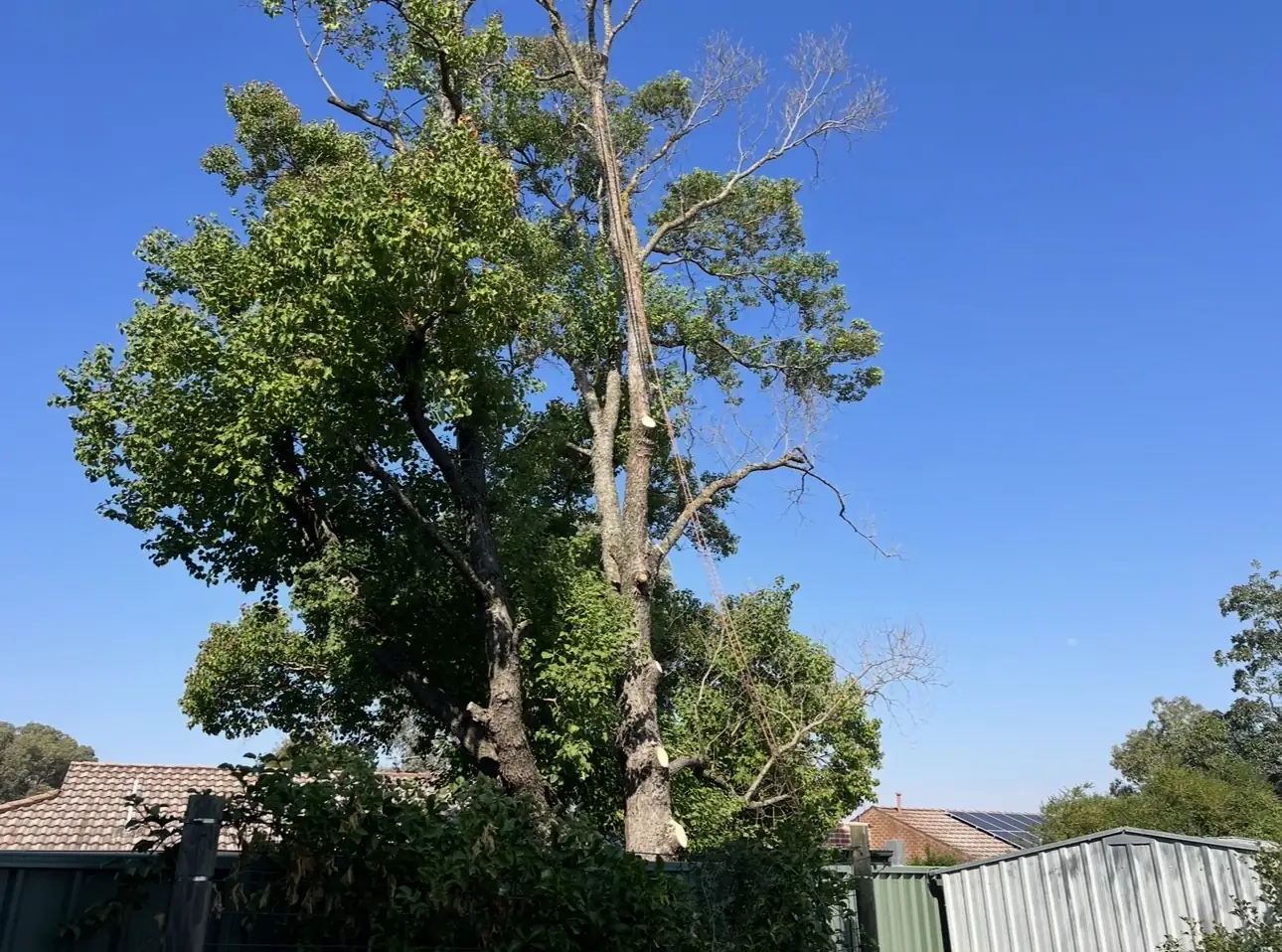
A dead tree can look solid from the lawn and still be hollow, cracked or soft at the base. When you ask Arbor Concept about dead tree removal, Drew visits, studies the trunk, the crown and the ground, and tells you plainly what he finds.
Drew is trained to Cert III and has worked with trees for 20 years. Once the plan is set, our team does the dead tree removal on ropes, from a spider lift or with a crane, and tidies up so the yard is clean when we go.
Rated 5 out of 5 stars based on 34 customer reviews on Google
Drew was fantastic. Responsive, efficient, knowledgeable and accommodating. Will definitely be calling on Drew and his team again.
Great price amazing service. The boys came out on 24hr notice after hours to help me with a cracked branch that was overhanging my house. They worked very quick and efficiently and great to deal with. Thanks for the good work
Chose Drew and the team as they had great reviews. Wasn’t disappointed at all. Drew gave me a quote to remove a pine that split and advice on another tree that was looking at doing the same. They were able to get it done quickly and to a great standard. Very happy with the service.
The Boys did a job for my parents cutting down a Gum and a Palm Tree and did a great job. Happy to recommend.
Drew and his team were absolutely fantastic. They were patient while we worked with council for the appropriate approvals, on time and very professional. Drew was also happy to assist us with adding on additional pruning and palm removal. Will recommend to everyone and definitely use again in the future.
Drew was great to deal with from the very first call. He stayed in touch throughout the job and sent photo updates along the way which was great. Drew and his team got there on time and did a fabulous job. Prices are reasonable and you can see there is a sense of pride in their work, super easy to deal with, polite and friendly. Thanks Drew and team, i am very happy with the end result.
Why choose Arbor Concept for dead tree removal.
Dead wood does not bend, creak or warn you. That is why dead tree removal rewards patience, testing and the right machine, and why you deal with the arborist from the very first call.
Wood tested first: Before anyone climbs, the trunk is tapped and judged, so the method matches what the tree can bear.
Machines where the wood is weak: If a trunk is too frail to bear a climber, machinery takes the load and the cutter reaches the wood from outside.
Honest about what comes down: If only one limb is dead, or a trunk can stand safely for birds, you hear it, whatever that does to the size of the job.
Drew from start to finish: The arborist who inspects the tree is the one who explains the quote, and the plan you approve is the plan our team follows.
34Google reviews
Everything about dead tree removal, in one place.
Read on for how we judge a dead tree, how the job is done and where the wood goes afterwards. For the wider picture, head to our main [tree removal service](/services/tree-removal/) page.
What dead tree removal involves.
Dead tree removal means taking down a tree whose wood has died, either all of it or enough that the tree can no longer be trusted. Drew inspects it, our team agrees the plan with you, and the tree comes down in controlled pieces. The job ends with the timber and branches sent where you chose and the ground left clear. It is the core of our tree removal work, adjusted for brittle wood.
- A look at the whole tree before any plan is made
- Controlled sections lowered, never a free fall
- Timber and branches sent where you choose
- The ground raked and the site left clear
Signs that dead tree removal is the answer.
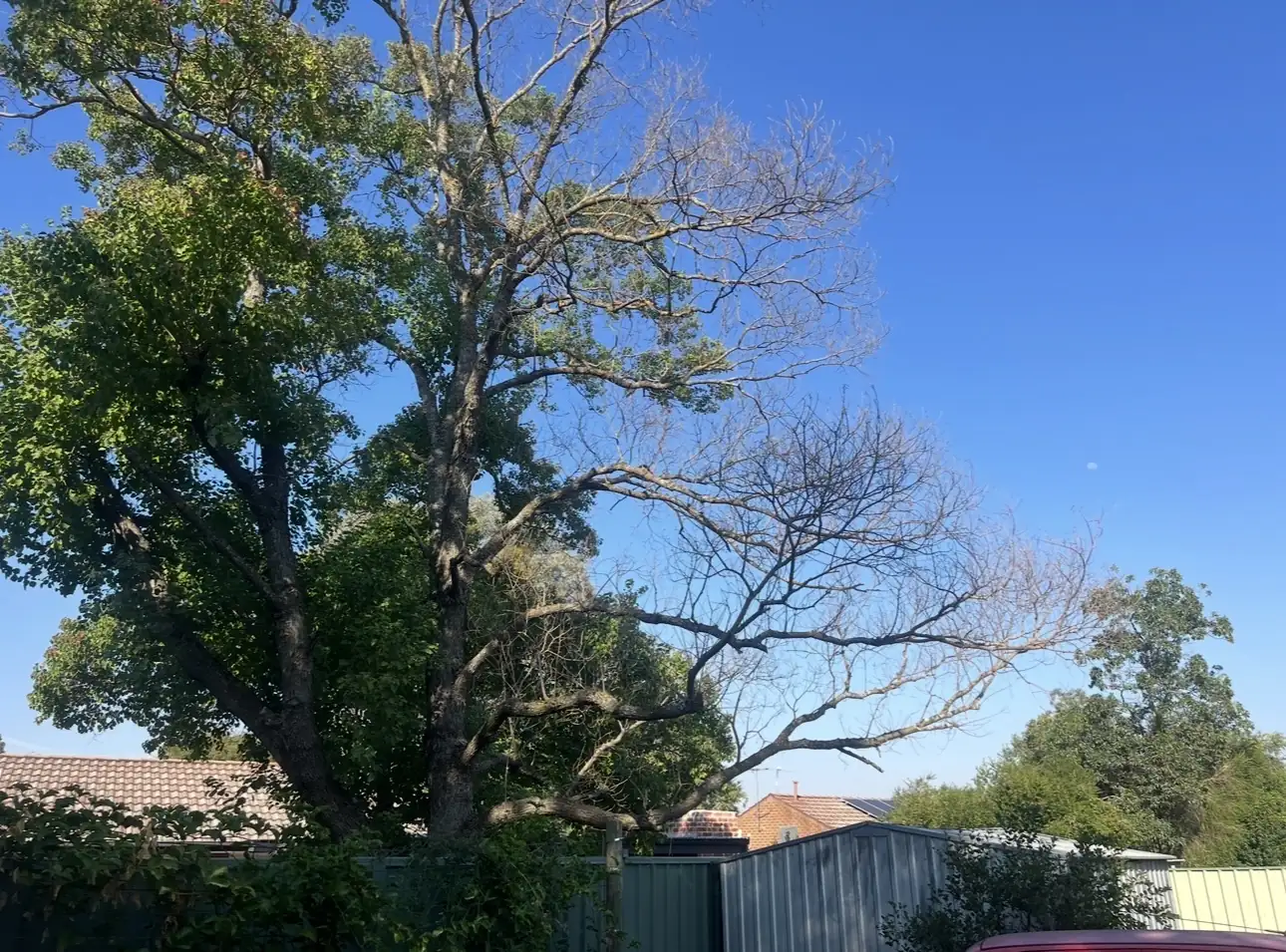
A tree that is bare in winter may be perfectly well, so the signs matter. Leaves that never return in the growing season, bark that peels away in sheets and twigs that snap dry are the usual ones. Mushrooms at the base, or a crown that thins from the tips downward, point the same way. One sign proves little, but several together often mean dead tree removal is the safest path, and Drew confirms it on site.
- No new leaf when the trees around it have shot
- Bark lifting or falling away in sheets
- Brittle twigs that snap clean and pale
- Fungus on the trunk or around the base
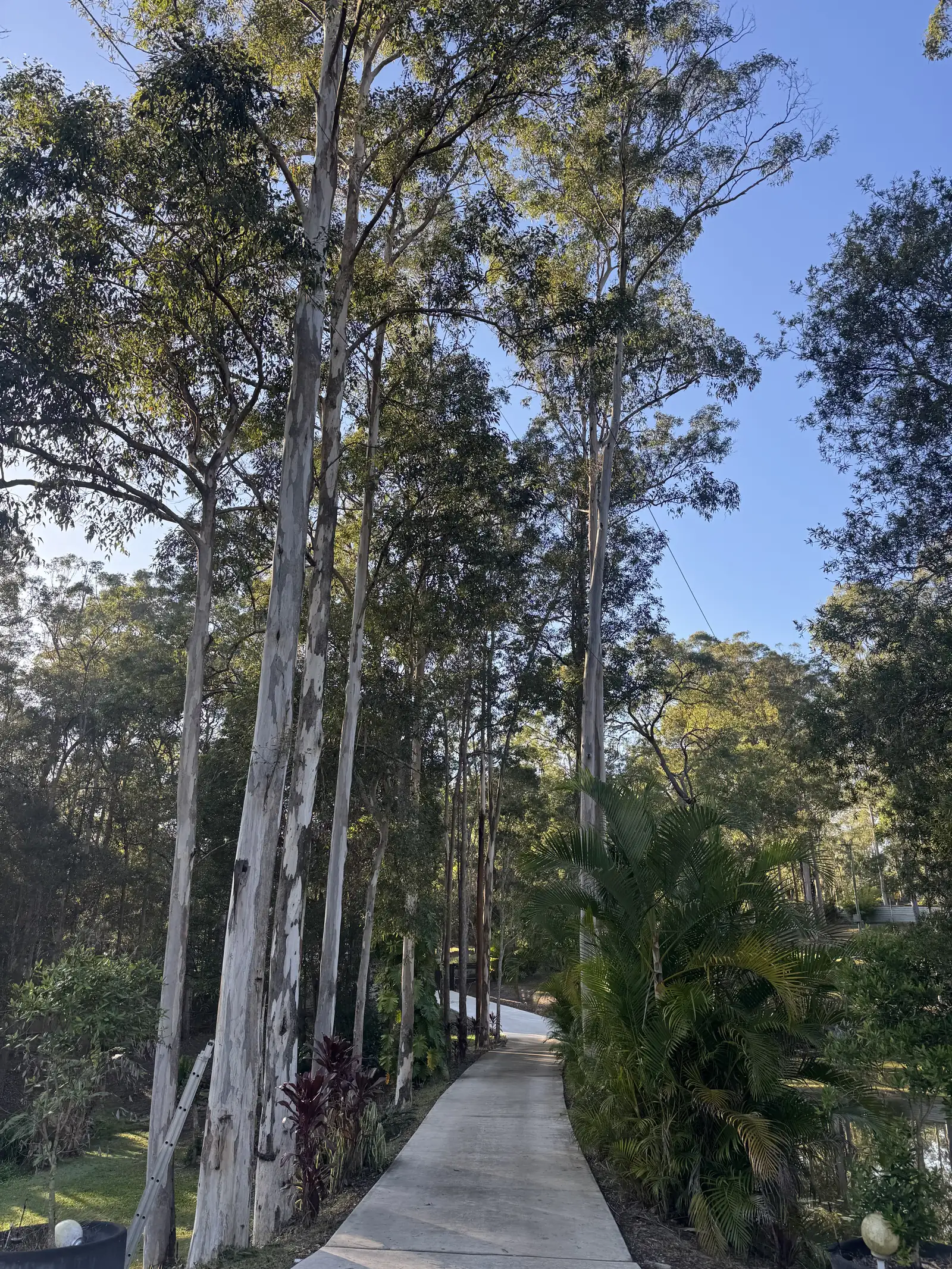
Why dead tree removal is harder than it looks.
Living wood bends and gives warning. Dead wood dries out, loses its spring and can snap under a load that a healthy limb would carry easily. That makes dead tree removal more delicate than the height suggests, because a cut, a rope or a climber's weight can bring a branch down early. Our team plans each piece, tests as it goes and keeps people well clear of wherever wood could land.
- Dry wood breaks instead of bending
- Hidden hollows and cracks carry no strength
- Old limbs can let go on a calm day
- Every piece is planned before it is cut
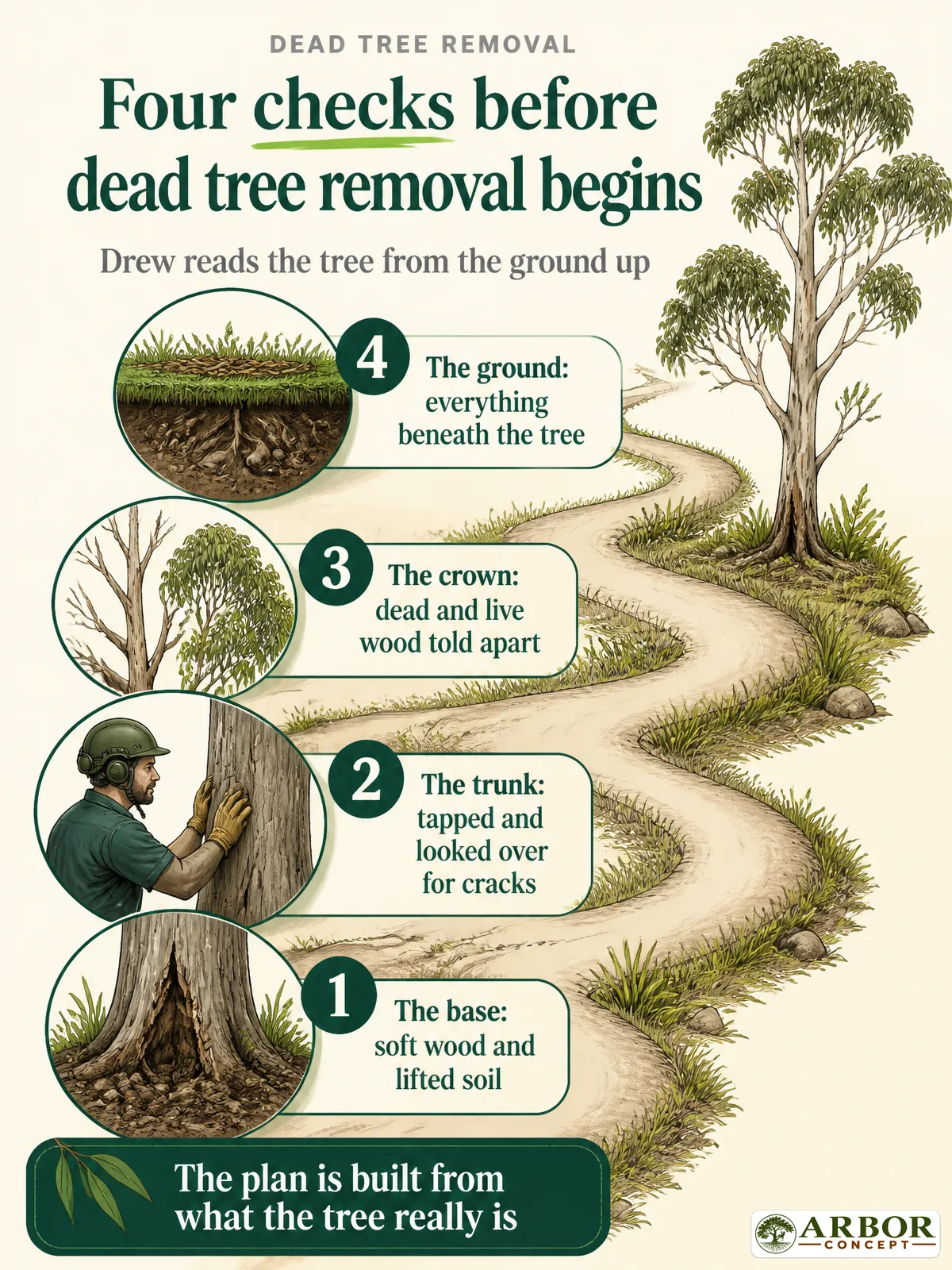
The checks before dead tree removal begins.
Before a rope goes up, Drew works through the tree in a fixed order. He starts at the base, moves to the trunk and the crown, then looks at the lean, the ground and whatever stands within reach of a falling limb. Each answer changes the next, so the dead tree removal plan is built from what the tree really is. How it looks from the road counts for little.
- The base, checked for soft wood and lifted soil
- The trunk, tapped and looked over for cracks
- The crown, with dead and live wood told apart
- The ground, and everything beneath the tree
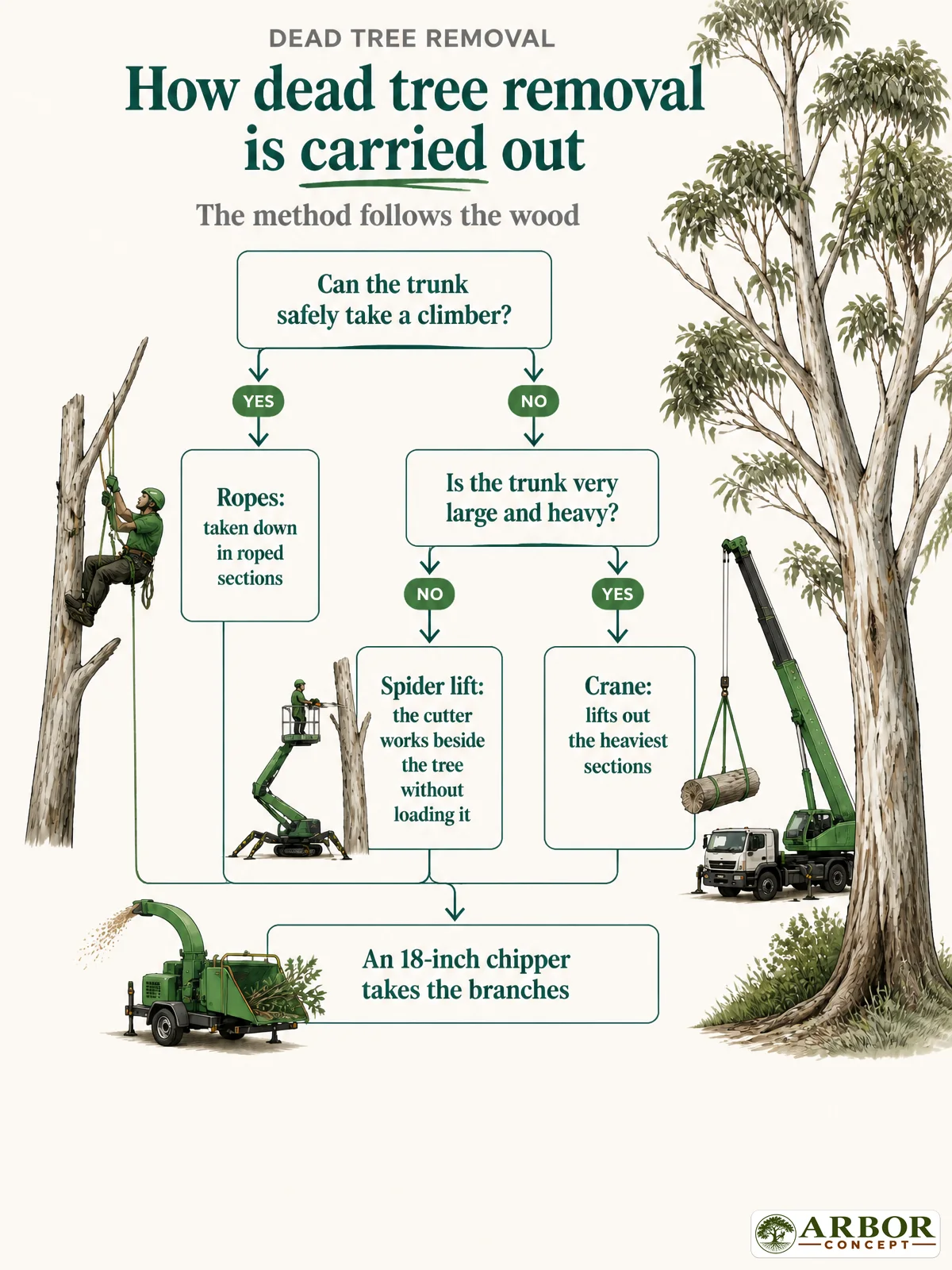
How we carry out dead tree removal.
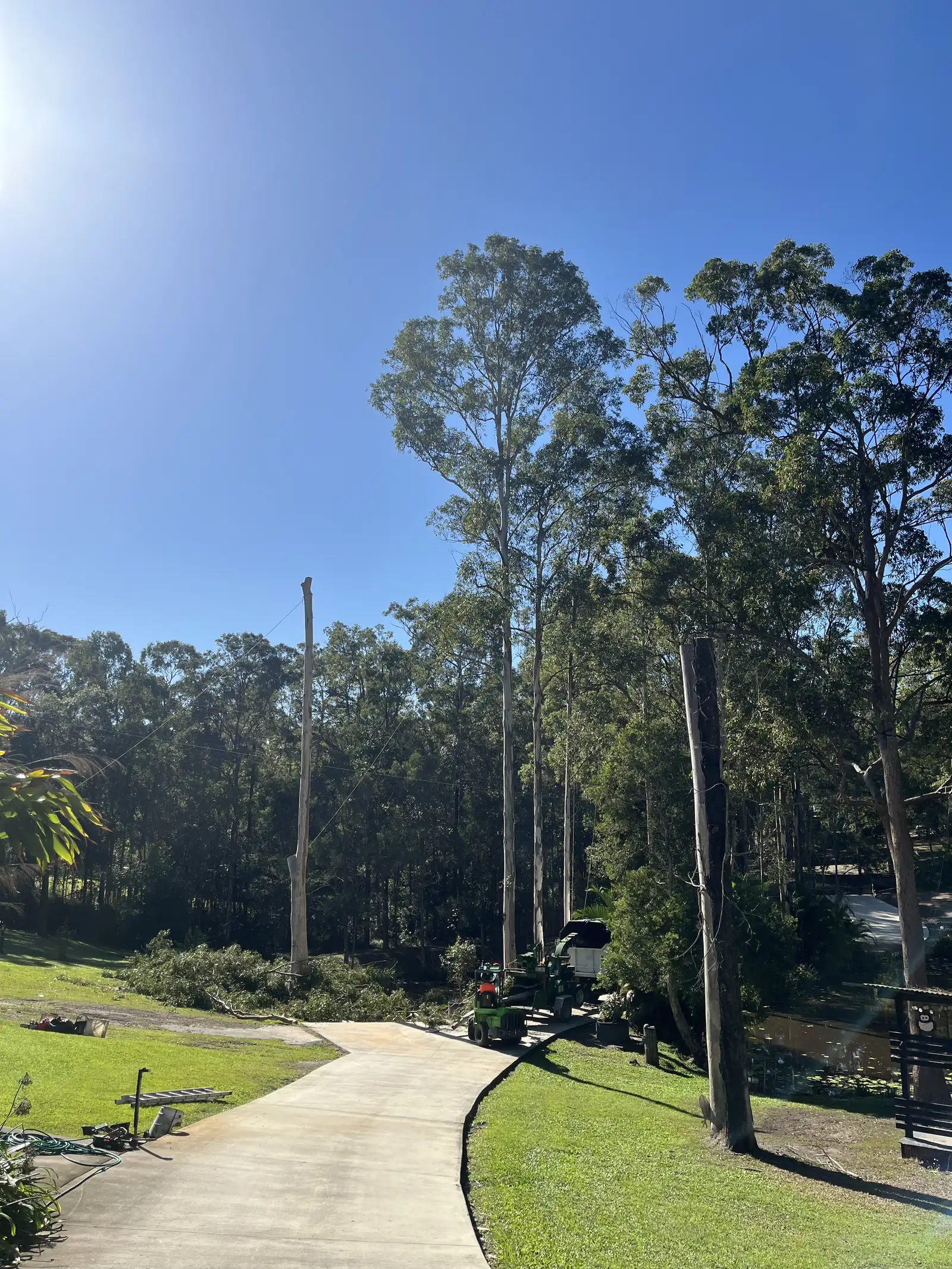
The method follows the wood. A sound trunk can be climbed, and the tree is taken down in sections on ropes. Where the wood is too weak to carry a person, a spider lift, with an arm that goes beyond 27 m, puts the cutter beside the tree without loading it. On a very large trunk, a crane to take the heaviest sections may be the only sensible answer.
- Ropes, when the trunk can safely take a climber
- A spider lift, when climbing would be a risk
- A crane, when the sections are too heavy to lower by hand
- An 18-inch chipper for the branches
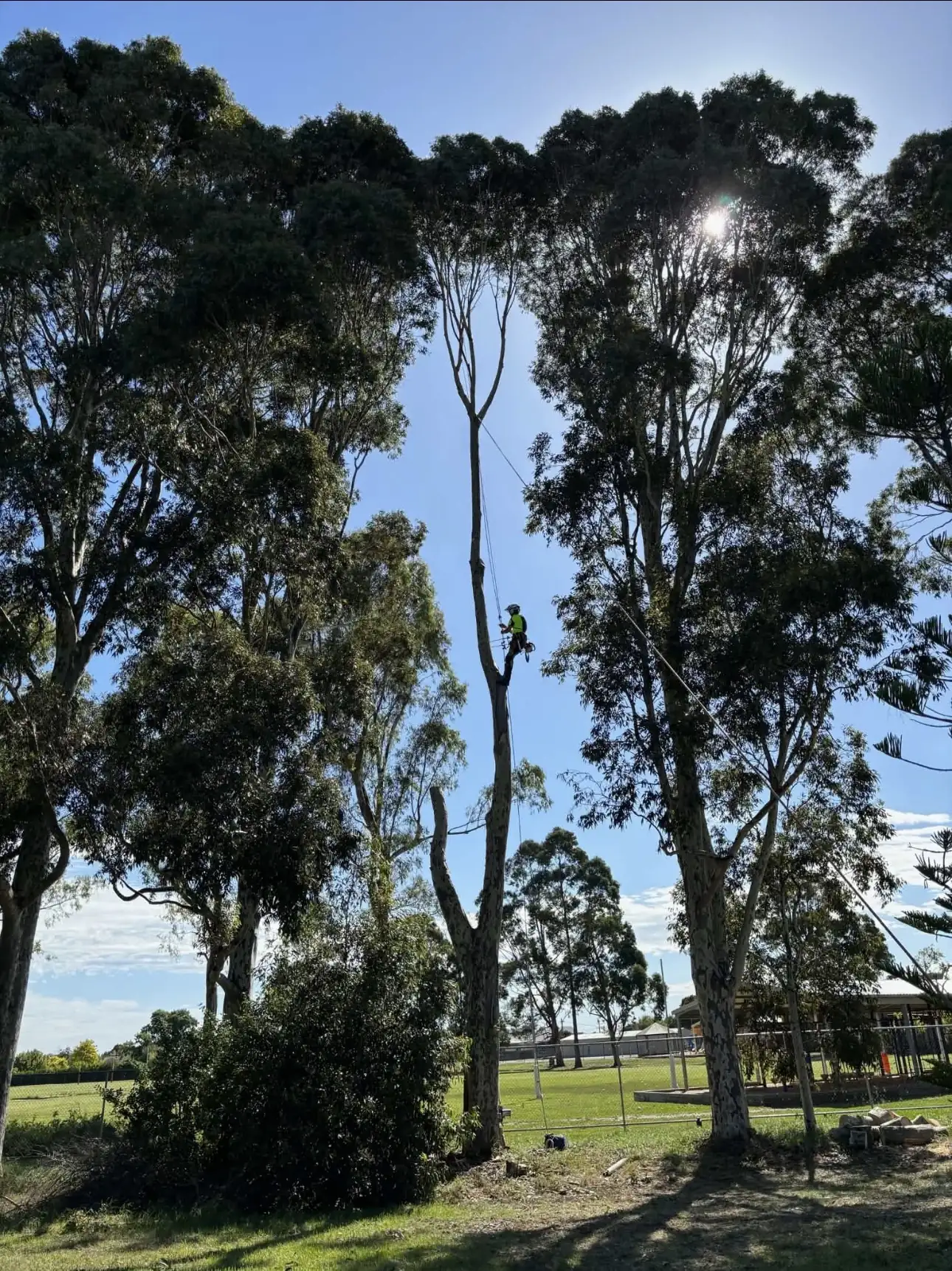
Part-dead trees and dead tree removal.
Not every dead limb means the whole tree must go. A tree with one dead stem, or dead wood in the crown, may need only that part taken out. Drew tells you which case yours is, and he says so if that means less work than full dead tree removal. Where a stable trunk stands well away from buildings and paths, it can sometimes be left as a home for birds and animals.
- One dead limb removed and the live tree kept
- A dead leader taken out above the join
- A stable trunk left for wildlife where it is safe
- The whole tree down only when it has to be
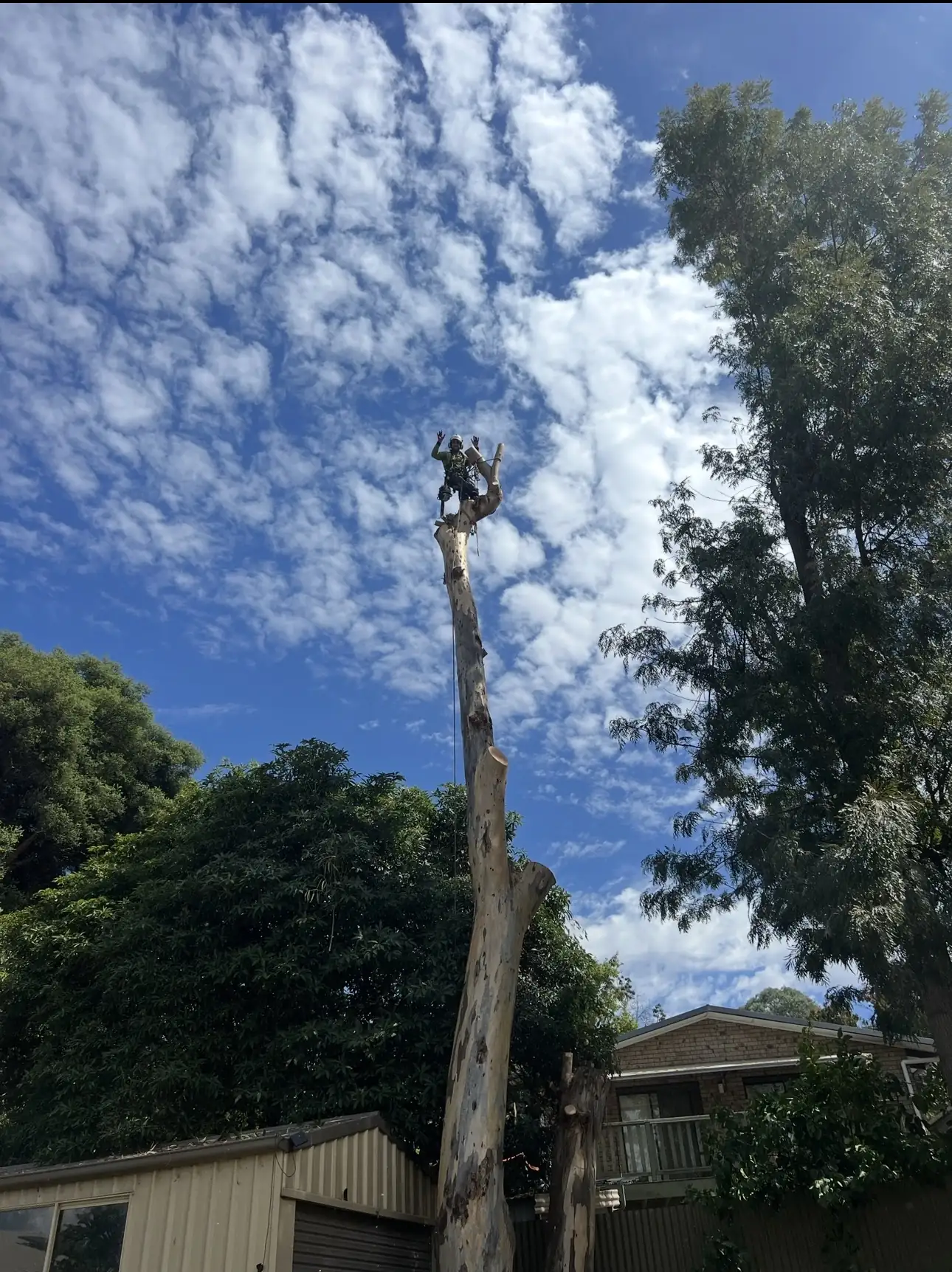
When dead tree removal is urgent or the space is tight.
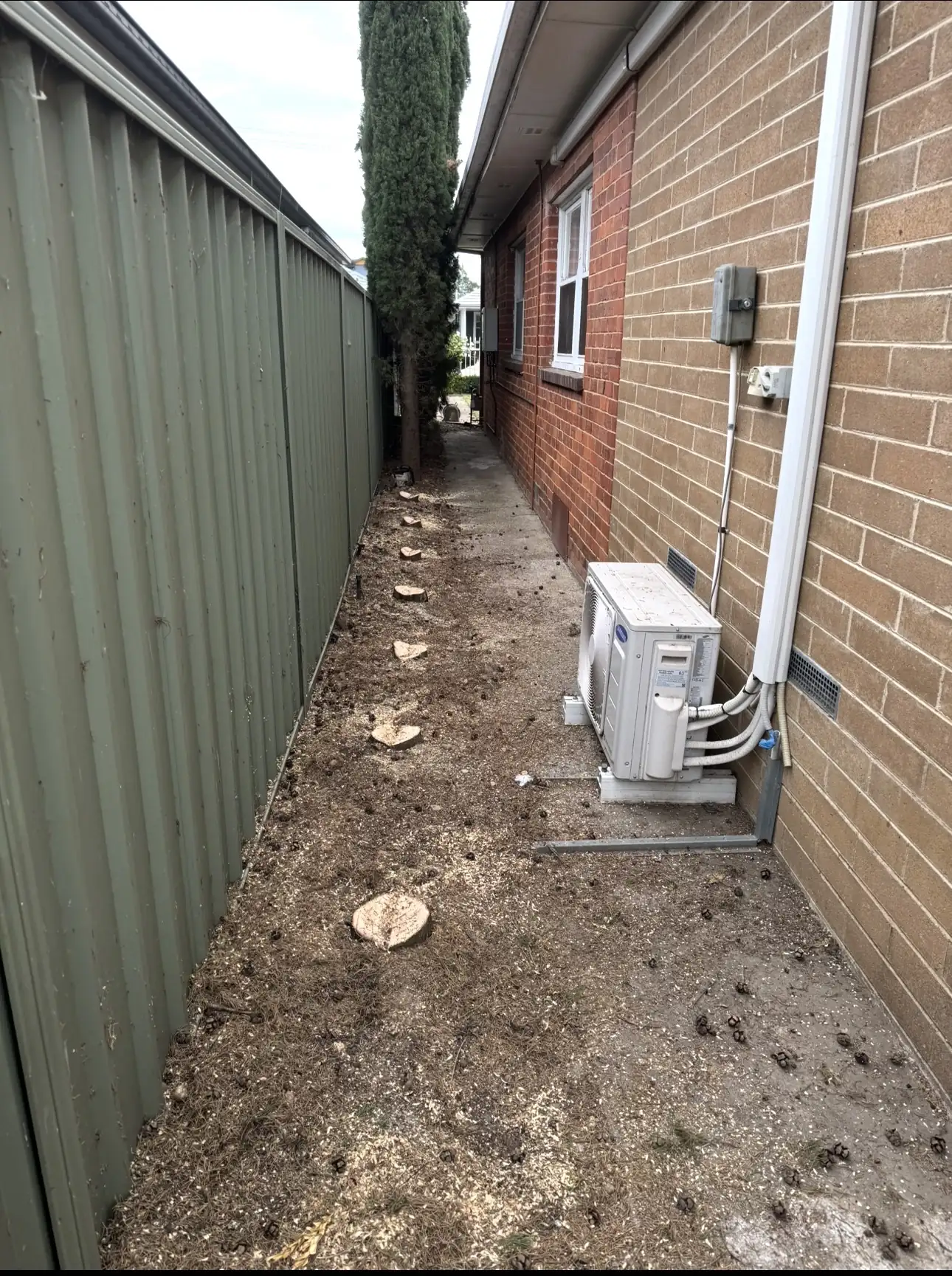
Some dead trees stand over a roof, a driveway or a play area. Others sit at the end of a narrow side passage. If limbs are already falling, treat it as an emergency call-out and get in touch quickly. If the trouble is how the tree comes down, felling a tree in one piece or in sections depends on room, lean and the strength of the wood, and a dead tree is nearly always taken in small roped pieces.
- Tell us what the tree could land on
- Limbs already falling call for a prompt reply
- Narrow passages handled with small roped pieces
- Fences, paving and garden beds protected
Choosing a provider for dead tree removal.
Dead tree removal can look like a quick job, so ask questions before you book. Look for an arborist who visits before quoting, who tests the wood instead of guessing from photos, and who says so when a smaller job will do. Drew is Cert III trained, he has 20 years in the trade, and public liability cover is in place. The thinking behind a price is explained on our how we quote page.
- A visit before any price is given
- The wood tested, never guessed at
- The method explained before the day
- A smaller job proposed when it is the right one
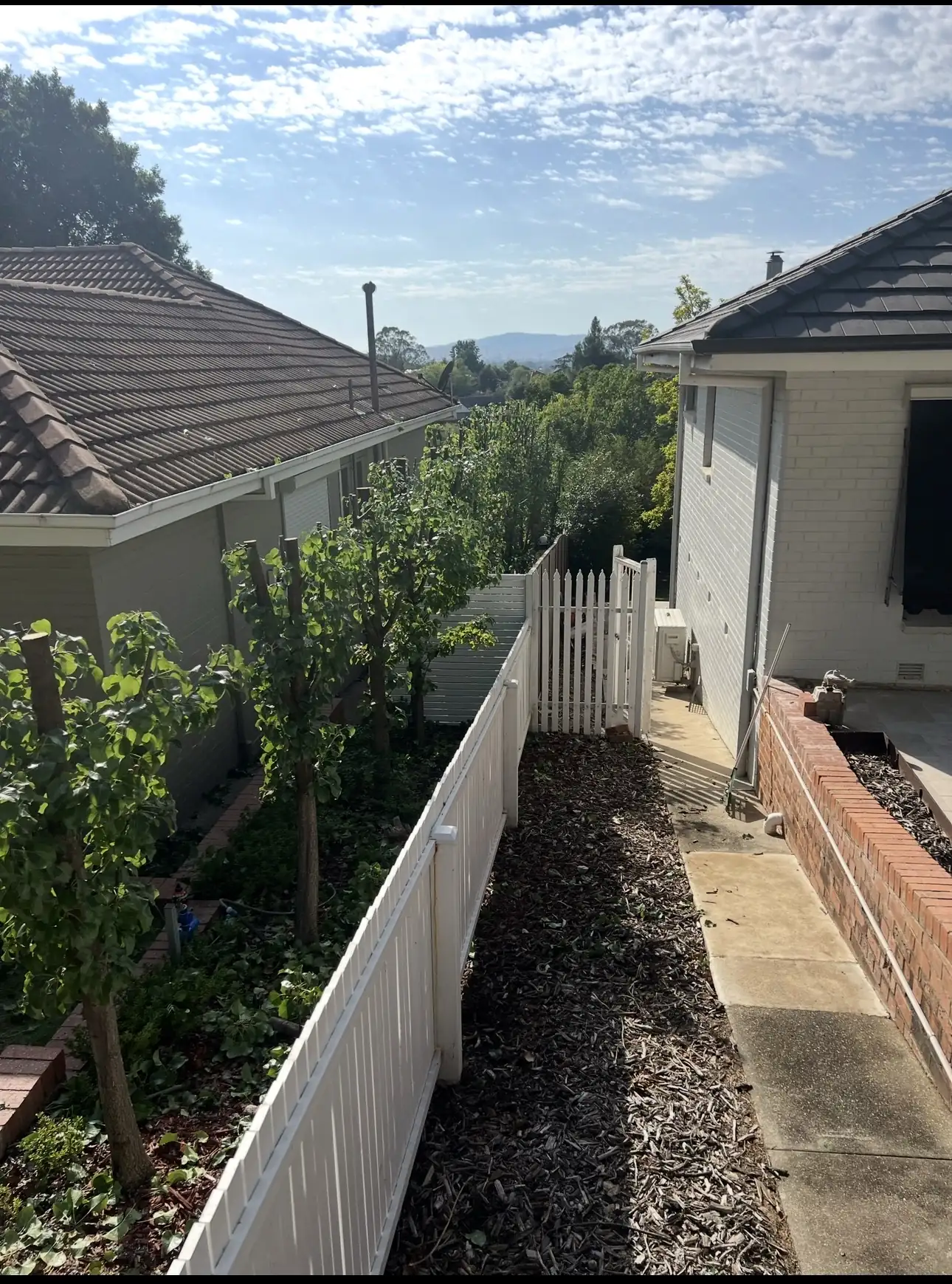
Whatever the dead tree removal job, it can be done.
A lone dead gum in a paddock, or a hollow tree against the house: the method is chosen for the wood in front of us. Whatever its size, a dead tree removal job is worth talking through.
A fully dead tree
Leafless and dry, it is tested, then taken down in sections by the safest method for the wood.
A tree in decline
Thin crowns and dead tips are read with care, and we tell you if the tree has a chance of recovering.
A hollow trunk
Hollows hide weakness, so the trunk is tapped and judged before any weight goes onto it.
One dead stem on a live tree
Only the dead stem comes out when the rest of the tree is sound.
A dead tree over a roof or fence
Pieces go down on ropes, or are craned out, so nothing drops on what is below.
A tree killed by storm or lightning
Splits and scorching are inspected first, because the damage often runs deeper than it looks.
Gear chosen for the wood, not the other way about.
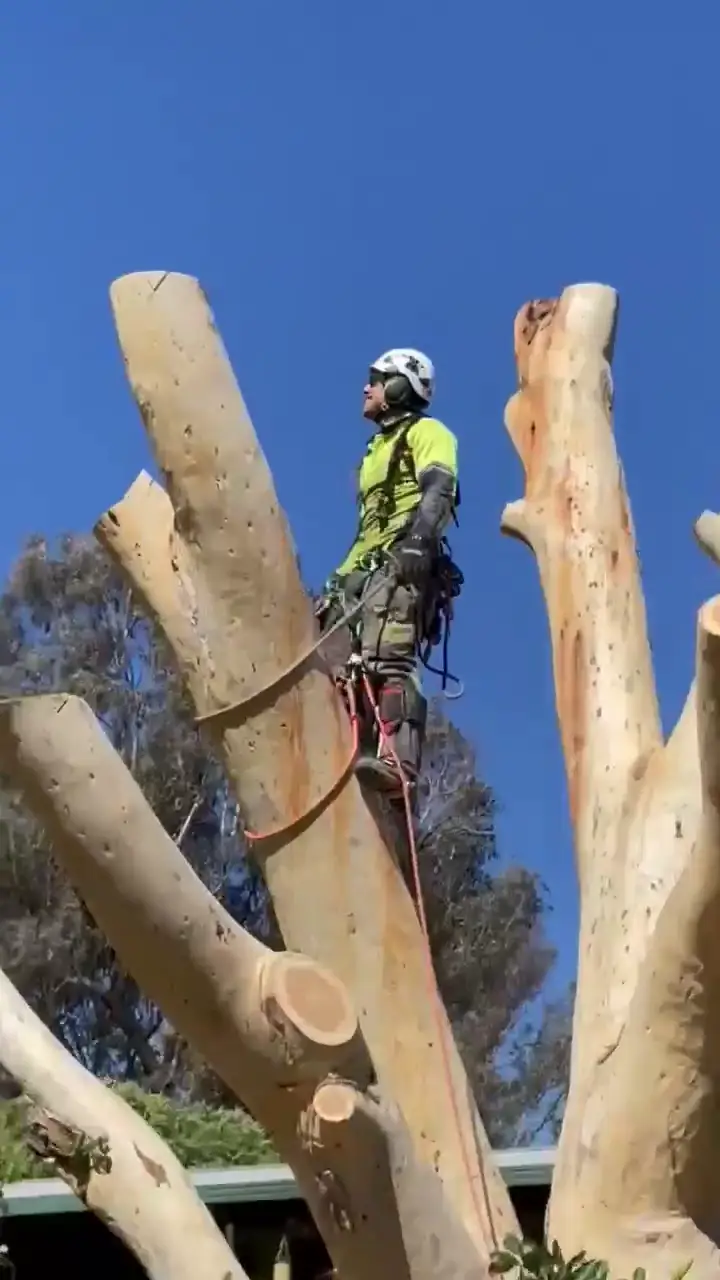
Rope access
A climber works inside the crown, but only once the wood has shown it can carry one.
Spider lift
A tracked lift that fits narrow gaps, with an arm that goes beyond 27 m. The cutter works from the platform beside the dead wood.
Crane
On very large trees a crane carries the weight of each section and swings it clear of roofs, fences and garden beds.
18-inch chipper
Dead branches are fed through as they come down. A tracked stump grinder can take out the stump too, if you want it gone.
Plain advice, no pressure.
Storm damage and dead tree removal.
A dead tree is often the first to fail in wild weather, and a limb that has already dropped can leave more hanging above it. Stay well back, keep people and cars out from underneath, and get in touch. If the whole tree has shifted or split, you will hear that straight away.
- A dead limb above the house deserves a prompt message to Drew
- A branch lying across the drive is cut and cleared, so the car gets out
- Our team also does the work that insurance claims after storm damage call for
Find Drew on the contact page.
Care for your yard, your fences and your neighbours.
What happens to the wood after dead tree removal.
Dead tree removal leaves timber and branches behind, and you decide where they go. This is only what becomes of the wood after the tree is down, not a separate service.
Branches chipped and carried off, leaving the yard clear
Timber cut into lengths and stacked, ready for the fire
Chips spread on garden beds as mulch, if you ask for them
A sound trunk milled into boards, by someone we arrange
Four small things that help before dead tree removal.
- 1
Move cars, bins, furniture and toys from beneath the tree and from the path to it.
- 2
Keep children and pets indoors on the day, and well away from the work area.
- 3
Show Drew where any wires, pipes or sprinklers run near the tree.
- 4
Give the neighbours a heads-up that a tree is coming down.
Is approval needed for dead tree removal?
Council rules are not the same everywhere, and they change over time, so ask your own council before any cutting starts. A tree that looks dead may still be covered by local rules.
Before the first cut, Drew can help you work out what approvals could be involved, so describe the tree the first time you write or ring. If the tree turns out to be healthy, we say so, and the job may not be needed at all.
Real trees, carefully taken down.
Questions about dead tree removal.
How do I know whether my tree needs dead tree removal?
Bare in winter is not the same as dead. Look for bark peeling in sheets, brittle twigs that snap clean, no new leaf in the growing season and mushrooms at the base. Drew checks on site and tells you straight.
Is dead tree removal an urgent job?
It depends on what the tree could hit. A dead tree in an open corner can wait for a booked day. One leaning over a house, a play area or a driveway should be seen soon. Tell us where it stands and we will say how soon.
Why can't you climb a dead tree like any other?
A climber puts load on the trunk and limbs, and dead wood can snap under it. So we test the tree first and, where it is not sound, bring in machinery instead: a spider lift or a crane. Wood strength decides the method.
What if the tree is only partly dead?
Then the live and dead parts behave differently, and the join between them is often the weak point. Sometimes the dead part can come off and the living tree stays. Either way you get an honest answer on which case yours is.
Can a dead tree be left standing for wildlife?
Sometimes. If a tree is well away from buildings and paths, a stable trunk can be kept as a home for birds and animals. We say honestly whether yours is safe enough to keep or needs to come all the way down.
What happens to the wood after dead tree removal?
You choose. We can chip the branches and carry them off, cut and stack the timber for firewood, leave mulch on site, or organise milling for a trunk worth keeping. Dead wood is dry, so it often burns well once split.
Do I need council approval for dead tree removal?
Rules differ between councils and they change, and some cover dead trees or the habitat in them. Check with your council. We can work through what, if anything, is required before the first cut, so you are not caught out.
How is dead tree removal quoted?
Drew visits, studies the trunk, the route in and the space underneath, then writes up the job. The price follows the method that job needs, and one pricing method is used for everybody. A quote is never done from photos.
Will dead tree removal damage my lawn or fences?
We plan to avoid it. Fences, paving and garden beds are covered before cutting, pieces are lowered on ropes, and track mats can be used on soft ground if you want them. Heavy gear is chosen to suit your yard.
Drew and our team, for dead tree removal.
Drew leads Arbor Concept and handles your job personally. A Cert III and two decades among trees shape each plan he makes, and for dead tree removal he takes your call, visits the site and writes up your quote there and then, free of charge.
The ropes, the machines, the chipper and the final tidy are all done by our team. If a tree is in better shape than it looks, Drew tells you so.
From first call to a clear site.
- 1
Contact us
Tell us which tree you mean and what stands near it. You talk with the arborist who plans the work, not with an office.
- 2
Get a quote
Drew gives a price after he has seen the tree. One pricing method serves every customer, and a photo is never the basis.
- 3
On-site inspection
Drew tests the wood, checks the access and the ground, and settles what will be done and when. Half is paid then to hold the date.
- 4
Professional dead tree removal
Our team does the agreed work with your house, fencing and garden beds protected, and the yard is left tidy.
The branches are chipped, the timber goes where you said, and the lawn is raked over as a last job.
Ready for dead tree removal?
Describe the tree and what sits under it. Drew comes to look, the quote on site costs nothing, and anything after that is handled by our team.